
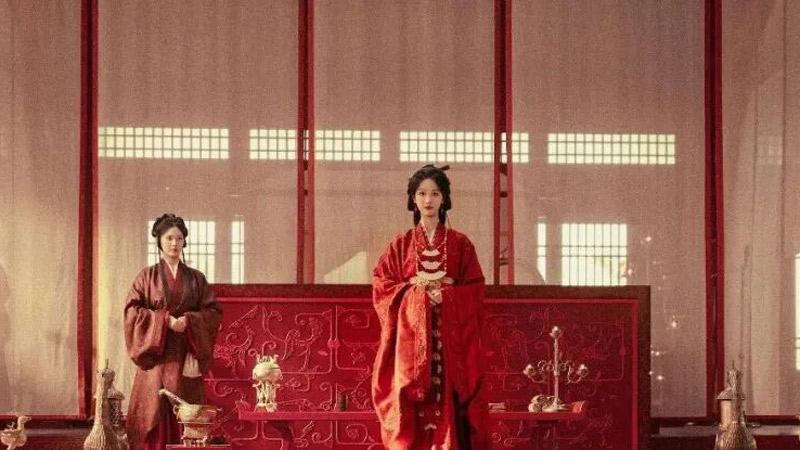
Why would a king hand his most powerful general’s daughter to the son of the very man he fears? That’s the puzzle at the heart of the new Chinese drama Ashes to Crown (翘楚). Unlike the usual slow-burn palace intrigue, this show moves at a breakneck pace. The heroine, Chu Zhao (楚朝), lives an entire lifetime in just one episode. But beneath the rapid plot twists lies a fascinating question of royal strategy. The old emperor clearly dreads the Xiaonan (霄南) King.
Yet he arranges a marriage between that king’s son, Xiao Xun (萧珣), and Chu Zhao, whose father commands two hundred thousand troops. On the surface, this looks like madness. Dig deeper, and you’ll find three cold, calculated reasons behind the imperial edict.
A Welcome Outcome
From the emperor’s seat, the marriage served a perfect political purpose. He had only two sons: the crown prince and the third prince. The crown prince had married into the powerful Xie family, giving him the backing of aristocratic clans. That left the third prince dangerously weak. Any seasoned ruler knows the art of keeping balance. You want your two contenders evenly matched, locked in a stalemate that leaves you as the final arbiter.
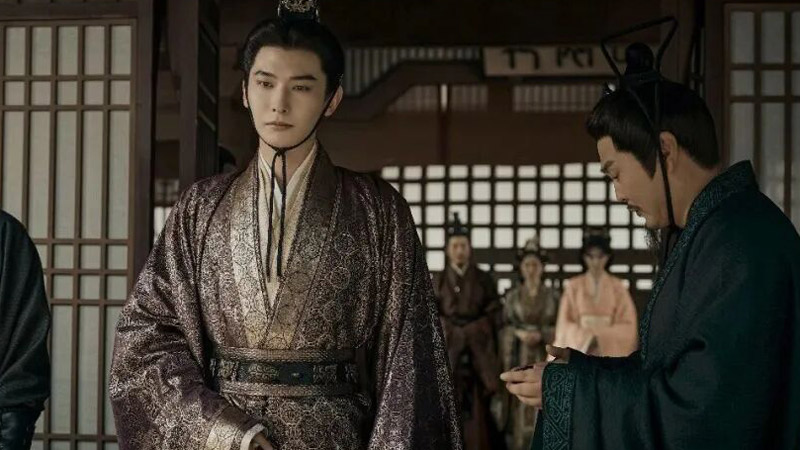
Now consider Xiao Xun. During the failed palace coup, he fought alongside the third prince, even killing the prince at the last moment after helping him storm the throne room. But here’s the key: the old emperor, like everyone else, believed Xiao Xun was a loyal follower of the third prince. In the emperor’s eyes, Xiao Xun belonged to the third prince’s faction. So marrying Chu Zhao to him would hand the third prince a massive military asset—two hundred thousand soldiers. That would put the third prince on equal footing with the crown prince.
And there was an extra bonus. When Xiao Xun asked for Chu Zhao’s hand, his father, the Xiaonan King, sent a memorial to the throne. He offered to give up his fiefdom and hand over his armies. He was voluntarily weakening himself. For an emperor who feared the Xiaonan King’s growing power, this was a gift wrapped in silk. He got to appear generous while actually trapping everyone in a web of his own design.
Deep Trust
The second reason cuts closer to the emperor’s heart. He trusted Chu Zhao’s father, Chu Ling (楚岺), with an almost brotherly faith. The show makes it clear: Chu Ling was the one person the emperor never doubted. They had sworn a blood oath together in younger days, a bond that supposedly transcended politics. When the palace coup reached its bloody climax, the emperor knew Xiao Xun was behind it. Yet his first order was to send the royal grandson to Chu Ling for protection—even though Chu Ling was about to become Xiao Xun’s father-in-law.
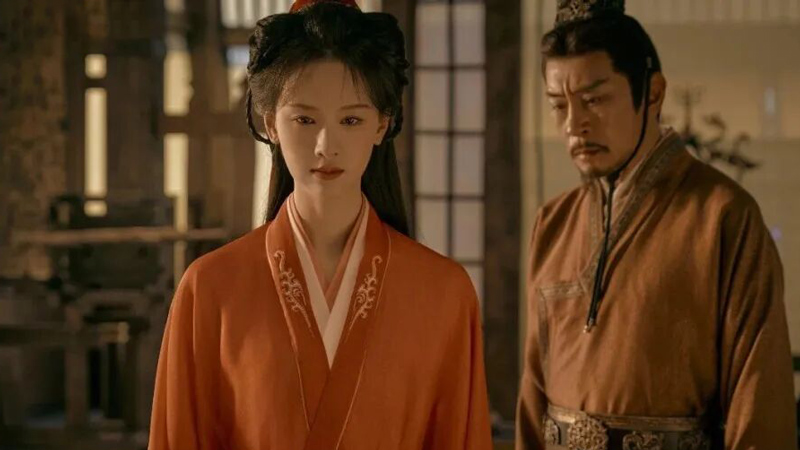
What kind of trust allows a dying emperor to hand his heir to a man whose daughter just married his enemy? The kind that runs deeper than marriage alliances. The emperor believed, with absolute certainty, that Chu Ling’s two hundred thousand swords would never turn against him. He told Chu Zhao directly: “Your father’s last wish is to guard this realm for me.” The exact meaning of that line is left ambiguous. Perhaps Chu Ling once helped the emperor win the throne but later grew disillusioned with court corruption. Or perhaps he simply preferred protecting border villagers over playing palace games. Either way, Chu Ling wanted his daughter far from the capital’s poison. The emperor knew this. He knew Chu Ling had no ambition for power, only a soldier’s loyalty.
So the marriage was safe. In the emperor’s mind, Chu Ling would never rebel. Even with his daughter tied to a potential usurper, the old general’s first and only allegiance remained to the throne. That kind of trust is rare. And in this case, tragically misplaced—but not in the way you might expect.
Blind Arrogance
The third reason is the simplest and the most fatal: the emperor thought he was invincible. He had spent decades on the throne, balancing factions, crushing rebellions, playing men like chess pieces. He had taken Xiao Xun as a hostage prince, but look at how loosely he held that leash. A real hostage never leaves the capital. Xiao Xun traveled freely to the border commandery of Yunzhong (云中) to propose marriage in person. He came and went as he pleased.
Listen to what the emperor said on his deathbed, after the coup had failed and his body was failing: “I may be dying, but I still have enough breath left to kill both you and your father—the pair who threaten my throne at every turn.” He was speaking to Chu Zhao, who had brought the royal grandson to see him one last time. Even with his organs shutting down, he believed a single word from him could still end lives. That is not confidence. That is arrogance carved into bone.
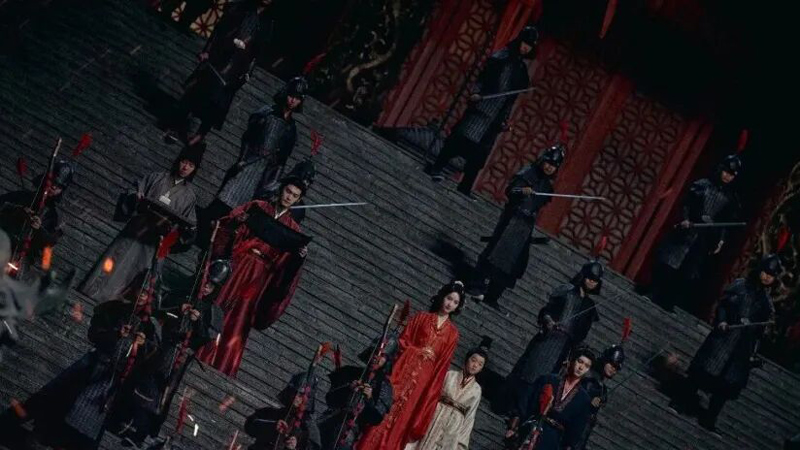
The emperor assumed he could always pull the trigger. He assumed his network of spies, his loyal generals, his decades of experience would catch any betrayal before it landed. He saw the marriage as a move on a board he controlled completely. If things went wrong, he would simply reverse it. But he forgot one thing: schemes have shadows. Xiao Xun was not the third prince’s pawn. He was playing his own game. And by the time the emperor realized that, he was already dead—not by Chu Ling’s armies, but by the very conspiracy he thought he had contained. The marriage he blessed became the rope that hanged his dynasty.