

The Mo (家业) drops a quiet bombshell in its latest episodes: as Li Zhen’s (李祯) tiny ink workshop prepares to cut its opening ribbon, she glances at the door one last time. He never shows. That night, her mother hands her a gift from her grandfather. And in that moment, she understands—his absence is not abandonment. It is the purest form of support a man who loved her could give.
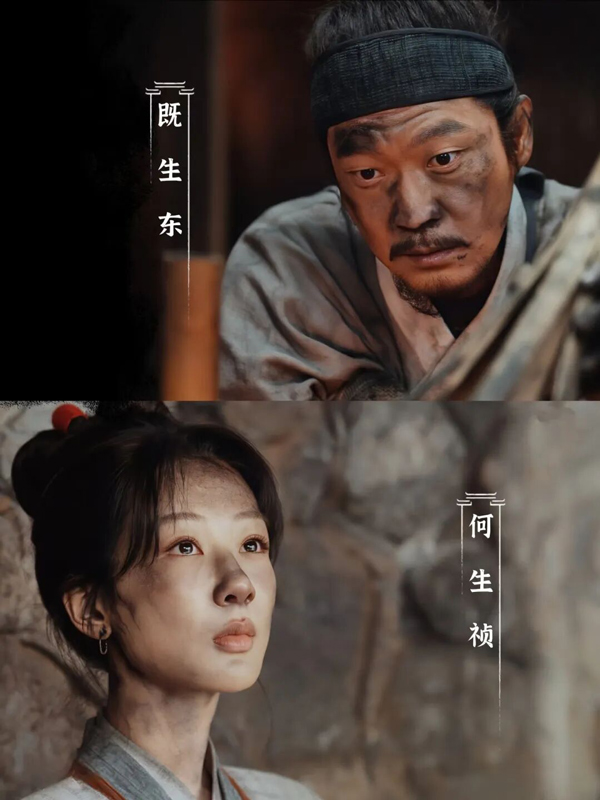
No one is more shattered by the success of Li Zhen’s Little Li Ink Workshop than Uncle Jingdong (景东). He has spent a lifetime mastering the craft. Yet this young woman has restored lacquer-soot ancient ink and then, almost immediately, formulated the Nine Treasures Ink—something Uncle Jingdong admits he could never create in his entire life. His pride wounded, he secretly buys a single piece from a merchant at triple the price, just to study it.
Meanwhile, Tian Jiangyue (田降月) watches Li Zhen’s rise with a burning, helpless jealousy. She had once urged Uncle Jingdong to reclaim the abandoned Li family workshop Li Zhen was using for her experiments. Now, with the new shop open, she whispers another suggestion: smash it. But Uncle Jingdong has limits. “She didn’t use the Li family name,” he says. “She didn’t take a single coin from them. On what grounds would we destroy her place?” That line shows he is not pure evil—just a proud, bitter old man.
The Desperate Rival
Tian Jiangyue sees clearly where others hesitate. She tells Uncle Jingdong that the Little Li workshop will one day swallow the Great Li workshop. And she is right. Li Zhen’s skill is unquestionable. Given time, her ink could rival the legendary Hui ink (徽墨) that made the Li family famous. But Tian’s urgency comes from fear—fear that her own position, her own relevance in the ink world, will dissolve. She cannot accept that a woman she looked down on has surpassed her so fast.
What Tian fails to understand is that Li Zhen’s true advantage is not just talent. It is freedom. The older generation, including Tian, had always used the grandfather’s sense of obligation against Li Zhen’s family. They pulled out the sacred Ancestor’s Silk Banner and forced the old man to swear on his teeth that he would never make ink again. That tactic worked on him. It would never work on Li Zhen. She does not hold that banner in the same awe. If her grandfather were still in the village, he would be caught between her ambition and the elders’ pressure—and that would break him.
So the grandfather made a choice. He took Li Zhen’s older brother and left. Not because he was angry. Not because he gave up on her. But because he knew that his presence had become a cage. Every time the elders wanted to stop Li Zhen, they would go through him. Every time she pushed forward, he would be forced to ask her to yield. Staying would only lead to a tear between them—a wound neither could heal.
The Old Man’s Silence
Online fans have joked about the “duct tape” moment—watching the grandfather twist under pressure, episode after episode. But his departure is no joke. It is the most painful, most loving decision he could make. He sees Li Zhen’s determination the day she announces she will open her own workshop. From that moment, he knows he cannot stop her. He also knows he cannot stand with her without betraying the people he owes gratitude to. There is no middle ground. So he removes himself from the battlefield.
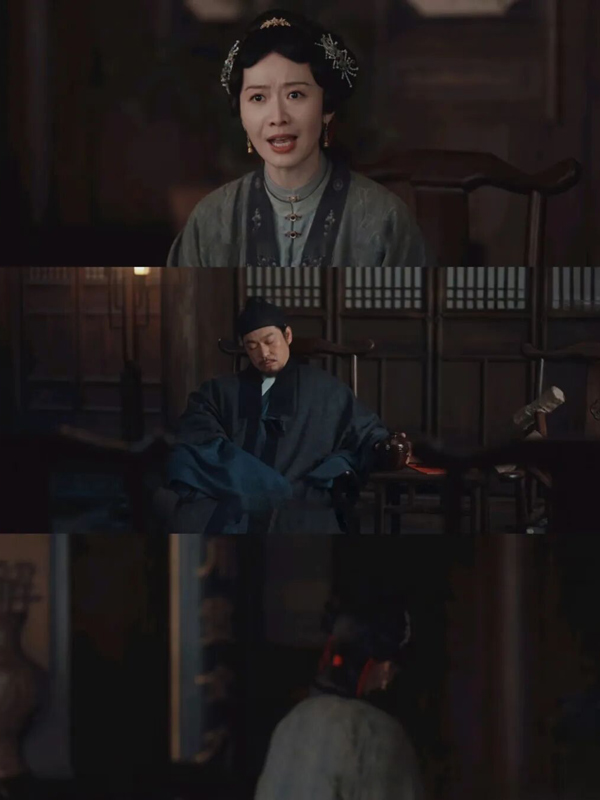
He does not become a shackle on her path. He becomes a silent blessing behind her back. That is why, when Li Zhen receives his gift on opening day, she does not cry in anger. She cries in recognition. The old man had already given her the only thing he had left to give: his absence. Without him nearby to negotiate, to plead, to apologize on her behalf, Li Zhen is free to fight her own fights. She can offend Uncle Jingdong. She can ignore the sacred banner. She can break every unwritten rule because she owes nothing to the old guard’s rituals.
And what about the brother? The grandfather takes him away under the pretense of selling inkstones. Neither expects much from the trip. But the brother, it turns out, has a natural gift for inkstone trading—far more than he ever had for making ink. That discovery is an unexpected joy. The grandfather’s departure does not just free Li Zhen. It also clears a path for her brother, a path he would never have found if he had stayed home, living in his sister’s shadow and under the elders’ thumb.
A Family’s Quiet Hope
This is not a story of dramatic rebellion or screaming confrontations. It is a story of people who have suffered too much to fight loudly. Li Zhen’s family endured years of being pushed around because her grandfather could not say no to the people who once helped him. His gratitude became their weakness. The elders exploited it ruthlessly. But when Li Zhen proved she could make ink that even Uncle Jingdong could not replicate, something shifted. The grandfather realized that his debt—his honor—should not cost his granddaughter her future.
So he left. Without a grand speech. Without a final blessing at the ribbon-cutting. He simply packed up and walked away with the son who needed a different kind of chance. That act of quiet retreat is, paradoxically, the bravest thing he has ever done. It says: I trust you more than I fear my own guilt. It says: Go be great, and do not look back to see if I am watching.

By the end of the episode, Li Zhen’s Little Li Ink Workshop stands open. Uncle Jingdong drinks alone, muttering. Tian Jiangyue fumes. But the grandfather is on a road somewhere, watching his son discover a talent for inkstones, smiling at a small miracle he never expected. The family has been broken apart by circumstance, but also healed by choice. They are not together. And yet, for the first time, each of them has a future worth hoping for. That is the real heirloom this drama offers—not ink, not tradition, but the courage to let go.