
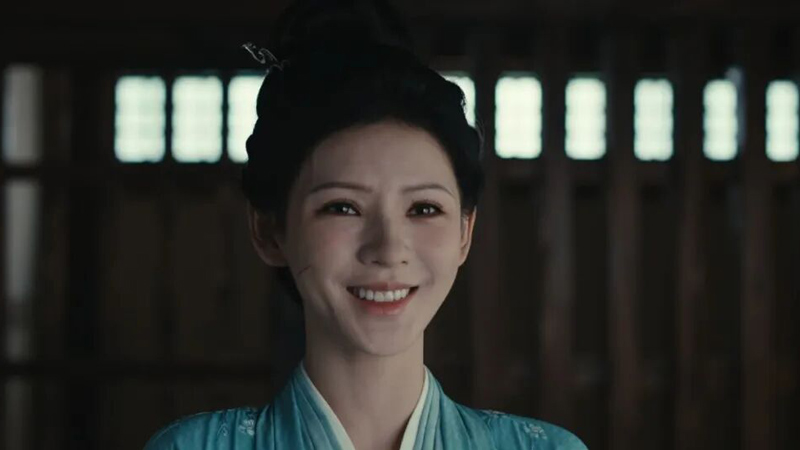
What happens when a woman with a sworn revenge mission also holds a promised marriage? The new Chinese drama Zhan Zhao Adventure (雨霖铃) throws that question at viewers with a sharp twist. Most audiences expect the female lead to either soften for love or sacrifice everything for a man. But Ding Yuehua (丁月华), a secondary character, does neither. She walks away from her fiancé, Zhan Zhao (展昭), despite their formal engagement. The real reason has nothing to do with another woman or a misunderstanding. It cuts much deeper. This article breaks down three surprising layers of her choice, using moments from the show that rewire how we think about heroines in costume dramas.
The Revenge Blueprint
If someone tells you a story about a person who endures hardship, swallows anger for years, and finally kills the family murderer, who do you picture? Most people imagine a man. That is exactly why Ding Yuehua shocks us. Her enemy, Jing Yiming (景逸鸣), destroyed her family. She does not cry or complain. She leaves home alone and steps onto a revenge path that she designs like a military campaign.

Viewers might say she left because her second brother falsely accused her of hurting the eldest brother. That is the surface reason. But look closer. She uses that misunderstanding as her cover. While staying at Cold Water Palace as the Zhangyue Shi (掌月使, Moon-Palm Envoy), she meets Jing Yiming almost daily in the Zhongxiao Yuan (中肖院). Yet she never once reveals her identity. She even hides her special weapon, “Chang Xiangsi” (长相思), using only a regular sword during their first fights. That patience is not weakness. It is precision.
Before the final attack, she ties up loose ends. She tells Huo Linglong (霍玲珑) the truth about Huo’s younger brother, paying for her past silence. Then she locks the prison door where Jing Yiming waits. No escape. No collateral damage. She wants him to die by the hand of someone he once called an ant. That is revenge from spirit to flesh. Audiences often call her reckless because Chinese dramas have taught us that female revenge equals emotional breakdowns. But Ding Yuehua proves otherwise. She calculates every move.
Her Own Identity
Ding Yuehua comes from a respected martial arts family in Songjiang Fu (松江府). Her father’s name carries weight. But she gives up that privilege to become the Zhangyue Shi of Cold Water Palace, a place that orthodox martial artists look down on. In most shows, a character in her position would weep about humiliation and endurance. The script would pour music over her suffering. Instead, she says something striking: she treasures her new title because it means she can survive by her own ability, no matter whose daughter she is.
That line flips the usual logic. Being someone’s daughter does not define her. Cold Water Palace gives her a different kind of power—the power to stand alone in the martial world. That is why, when she fails to retrieve the Changhong Bi (苌弘璧, a jade artifact) for the palace’s elder, she returns willingly to accept punishment. She never looks down on Cold Water Palace just because it is not a “righteous” sect. Just as she never looks down on herself for being a woman. Wherever she stands becomes the best place. Outside judgment does not move her.

One shot captures this perfectly. The elder of Cold Water Palace hands her the weapon “Chang Xiangsi” with solemn care. In that moment, there is no palace envoy, no daughter of the Ding family, no label of good or evil. Just an elder passing her best hopes to a younger woman. That image stays with you. It says that identity is not given by blood or reputation. It is built by choice and action. Ding Yuehua understands this deeply, which makes her more independent than most so-called “strong heroines” in other dramas.
The Untaken Path
After she kills Jing Yiming and completes her revenge, Ding Yuehua faces another decision. Fans of Sanxia Wuyi (三侠五义) know that she and Zhan Zhao have a marriage contract. They are the official couple in classic literature. Viewers of the drama also ship them hard. He is brave, handsome, and clearly respects her. Everything points to a happy union. But Ding Yuehua does not stay. She does not join him on his detective cases. Instead, she leaves to find a famous doctor for her comatose eldest brother.

Wait—wasn’t the brother injured by her own sword, tricked by Jing Yiming? Yes. But she still takes responsibility. During her time at Cold Water Palace, she had already researched where to find rare physicians. She also tracks down the parents of Huo Linglong’s younger brother, planning to send the boy home. She watched that boy drink poison every day at the palace and did nothing, because interfering would ruin her revenge. No one asked her to fix that. The poison did not come from her hand. Yet she refuses to make excuses. She says that doing nothing makes her an accomplice.
That sense of accountability explains why the elder wanted to pass down the entire legacy of Cold Water Palace to her. The world has no shortage of talented or strong people. But people who keep their independence while still caring for others? Those are rare. Ding Yuehua chooses her own road, not the one written by a marriage contract or audience expectations. She walks toward healing her brother and returning a lost child. That is not rejection of love. It is affirmation of self. The writer of Zhan Zhao Adventure does not need to shout about feminism. She just lets Ding Yuehua leave, and that single act says more than a hundred speeches.