

Everyone who reads A Splendid Match (良陈美锦) knows Gu Dezhao (顾德昭) is a terrible husband and father. He abandons his own daughter. He favors his concubine over his legal wife. But those actions are not even his worst. Hidden deeper in the original story, he commits something far more unforgivable. He drives his first wife, Ji Han (纪晗), to kill herself. Not with a single blow or a shouted curse, but with years of cold suspicion, cruel words, and willful ignorance. This article breaks down how he did it, why his betrayal cuts deeper than any other, and what his eventual downfall teaches us about delayed justice.
Silent Suffering
Ji Han was not a random bride forced into marriage. She was the eldest daughter of the Ji family, a woman who defied her own parents to marry Gu Dezhao. In the beginning, their relationship had warmth. She bore him a daughter, Gu Jinchao (顾锦朝), and later a son, Gu Jinrong (顾锦荣). She even took on the duties of a “virtuous wife” by finding him three concubines. Among them was her own personal maid, Yun Xiang (云湘). She gave him everything she had.
But Gu Dezhao did not treasure her sacrifice. Instead, his affection shifted entirely to Yun Xiang. Ji Han saw this clearly. Her heart ached, but she never complained or fought back. She swallowed her jealousy and kept silent. Then Yun Xiang became pregnant. At eight months, someone gave her a drug that caused early labor. She died in agony. Gu Dezhao immediately blamed Ji Han. He never bothered to investigate. In truth, another concubine, Du Yiniang (杜姨娘), had poisoned Yun Xiang. But Gu Dezhao preferred his own suspicion over facts.
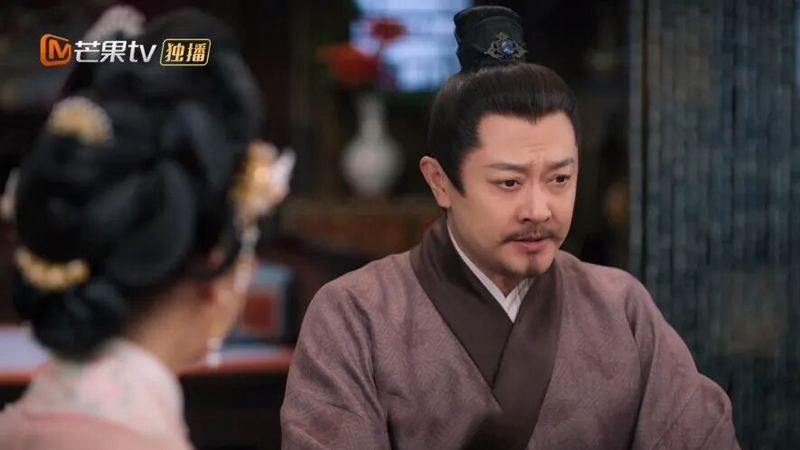
From that day, he treated Ji Han as a murderer. Their marriage became a hollow shell. He refused to sit with her, speak to her kindly, or even look at her without disgust. Ji Han did not know what crime she had committed. She only knew the man she loved had turned into a stranger. Over time, her spirit broke. A deep illness took hold of her body. Day by day, she grew weaker. Yet Gu Dezhao never came to her bedside with concern. He only grew more certain of her guilt.
Poison and Lies
Ji Han’s daughter, Gu Jinchao, hired a famous doctor to treat her mother. For a while, her condition improved. Then Song Yiniang (宋姨娘) decided to destroy her completely. Song wanted the position of legal wife. First, she bribed a servant named Sun Guan (孙管) to add rhubarb to Ji Han’s medicine every day. The herb made Ji Han’s illness return again and again, never healing. Then Song went to Gu Dezhao and whispered lies. She claimed Ji Han was adding the rhubarb herself to fake her sickness and win his pity.
Gu Dezhao believed her without question. He did not check the medicine. He did not ask the doctor. He simply accepted the lie because it matched what he already thought. Next, Song found a former maid of Yun Xiang named Yu Ping (玉屏). Yu Ping had once suspected that Ji Han switched Yun Xiang’s medicine. Song told her to turn that suspicion into a fact. “Tell him you are sure,” Song ordered. And Yu Ping obeyed.
Now Gu Dezhao had all the “proof” he wanted. He marched to Ji Han’s room, the Xiejiao Yuan (斜霄院). She lay there, her face yellow and thin, barely able to sit up. He felt no pity. His heart held only rage. In his mind, she deserved every bit of her suffering. She had killed his beloved concubine. She was faking her illness. She was the villain of his story.
The Cruel Words
Gu Dezhao stood over his dying wife and began to speak. His first question: “Did you kill Yun Xiang?” Ji Han tried to defend herself. But he cut her off. The poison poured out of his mouth. “If you were really so close to her,” he said, “why don’t you go with her?” Then he added, “How could your illness relapse so many times unless you caused it yourself?” He mocked her sacrifices. “You always say you raised concubines for me, but then you come crying about your suffering. Tell me—did I ever ask you to raise them?”

Ji Han remembered her daughter’s advice to stay calm and explain everything. But Gu Dezhao had already decided the truth. He would not listen. His words grew worse. “If you were truly sick, you would have died long ago.” Then the final blow: “I have written many letters of divorce in my study. I burned every one of them—not for you, but for our daughter. She still needs to marry someday.” Ji Han felt her heart shatter. She had defied her family for this man. She had given him children, her youth, her health. And he repaid her with suspicion, cruelty, and the threat of abandonment.
She saw herself as a joke. A fool. She had no strength left to fight. More importantly, she had no desire to live under his constant accusation. That night, she took a belt and ended her own life. When Gu Jinchao later screamed at her father, “You killed my mother!” Gu Dezhao only repeated, “I wronged her. I wronged her.” But guilt after death is meaningless. He turned to Daoist studies, numbing his mind. Yet fate did not let him escape. In the end, he lost all his money to a swindler. His family scattered. He died alone and forgotten. Evil deeds bear bitter fruit—sometimes late, but always surely.