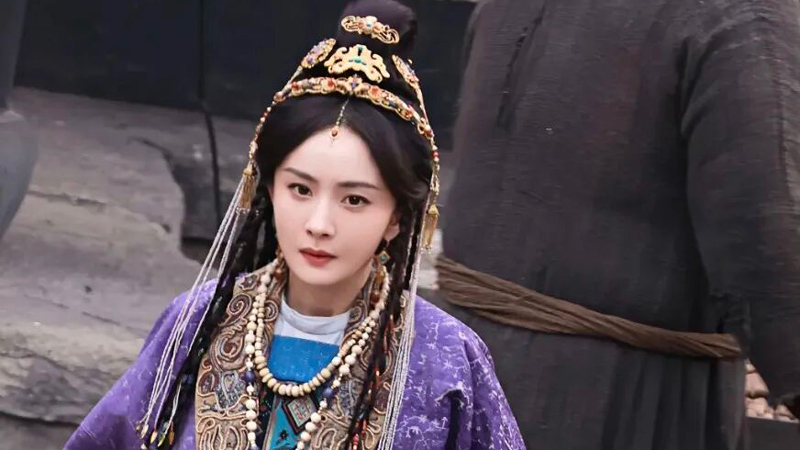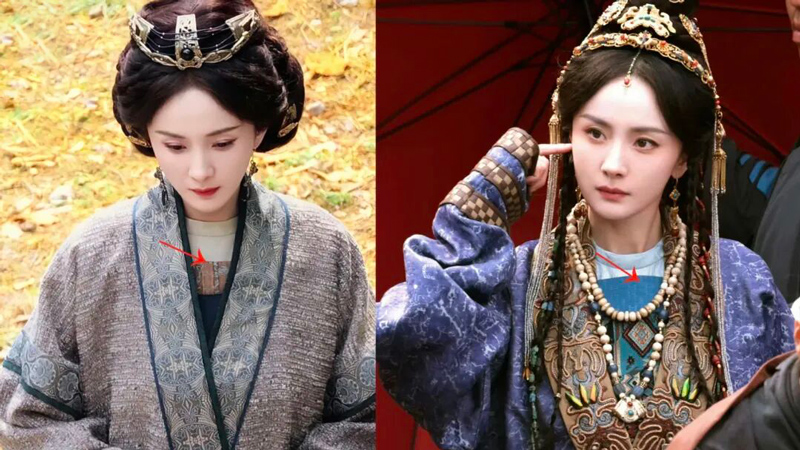
In a recent leaked still from the historical drama Jiangshan Datong (江山大同), actress Yang Mi (杨幂) appears in Northern Wei (魏) costume that has ignited online discussion. Viewers praise the layered, graceful silhouette, but few notice the key piece hidden underneath—a simple square garment that looks like a modern vest. That item is the Liang Dang (裲裆), also called “two covers.” Its name is literal: one piece for the chest, one for the back. During the Northern Wei dynasty, this unisex vest was not merely underwear. It was a warm inner layer, a daring outer fashion statement, and even a piece of military armor—all in one. How did a humble vest become a symbol of cultural fusion and everyday style? Let’s peel back the layers.
More Than Underwear
Many mistake the Liang Dang for ancient lingerie, but its role was far richer. The garment consists of two rectangular panels of fabric, front and back, connected at the shoulders by straps or buttons. Sleeveless, it could reach the knees or stop at the waist. Its earliest ancestor appeared in the Han (汉) Dynasty as a close-fitting thermal called Pa Fu (帕腹) or Bao Fu (抱腹). By the Wei and Jin (魏晋) Dynasties, social mores loosened, and women pioneered a new trend. According to the Book of Jin (晋书), women wore the Liang Dang on top of their crossed-collar robes—a bold “underwear-as-outerwear” look that conservatives condemned as “demonic attire.” Yet it only grew more popular.
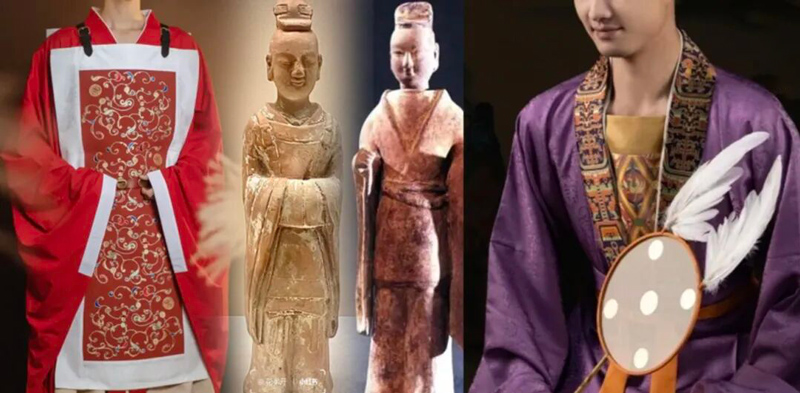
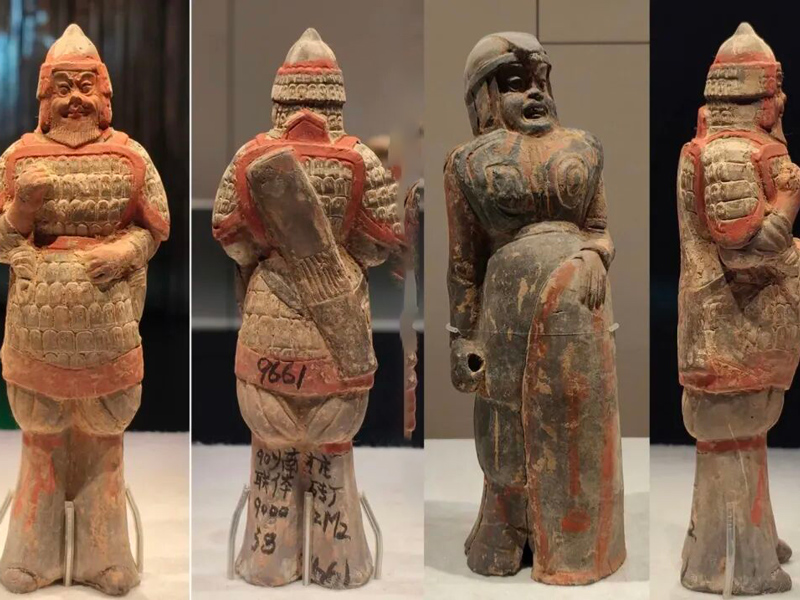
What made it so versatile? For ordinary people and officials, a plain cloth Liang Dang served as daily outerwear over a robe. For soldiers, it became Liang Dang Kai (裲裆铠), made of iron or leather to protect the chest and back without restricting arm movement. For noble men and women, embroidered silk versions could be worn inside or outside, layered with wide-sleeved gowns for a textured, elegant silhouette. This trifecta of function—thermal, fashion, armor—made it the ultimate all-purpose garment of the era, worn by everyone from commoners to cavalrymen.
Evidence survives in tomb figurines. A pottery statuette from a Northern Wei tomb in Yanshi, Henan (河南偃师) shows a soldier clad in Liang Dang armor. Other Northern Wei and Northern Qi (齐) murals frequently depict men in Liang Dang, proving its ubiquity. Yang Mi’s character, Empress Feng (冯), wears it as an inner layer, but the historical record shows it was never merely hidden. It was a statement.
Three Faces
Scholars classify the Liang Dang into three distinct types based on material and context. The first is the cloth Liang Dang, worn by peasants or as an official’s casual outer robe. Simple, durable, and breathable, it offered warmth without bulk. The second is the iron or leather Liang Dang kai, a form of lamellar armor that protected vital organs while allowing full range of motion for horseback archery—essential for the nomadic Xian Bei (鲜卑) people who founded the Northern Wei. The third is the embroidered Liang Dang, adorned with intricate silk threads and worn by aristocrats for both inner and outer use. A stunning example unearthed from Huahai Tomb, Gansu (甘肃花海墓) reveals the sophistication of women’s fashion at the time.
Some viewers have asked: Why would Empress Feng, who championed sinicization reforms, insist on wearing a Liang Dang? The answer lies in its hybrid origins. The Xian Bei, as steppe nomads, had no tradition of close-fitting inner garments. After conquering the Central Plains, they absorbed Han-style underwear culture and adapted it into a Xian Bei-flavored Liang Dang. The version Feng wears is short, ending at the waist—a practical Xian Bei preference that avoids dragging. By donning it, she simultaneously honored her nomadic roots and showcased the success of sinicization. One garment, two messages. It is also worth noting that Yang Mi’s costumes in the drama feature left lapel wrapping, opposite to the mainstream Han right-lapel style, deliberately preserving a distinct Xian Bei identity.
The Liang Dang thus becomes a visual metaphor for the Northern Wei’s defining tension: retaining ethnic heritage while embracing Han governance. Empress Feng, portrayed by Yang Mi, sits at that crossroads. Her Liang Dang is not a passive relic but an active political and cultural symbol—woven, strapped, and worn close to the heart.
Daily Legacy
For years, traditional Chinese clothing has suffered from a reputation as ornate, heavy, and impractical—something reserved for ceremonies or museum displays. But the leaked looks from Jiangshan Datong challenge that notion. The Liang Dang, paired with a muted melon-green pleated skirt and a wide leather belt to cinch the waist, looks surprisingly modern. Low-saturation colors, minimalist cutting, and subtle dark patterns replace brocade overload. This styling echoes the current “elegant and plain” trend in Hanfu revival and the “minimalist traditional elements” in Chinese retro fashion. The drama’s costume design, while artistic, helps transform the Liang Dang from an archaeological artifact into a wearable piece of high-street sensibility.
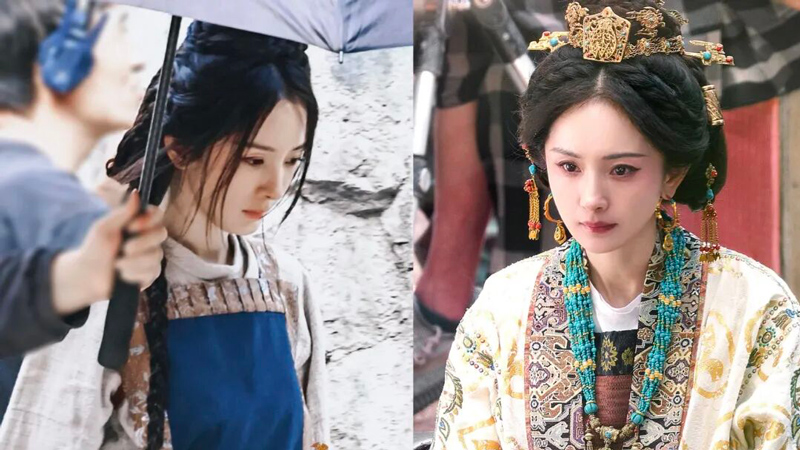
Of course, television costumes are creative works, not strict historical reconstructions. Designers adjust details for visual impact—enhancing fabric textures, modifying proportions, or simplifying fastenings. A purist might point out inaccuracies. Yet the value of such media is not literal replication. It is ignition. When a viewer sees Yang Mi’s Liang Dang and thinks, “I could wear something like that today,” the garment transcends its era. It sparks curiosity about Northern Wei history, about the Xian Bei and Han fusion, about how people solved the same universal problems of warmth, comfort, and self-expression.
That is the quiet power of the Liang Dang. It asks no pedestal. It simply waits to be tied on—over a turtleneck, under a blazer, or as a standalone top. The wisdom of fourth-century dressing is not locked in a glass case. It lives whenever someone chooses a layered vest not for authenticity but for feeling right. So the next time you reach for a sleeveless layer on a chilly morning, remember: you are sharing a small, practical genius with an empress, a soldier, and a commoner from a thousand years ago. And that is how tradition truly continues—not by being preserved, but by being worn.