
Why Two Dots? The Hidden History of Lin Yun’s (林允) ‘Tear Makeup’ in The Road to Glory (归鸾)
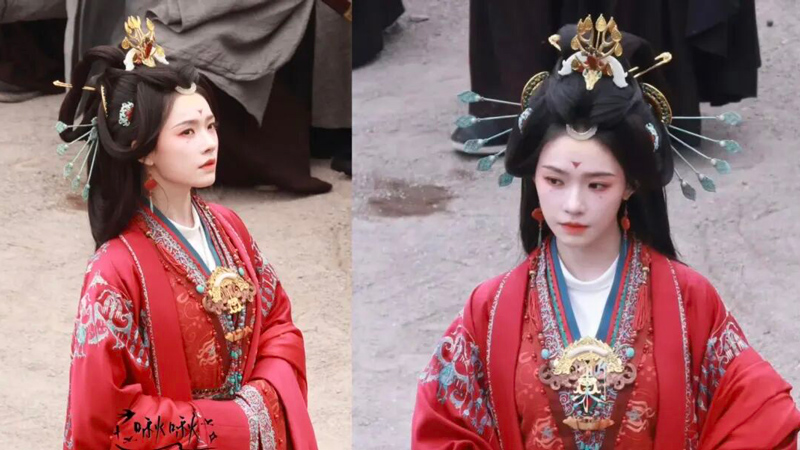
In a leaked wedding costume photo from the upcoming drama The Road to Glory, actress Lin Yun appears with two tiny dots painted just below her eyes. The look is strange, delicate, and instantly haunting. Viewers have asked: Is this a new internet trend? A symbolic ritual? Or something much older? The answer lies not in modern fashion, but in a forgotten Chinese court tradition called Ti Zhuang (啼妆), or “weeping makeup.”
First recorded in the Han Dynasty, this understated style—pale powder or colored dots mimicking tear stains—was once banned as a “garment demon” for being too weird. Today, it’s back on screens and runways, carrying a millennium of hidden sorrow and restrained beauty. Let’s trace where those two dots really came from, and why they refuse to disappear.
Ancient Roots
Long before social media challenges, a quiet makeup revolution began inside the Han Dynasty palace. Court ladies would brush a thin layer of white powder on their cheeks, not to glow, but to look pale and just-cried. Historical records in Kaiyuan Tianbao Yishi (开元天宝遗事) describe this as “tear makeup”—a cold, fragile face that suggested hidden grief. Another text, Fengsu Tong (风俗通), explains it clearly: “Worry brows are thin and curved. Weeping makeup is a light dab under the eyes, like where tears would fall.”

This wasn’t about looking pretty. It was about looking mournful. And it became a craze. From imperial concubines to street vendors, women copied the style. But the government soon banned it, calling it a “clothing demon”—too strange, too unsettling for proper society. The ban only proves how powerful the look had become. A single dab of powder could challenge social norms and spark a nationwide obsession.
Why did ancient women want to look sad? Historians believe it reflected the hidden emotional lives of palace ladies—their loneliness, their suppressed desires, their silent protests. The cosmetic was a secret language. A tear that never fell, painted on purpose. That tension between showing and hiding emotion lies at the heart of classical Chinese aesthetics, and it’s exactly what makes Ti Zhuang so memorable even now.
Tang to Song
As dynasties changed, so did the tear stain. In the Tang era, the look was bold: white powder spread across both cheeks, creating a ghostly, exhausted appearance. Women wore it like a badge of melancholy. But by the Song Dynasty, taste shifted toward subtlety. No more full-face powder. Instead, a tiny dab of rouge or powder at the inner corner of each eye—small as a mole, clean and precise. Song records state clearly: “In the reign of Emperor Lizong (理宗), palace ladies dotted their eye corners with powder, naming it tear makeup.”
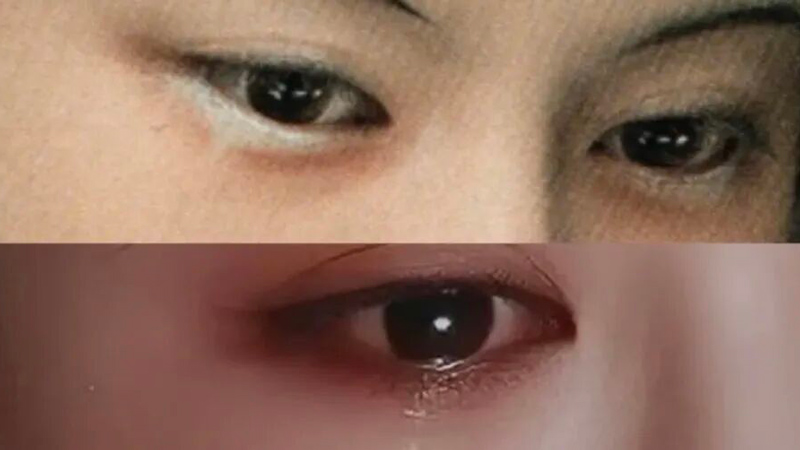
This miniature version carried the same emotional weight, but with more restraint. Song women often wore it during sacrificial ceremonies, using the faint tear marks to express remembrance and inner grief without uttering a word. The poet Zhang Lei (张耒) captured it perfectly: “A cold cup of amber wine, / Tear makeup touched with thin rouge. / After the moon sets and crows cry, / A lonely boat breaks the heart.” Here, the makeup isn’t decoration—it’s a narrative. It tells a story of solitude and endurance.
What made Ti Zhuang survive across centuries wasn’t just its look. It was its emotional core. Chinese classical beauty often values the hidden over the obvious, the suggested over the declared. A tear stain that isn’t real, a sorrow that can’t be spoken—that subtle balance is pure Eastern sensibility. And it’s the same reason why, when Lin Yun appeared with those two dots, audiences felt something deeper than curiosity. They felt a memory.
Modern Revival
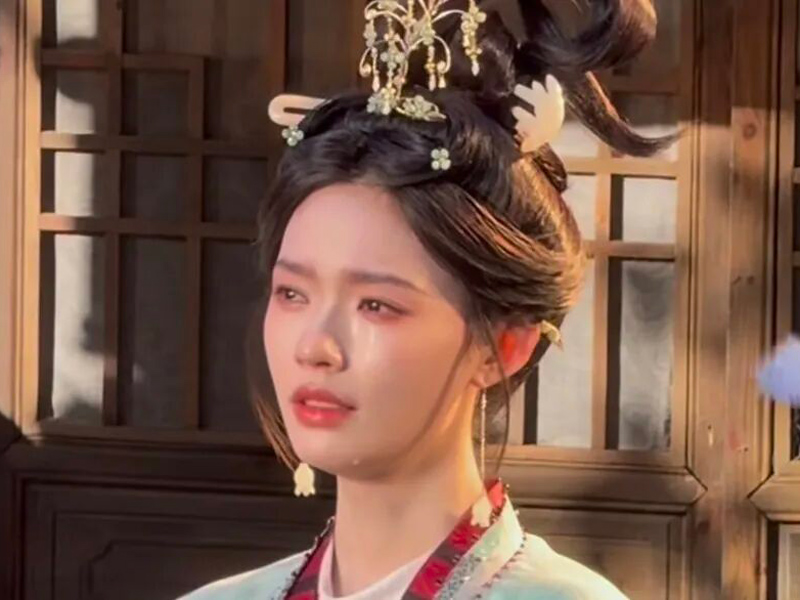
Fast forward to today. Lin Yun’s “crying makeup” in The Road to Glory might seem like a niche costume-drama detail, but it has already sparked copycat tutorials on beauty platforms. Young women call it “goddess tear makeup” or “teardrop mole makeup.” They pair it with glowing skin and soft lips, stripping away the original sadness. The sorrow is gone. What remains is the vibe—fragile, cool, slightly broken. It works for photoshoots, festivals, even weddings. But as our Chinese article pointed out, using this makeup with a wedding dress may feel mismatched. Because historically, Ti Zhuang was never joyful.
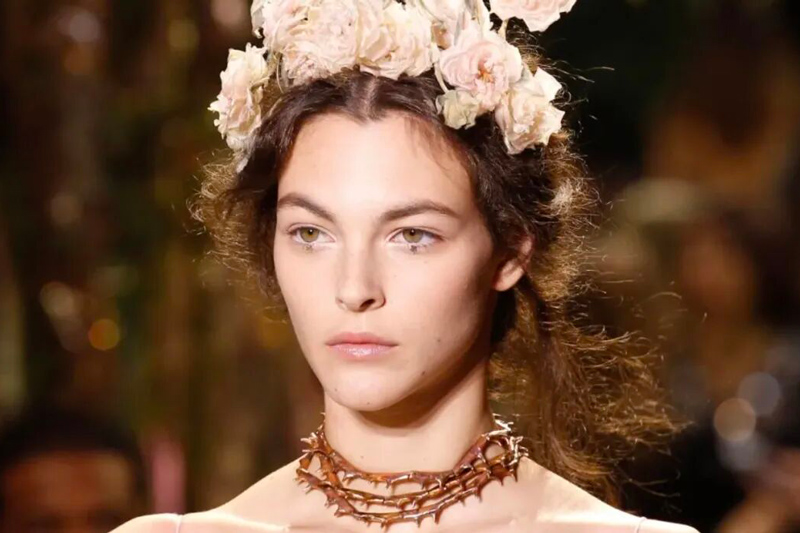
Interestingly, high fashion has also noticed. International runways have featured models with tear-like dots and pale under-eye shading. Designers call it poetic or avant-garde. They rarely mention its Chinese origin. But the visual language is unmistakable: a single mark below the eye changes a face from neutral to emotional. That power transcends borders. Yet the original meaning—a woman’s silent grief, sometimes even a bad omen for a dynasty—gets lost in translation.
This brings us to the real value of period dramas like The Road to Glory. They don’t just dress actors beautifully. They dig up forgotten aesthetics and give them new life. When Lin Yun wears Ti Zhuang, she isn’t just following a stylist’s whim. She’s reviving a thousand-year conversation about how women wear their feelings on their faces. The problem? Context matters. A funeral makeup worn at a wedding might confuse the audience. And that’s exactly why the debate around those two dots matters. It forces us to ask: Can we separate a look from its history? Or should we let the past teach us when to dab, and when to leave the tear unpainted?