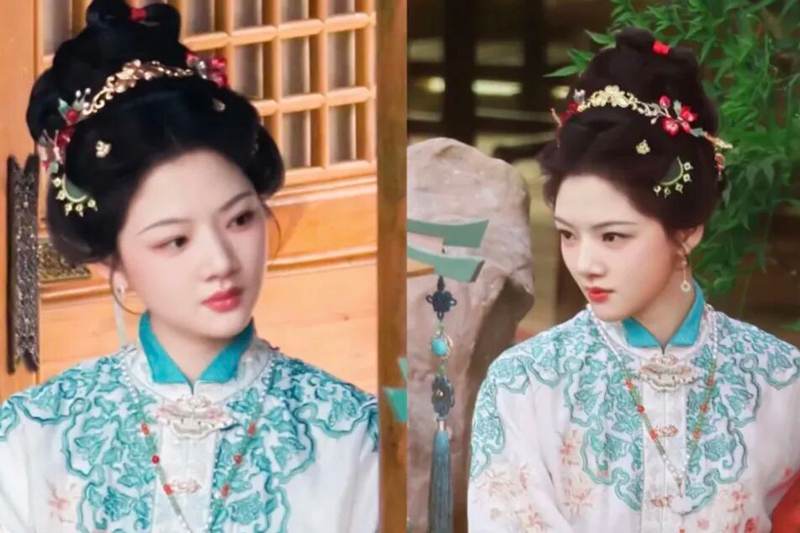
Flipped collars are everywhere in the latest costume drama trailers. When Ren Min (任敏) appeared in the leaked set photos of A Splendid Match (良陈美锦), her upright collar turned outward caught everyone’s eye. That neat white edge framing her neck looks elegant and strangely familiar—like a traditional version of a modern polo shirt.
But here’s the real question: did Ming (明) dynasty people actually wear their collars this way, or is it just another TV trick to make faces look smaller? The answer is yes and no. The Ming dynasty did have a similar folded style, but not nearly as common or dramatic as what you see on screen. And that face-slimming effect? That’s a happy accident, not the original purpose.
Real Ming Evidence
Let’s start with what actually existed. The turned-down collar you admire is properly called Zhe Ling (折领) or folded collar, sometimes Fan Ling (翻领). It evolved directly from the classic Ming vertical collar—a high, standing band that hugged the neck. To make it less stuffy, people would flip the top edge outward by just a small section, usually revealing a white fabric border. That subtle white line is what old paintings call Lu Bai (露白) or “exposed white.” It’s tiny, deliberate, and nothing like the exaggerated half-collars you see in dramas today.
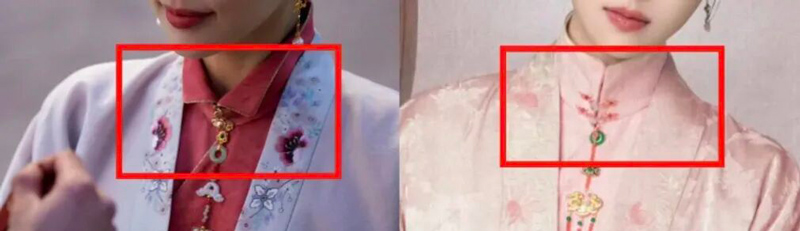
Two distinct versions existed in real Ming wardrobes. The first came from the outer garment itself: the collar’s own fabric was folded back, using the reverse side of the same material to create a neat layered look. The second method involved an inner undergarment. Imagine a short-sleeved, standing-collar shirt worn underneath a longer robe. Only the inner shirt’s white collar edge flipped outward, while the outer collar stayed upright against the neck. That’s why period paintings show such clean, thin white lines—they’re usually just the inner layer peeking through.
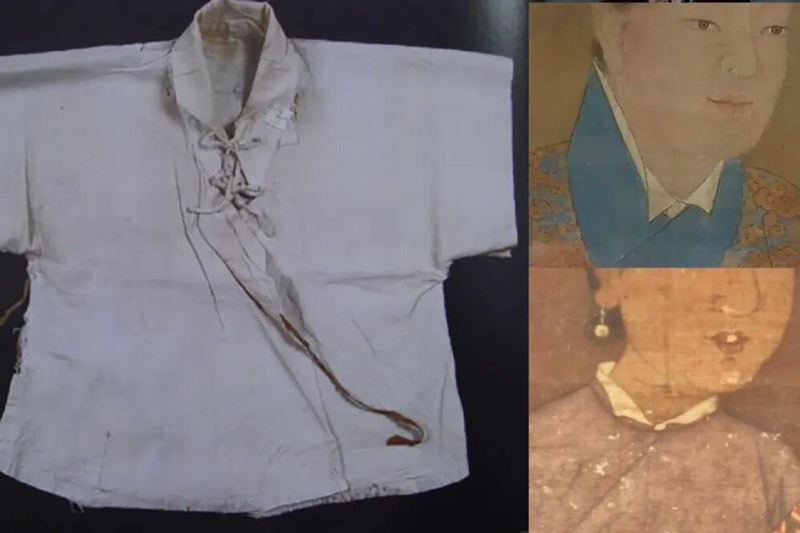
Archaeological finds back this up. A Ming tomb excavation unearthed a short-sleeved standing-collar garment with slanted closure. Its collar structure confirms that the frequent “small white band” in classical portraits was exactly this short inner layer. The outer long robe hid everything except that one crisp white line. Smart layering gave visual depth without adding bulk or heat. So yes, the folding idea is historically genuine—just not as oversized as what Ren Min wears on set.
Smart Cooling Trick
Why did Ming people bother flipping their collars in the first place? Not just for beauty—though that white border did look sharp. The real driver was practical: heat relief. Look at where these folded-collar portraits appear most often. The southern regions, especially Jiangnan (江南) and the Central Plains, have brutally humid summers. A tall, sealed standing collar traps sweat and heat against the neck. Flipping even a small section outward creates a ventilation gap. Air flows in. Heat escapes. It’s ancient air-conditioning, stitched into clothing.
That tiny folded opening makes a surprising difference. Think about how modern polo shirts use a similar flipped collar for breathability. The Ming version worked exactly the same way, just with more elegance. They didn’t have moisture-wicking fabrics or cooling gels. They had clever tailoring. And by adding that inner layer’s white edge, they also created a layered outfit without wearing two full heavy garments. The outer robe stayed thick and formal. The inner shirt was short, light, and breathable. Together, they offered seasonal adaptability—warmth in winter if you kept the collar up, cooling in summer if you flipped it down.
This wasn’t random fashion. It was zone-specific, climate-responsive design. Ming dynasty tailors understood that a rigid uniform didn’t work across all seasons and provinces. So they built adjustability into the collar itself. A small fold changed the entire wearing experience. And because the white inner border was usually made of lighter, thinner fabric, it absorbed sweat away from the skin while staying visible as a design element. Function and aesthetics worked together. That’s the kind of smart detail that gets lost when modern costume departments just copy the look without understanding the logic behind it.
Three Turn-Down Ways
Ming people didn’t flip their collars randomly. They had three distinct methods, each matched to a specific social setting. The first is Da Fan Ling (大翻领) or large turn-down. Here, you fold the entire collar halfway down, creating a natural triangular opening. It looks relaxed, casual, almost effortless. People wore this version at home, during garden walks, or at informal gatherings with close friends. It said, “I’m comfortable here.”
The second style is Zhe Jiao Fan (折角翻) or corner turn-down. This one is almost minimal—just a single corner of the collar flipped back. Nothing more. It’s subtle, quiet, and incredibly precise. You’d hardly notice it from a distance. But up close, that small folded corner added a touch of hidden sophistication. Think of it as the Ming equivalent of rolling your shirt sleeves just once—understated but deliberate. It worked best for semi-formal occasions where you wanted to look put-together without trying too hard.
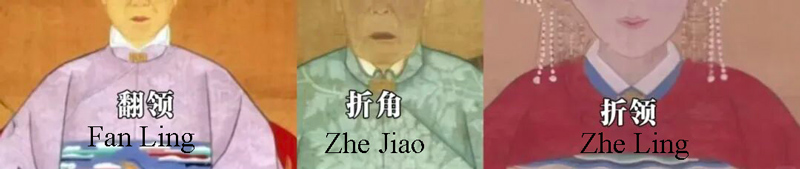
The third is Zhe Ling Fan (折领翻) or regular turn-down. This is the strict, orderly version. The entire collar edge folds down in a clean, straight line, perfectly aligned from left to right. No curves, no gaps, no casual triangles. It’s crisp, formal, and proper. People wore this for receiving guests, attending ceremonies, or any situation that demanded respect and seriousness. Each of the three styles had its own job, and wearing the wrong one at the wrong time would have been noticed. That’s how detailed Ming dress codes were.
So where do modern dramas fit in? They took real Ming collar folding, then pushed it further. To make actors’ faces look slimmer and necklines more photogenic, costume designers shortened the collar height and widened the folded section. The historical proportion was a small white edge—maybe half an inch. On screen, it’s often two inches or more. That’s not historical replication. That’s adaptation for camera angles and face shapes. But is that wrong? Not necessarily. Extracting traditional elements and giving them reasonable aesthetic upgrades helps costumes feel both ancient and accessible. When done well, it pulls audiences into history without confusing them with exact, uncomfortable reproductions. And that white folded collar? It’s finally getting the attention it deserves—even if modern TV made it a little more dramatic than grandpa Ming ever intended.