
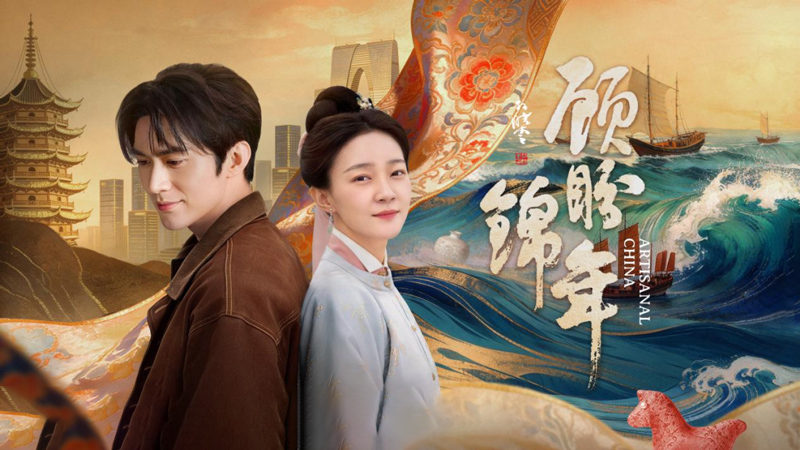
A modern youth tumbles into the Ming dynasty (明朝), where a sabotaged diplomatic gift threatens national honor. That is the hook of Artisanal China (顾盼锦年), a micro-drama that refuses to feel “micro” in ambition. Co-produced by China’s state media platform Yang Shi Pin (央视频), this short-form series turns intangible cultural heritage into a time-travel thriller.
Instead of lecturing viewers about ancient weaving, it lets a young inheritor of Song Jin (宋锦) brocade skills fight scheming officials and resurrect a lost craft. What makes the show unforgettable? The cross-collar Hanfu designs that wrap every character in history, texture, and personality. From the heroine’s court attire to the hero’s layered robes, each stitch tells a story of openness, resistance, and pride. Here is why this drama’s wardrobe and plot deserve your attention.
Plot Genius
Most heritage-themed dramas feel like homework. Artisanal China flips that script. It sends a present-day artisan back to the Ming dynasty’s textile bureau, where a critical Guo Li (国礼) — a state gift for a foreign envoy — has been destroyed by a rival. Without authentic Song Jin brocade, the emperor’s face and the bureau’s fate hang in the balance. He must use his modern knowledge of ancient techniques to re-weave the fabric, all while hiding his true identity. This high-stakes setup turns every loom click into a life-or-death beat.
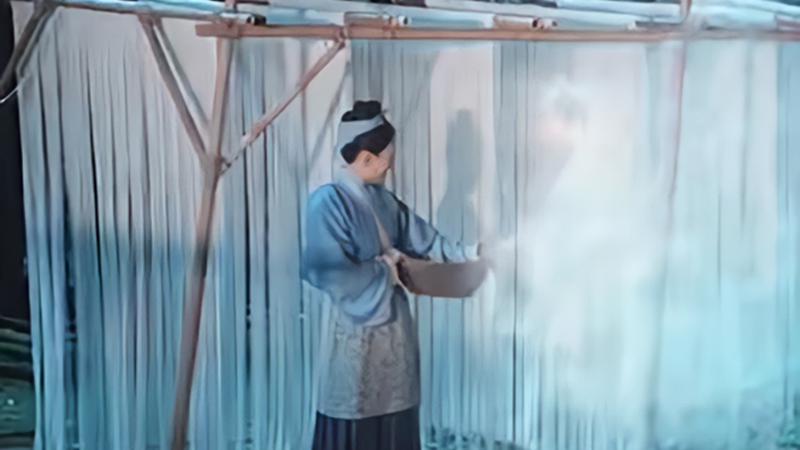
Here is a quick fact: Song Jin began in the Song dynasty but reached its golden age during the Ming. Alongside Shu Jin (蜀锦) and Yun Jin (云锦), it was called “one inch of brocade, one inch of gold.” Ming artisans improved Song-era methods, creating denser patterns and richer textures for imperial robes and diplomatic gifts. The drama never parades these facts like a textbook. Instead, it hides them inside a sabotage-and-rescue plot. When the hero races to re-dye silk or repair a loom, you feel the weight of every lost thread.
The result? A story that makes you cheer for craftsmanship. The villains are not cartoonish; they represent the forces that have always threatened traditional art — greed, short-term thinking, political infighting. And the hero’s journey is not a one-man show. He bonds with a Ming female official (she) who guards the bureau’s legacy. Their partnership across time becomes the emotional core. By the final episode, you have absorbed more about Song Jin than any documentary could deliver, but it never felt like a lesson.
Top-Tier Craft
Micro-dramas often carry a stigma: cheap, rushed, disposable. Artisanal China smashes that prejudice. The production brought in Xue Xiaolu (薛晓路), a celebrated film director and screenwriter, as supervisor. Her cinematic eye turns every frame into a painting. Lighting warms the weaving rooms. Close-ups capture the silk’s actual sheen. Even the background extras move with period-specific posture. This is not television; it is a moving museum.
The cast elevates the material further. Wang Daotie (王道铁) plays the time-traveling hero with a mix of modern nervous energy and ancient reverence. When his hands touch a Ming loom, you see both a stranger and a heir. Jiao Junyan (焦俊艳) plays the Ming female official — stoic, sharp, yet secretly tender. Their scenes together crackle with trust and tension. No one phones in their performance. Even side characters, from treacherous ministers to loyal maids, feel like real people trapped in a real historical moment.
And the details? Brutally accurate. The drama hired living Song Jin inheritors to supervise every brocade pattern and weaving move. When the hero restores a damaged jadeite inlay or matches a historical thread color, an expert approved it. This is not cosplay. It is reconstruction. The result is a show that feels both thrilling and respectful — a rare balance that proves short-form content can carry long-form soul.
Hanfu Details
The female lead’s wardrobe tells two stories. In her official role at the Shang Gong Ju (尚工局, Palace Crafts Bureau), she wears a Jiaoling Youren (交领右衽) top — a cross-collar that crosses left over right, the Hanfu standard — decorated with a Bu Fu (补服) rank badge. Below it, a Heng Lan Ma Mian Qun (横襕马面裙), a horse-face skirt with horizontal bands. The fabric echoes Ming-era Song Jin: dense, luxurious, with floral medallions that signal imperial favor. Every time she enters a hall, her collar layers announce her authority. For labor scenes, she switches to a plain cross-collar top, a simple cloth apron tied at the waist, and a muted skirt. The ornament disappears, but the structure remains. Her identity shifts, yet her Hanfu roots never waver.
The hero’s looks mirror his dual nature. His first outfit: a half-arm Jiaoling robe worn over a long-sleeved inner robe, topped with a Wang Jin (网巾) — a hairnet cap that Ming scholars favored. The half-arm outer layer keeps movement easy for weaving and fighting. The inner layer provides elegance. It is a scholar-warrior blend. His second look: a square-collar, buttoned Bi Jia (比甲) vest over a cross-collar robe. The Bi Jia came from foreign influences that Ming weavers adapted into local fashion. But the under-robe stays purely Han. This layering says: We can borrow from the world without losing our core. That message rings loudly in today’s globalized age.
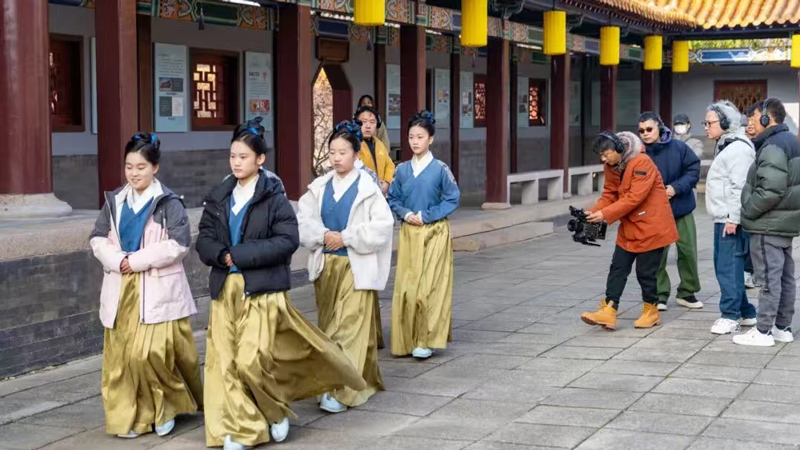
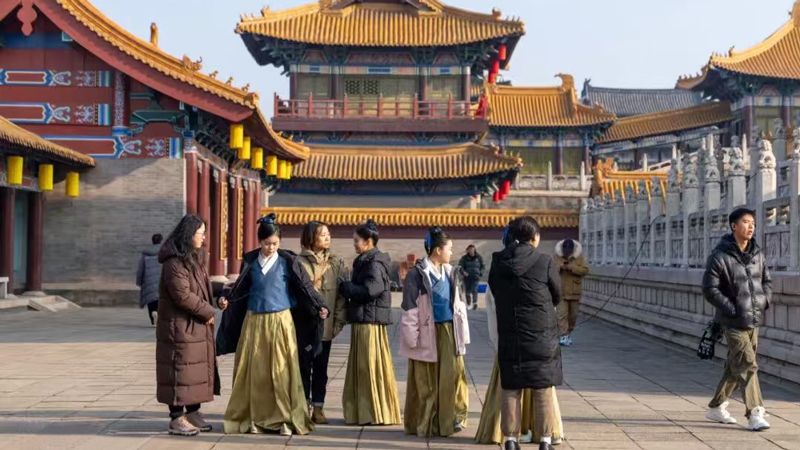
Even the extras get the treatment. Ming officials appear in round-collar, cross-collar robes with rank badges, black gauze caps firmly in place. Servant girls wear short cross-collar jackets with puffy skirts — a silhouette that feels both modest and lively. No one looks like a period-film cliché. Every costume reinforces the drama’s thesis: the Ming dynasty was not closed off. It was curious, adaptable, and proud. And the cross-collar was not just a fastener. It was a statement. From the heroine’s courtly poise to the hero’s layered rebel style, Artisanal China proves that clothing can carry character, history, and emotion — all in one fold of fabric. Watch it for the plot. Stay for the collar.