
After watching the first six episodes of the drama Fate Chooses You (佳偶天成), many viewers feel moved by the loyalty between Xin Mian (辛湄) and Lu Qianqiao (陆千乔). They marry in prison because each needs something from the other. When Lu dies unjustly, Xin Mian risks her life to avenge him. Before his fake death, Lu gives her a protective magical tool and a rare herb to boost her cultivation. When he learns of her revenge, he saves her repeatedly. Their bond seems heroic. But the original novel tells a very different story. There, their relationship is not built on mutual sacrifice. It is built on oppression and resistance. What the drama celebrates as loyalty, the book reveals as captivity.
1. A Captive Bride
In the novel, Xin Mian is an ordinary mortal. She is the only daughter of Xin Xiong (辛雄), master of Xinxie (辛邪) Manor. When she is one month old, her father asks a fairy to read her fate. The fairy says she has a strange destiny and a bizarre marriage pattern—a “husband-killing face.” As a result, no one dares propose to her. By sixteen, her father grows desperate about her marriage. Watching his anxiety, Xin Mian decides to go out and “buy a husband.” She takes her spiritual beast and heads to Chongling (崇灵) Valley to deliver goods.
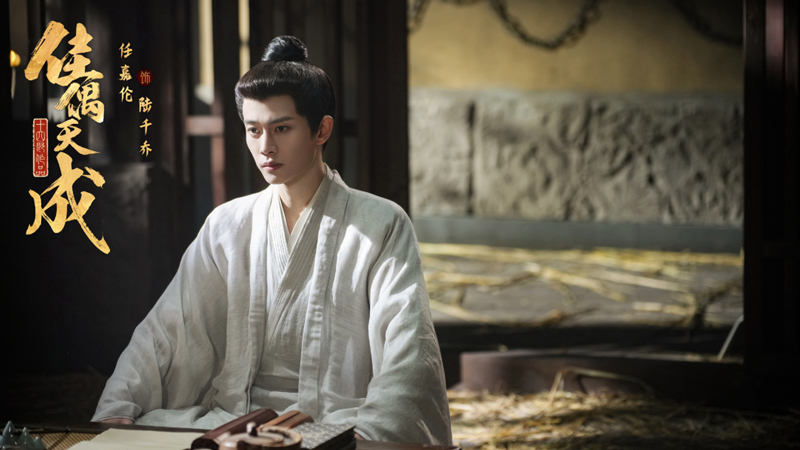
While camping near Wanlan (挽澜) Mountain, she is harassed by a bird demon. Then Lu Qianqiao appears and slaps her awake. Later, when she returns a lost money pouch to him, he does not thank her. Instead, he claims she can help break a cloud-fog formation. He drags her back to the Imperial Tomb and holds her there against her will. From that moment, she is his prisoner. There is no offer, no deal, no equal exchange. She is simply taken.
This beginning destroys any sense of heroic partnership. He does not need her consent. He needs her usefulness. The drama’s wedding in prison—a mutual arrangement—never happens in the book. Instead, he binds her to his side by force. Her anger is immediate and justified. And she makes sure he knows it.
2. Resistance and Observation
Xin Mian is furious. She tells herself he is just a man who kidnaps women. She mocks his expressionless face. On the very first day of her imprisonment, she plans an escape. She even succeeds once. But he catches her and brings her back. After that, he ties her with the Kunyao (捆妖) Rope, a magical cord that restrains demons and mortals alike. Still, she does not give up. She fights back with small, petty acts of rebellion. She eats a sesame cake with greasy hands and wipes them on his clothes. She finds every way to annoy him.

This passive resistance becomes her daily routine. She cannot break the rope, but she can break his peace. Slowly, though, something changes. She begins to watch him. She notices that he does not harm the little demons in the tomb. He feeds them. He keeps order without cruelty. He is not a monster, just a cold man doing a cold job. Her anger does not vanish, but curiosity creeps in. She starts to see the difference between being trapped and being treated with basic decency.
Over time, she realizes he treats her better than she expected. He does not starve her or beat her. He even protects her from outside threats. Her heart, against her better judgment, begins to stir. She questions herself: Am I falling for my captor? But she also remembers that he never asked for her opinion. He just took her. And yet, he is not evil. This internal conflict drives her actions in the second half of the book. She does not forget the cage, but she starts to like the keeper.
3. The Demon’s Trial
Lu Qianqiao is a mixed-blood War Demon. His mother, Li Chaoyang (郦朝央), is pure-blood War Demon; his father is a powerful minister of Qiong (琼) Kingdom. Because of his impure blood, he ranks low among his clan. He earns the title of general at fifteen, but later gets demoted to guard the Imperial Tomb. Unlike the drama, where he must transform from demon to mortal, in the book he must transform from mortal to demon. Every War Demon faces a “transformation disaster” at age twenty-five. Half die. His mixed blood makes his trial even more dangerous.
When he meets Xinmian, his trial is near. His mother sees that he likes her. So she asks the king to grant them a marriage—with a burial clause. If Lu survives the transformation, Xin Mian becomes his wife. If he dies, she must be buried with him. No one asks Xin Mian if she agrees. But she does agree. She says yes. And then Lu runs away. He flees their wedding. He does not want her to die for him. But Xin Mian is not grateful. She is enraged. She chases him to an apricot forest, beats him, and forces him to marry her anyway.
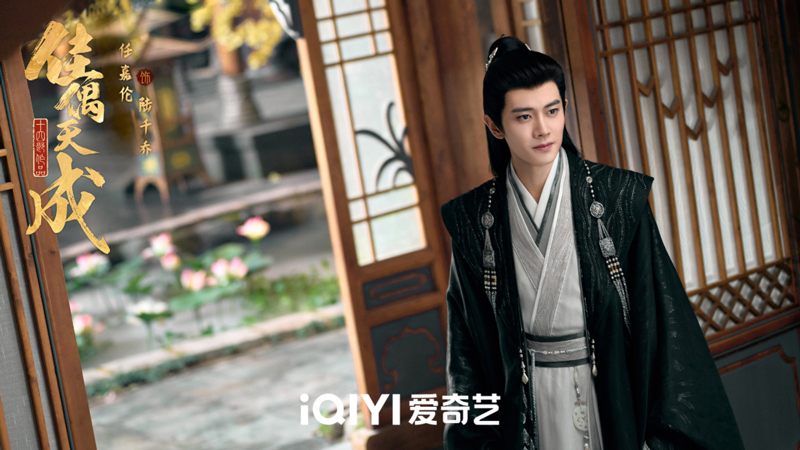
Reading this, I cannot feel romance. I feel confusion. Why would she choose to die for a man who locked her up? The drama gives her a clean motive: she is a good person who helps anyone in need. The book gives her something darker. It looks like devotion, but it reads like a psychological trap. Stockholm syndrome? Or just bad writing? Either way, the novel’s version of their love makes me uncomfortable. The drama’s change—turning imprisonment into loyalty—saves the story. It lets viewers believe in sacrifice without wondering if the victim ever had a real choice.