
The Hanfu wedding dress has emerged as one of the most sought-after choices for couples who want to honor Chinese cultural heritage on their special day. Far more than a fashion statement, each dynasty’s wedding attire carries centuries of ritual meaning, aesthetic philosophy, and social symbolism. Whether you are drawn to the bold warmth of Tang Dynasty splendor, the refined elegance of Song Dynasty simplicity, or the solemn grandeur of Ming Dynasty ceremony, understanding the historical roots behind each style will help you make a choice that is both beautiful and authentic.
In this guide, we will walk through the wedding dress traditions of three major Chinese dynasties — Tang, Song, and Ming — explain what makes each distinctive, and help you navigate the booming 2026 Hanfu wedding market with confidence.
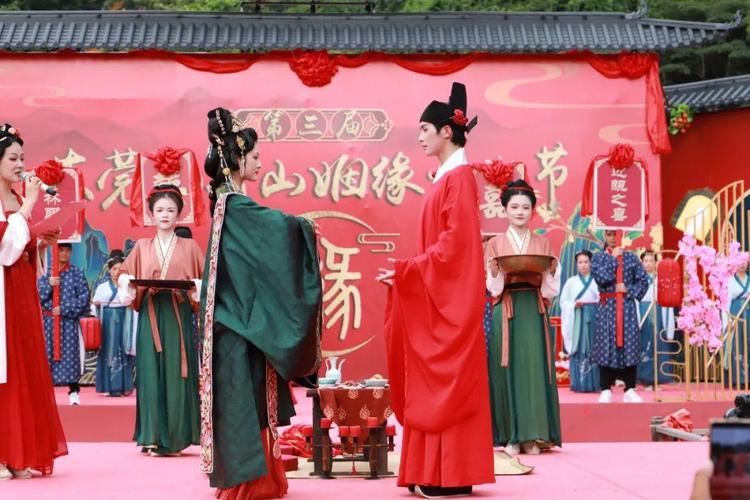
Why Choose a Hanfu Wedding Dress?
Choosing a Hanfu wedding dress is a declaration of cultural identity. For centuries, Chinese wedding garments followed strict dynastic codes that communicated family status, regional identity, and ritual propriety. After decades of Western white gowns dominating Chinese weddings, the Hanfu revival movement has brought traditional bridal wear back into the spotlight — not as costume, but as a living tradition.
A Hanfu wedding is not simply about wearing old clothes. It is about participating in a ritual system that dates back thousands of years. The garments themselves encode meaning: the colors signal the bride’s role, the accessories mark the formality of the occasion, and the layered construction mirrors the layered obligations of marriage. When you choose a Hanfu wedding dress, you are choosing to enter a conversation with history.
Practically, the Hanfu wedding industry has matured dramatically. In 2026, cities like Chengdu, Luoyang, Xi’an, and Hangzhou now offer full Hanfu wedding rental services, complete with stylist consultations, matching groom attire, and even traditional ceremony packages. What was once a niche hobby has become a mainstream option available to any couple who wants it.
Tang Dynasty Wedding Style: Bold, Warm, and Lavish
The Tang Dynasty (618–907) was arguably the most cosmopolitan era in Chinese history. The capital Chang’an was one of the largest and most diverse cities in the world, and this openness was reflected in Tang aesthetics — including wedding fashion.
Visual Characteristics
Tang Dynasty wedding dresses are characterized by their visual warmth and richness. The key elements include:
- Deep red and crimson as the dominant palette, accented with gold thread and embroidery
- Multi-layered construction: a ru (upper garment) worn over one or more inner layers, paired with a long pleated skirt
- Wide sleeves that drape dramatically, emphasizing movement and presence
- Elaborate hair ornaments, including gold combs, flower pins, and the iconic buyao (swaying hairpin) that trembles with each step
- Heavy use of floral and bird motifs in embroidery, symbolizing prosperity and marital harmony
The overall impression of a Tang wedding outfit is one of abundance. Where later dynasties would favor restraint, Tang style celebrates opulence. The layers create a sense of volume and warmth — visually and symbolically, the bride is wrapped in richness and generosity.

Historical Context
During the Tang Dynasty, wedding ceremonies were grand communal events. The bride’s attire was not merely personal adornment; it was a statement of her family’s standing and their investment in the marriage alliance. Red was considered an auspicious, life-giving color, and the more lavish the presentation, the more honor was shown to both families.
It is worth noting that Tang weddings often took place at dusk, which is why the ceremony was called hun li (昏礼) — literally “dusk ritual.” The warm, glowing colors of Tang bridal wear would have looked especially striking in fading lamplight.
Styling Tips for a Tang-Inspired Wedding
If you are drawn to Tang style, embrace boldness. Choose deep crimson rather than pale red. Opt for gold embroidery with peony or phoenix motifs. Stack your hair ornaments — a single pin will not achieve the Tang look. Consider a sheer overskirt or shoulder wrap to add that signature layered effect.
The Tang Dynasty bride did not whisper her arrival. She announced it.
Song Dynasty Wedding Style: Elegant, Flexible, and Surprisingly Green
If the Tang Dynasty was bold, the Song Dynasty (960–1279) was refined. Song aesthetics shifted toward subtlety, restraint, and intellectual elegance — and this shift profoundly affected wedding fashion.
Visual Characteristics
Song Dynasty wedding attire is defined by clean, flowing lines and a more flexible approach to pairing garments:
- Green as the bride’s primary color — this surprises many modern couples who assume red has always been the Chinese wedding color
- The beizi (褙子), a long, straight-cut outer jacket with parallel front panels, as the signature garment
- Slender silhouettes that emphasize vertical line rather than volume
- Subtle embroidery — small repeated motifs rather than large statement patterns
- Simpler hair arrangements compared to Tang, often with a single elegant hairpin or comb
The Song look is understated in the best sense. It communicates taste and refinement rather than wealth and power.

Why Green? The Historical Explanation
One of the most fascinating aspects of Song Dynasty wedding tradition is that the bride wore green, not red. This practice has deep roots in the ritual code of the Zhou Dynasty, which influenced Song scholars who were obsessed with reviving ancient propriety.
In the Zhou ritual system, green symbolized spring, new growth, and the bride’s role as a life-giving force entering her husband’s family. The color green (qing, 青) was associated with the east, with dawn, and with the wood element — all metaphors for new beginnings. The groom, by contrast, might wear red, creating a complementary pair.
This green-bride tradition persisted through the Song Dynasty but gradually faded during the Ming Dynasty, when red became the universal wedding color. Today, many couples are rediscovering the Song green wedding dress as a distinctive and historically grounded alternative to the now-ubiquitous red.
Styling Tips for a Song-Inspired Wedding
For a Song-style wedding, think of elegance through simplicity. Choose a well-cut beizi in a muted green — jade, sage, or celadon tones work beautifully. Let the fabric quality speak for itself: a fine silk or silk-blend with a subtle sheen will give you the Song look without heavy ornamentation. Pair with a single statement hairpiece rather than a crown of decorations.
In Song aesthetics, the highest form of beauty is the beauty that does not announce itself.
Ming Dynasty Wedding Style: The Most Solemn and Complete
When most people picture a traditional Chinese wedding, they are picturing Ming Dynasty style — even if they do not realize it. The Ming Dynasty (1368–1644) established the most complete and codified wedding ritual system in Chinese history, and its visual language remains the standard for Hanfu weddings today.
Visual Characteristics
Ming Dynasty wedding attire is the most formal and structured of the three styles:
- Red as the dominant color for both bride and groom — this is the era when red became the definitive Chinese wedding color
- The Fengguan (凤冠), or phoenix crown — an elaborate headdress adorned with gold phoenixes, pearls, jade beads, and gemstone flowers
- The Xiapei (霞帔), a long embroidered sash draped over the shoulders and pinned at the center, often decorated with cloud and phoenix patterns
- A structured ao (袄) jacket with a standing collar and wide sleeves, worn over a pleated mamian (马面) skirt
- Gold thread embroidery covering large areas of the garment, creating a rich, almost luminous surface
The Fengguan Xiapei (凤冠霞帔) combination is the single most iconic Chinese bridal look. It communicates the highest level of formality and the most solemn commitment to ritual propriety.

Historical Context
The Ming Dynasty was deeply invested in ritual codification. The government published detailed sumptuary laws specifying exactly what each social class could wear at weddings, and the Fengguan Xiapei was designated as the proper attire for women of the scholar-official class and above. Over time, the custom spread to common families as well — everyone aspired to the phoenix crown on their wedding day.
The ritual system of the Ming wedding was elaborate. It included six formal steps: the proposal (nácǎi), asking the bride’s name and birth date (wènmíng), sending gifts (nàjì), sending the bridal gifts (nàzhēng), setting the date (qīngqī), and the wedding procession itself (yíngqīn). Each step had prescribed garments, gestures, and words.
This is why Ming Dynasty wedding style feels the most “complete” — because it was literally designed to be a complete system, not just a beautiful outfit.
Styling Tips for a Ming-Inspired Wedding
If you want the full Ming wedding experience, the Fengguan Xiapei is non-negotiable. Invest in or rent a proper phoenix crown — it is the visual centerpiece of the entire ensemble. Choose a mamian skirt with structured pleats rather than a simple gathered skirt; the architectural quality of the mamian is essential to the Ming silhouette. Make sure the xiapei sash is properly draped and pinned; it should hang in clean parallel lines from the shoulders.
The Ming wedding was not just a ceremony. It was a ritual architecture — every garment was a load-bearing element.
Clearing Up a Common Misconception: Xiu He Fu Is Not Traditional
There is a garment that appears at countless Chinese weddings called the Xiu He Fu (秀禾服). With its upright collar, knot buttons, and elaborate embroidery, it looks impressively traditional — and most people assume it is an ancient Chinese wedding dress. It is not.
The Xiu He Fu is a modern invention. It was created in the early 2000s, inspired partly by Qing Dynasty court clothing and partly by theatrical costume design. The name “Xiu He” itself comes from a fictional character in a television drama. While the garment draws on traditional elements — the mandarin collar, the pankou (knot buttons), the gold and silver thread embroidery — it has no historical precedent as a wedding dress.
This does not mean the Xiu He Fu is invalid or that you should not wear one. It can be beautiful, and for many families it has become a genuine tradition in its own right. But if you are seeking historical authenticity — if you want to wear what a Chinese bride actually wore centuries ago — the Xiu He Fu is not the answer. The Tang layered ruqun, the Song green beizi, or the Ming Fengguan Xiapei are the authentic choices.
Understanding this distinction is important because the Hanfu revival movement is, at its core, about reconnecting with real history. Confusing a modern costume design with a dynastic tradition undermines that purpose.
Comparing the Three Styles at a Glance
- Tang: Bold red layers, wide sleeves, exuberant hair ornaments, warmth and abundance
- Song: Elegant green beizi, clean lines, restrained ornamentation, intellectual refinement
- Ming: Solemn red Fengguan Xiapei, phoenix crown, structured silhouette, complete ritual system
None of these styles is inherently superior. They represent different aesthetic philosophies and different relationships to ritual. The right choice depends on what you want your wedding to express.
The 2026 Hanfu Wedding Landscape
The Hanfu wedding market in 2026 is thriving in ways that would have been unimaginable even five years ago. Several developments are shaping the landscape:
Chengdu: The Hanfu Wedding Capital
Chengdu has emerged as the leading city for Hanfu wedding services. Multiple shops now offer complete Tang, Song, and Ming Dynasty wedding rental systems — not just the dress, but the full ensemble including undergarments, accessories, shoes, and hair ornaments. Some shops employ historians and ritual specialists who can guide couples through authentic ceremony procedures.
The rental model has made Hanfu weddings accessible to a much wider audience. A full Ming Dynasty Fengguan Xiapei set that would cost thousands of RMB to commission can be rented for a fraction of that price, making the grandeur of historical bridal wear available to couples on a range of budgets.
Luoyang: National Hanfu Collective Wedding on August 19, 2026
Luoyang, one of China’s ancient capitals, is planning a national Hanfu collective wedding event on August 19, 2026. The event aims to bring together couples from across the country to celebrate their marriages in traditional Hanfu, with ceremony elements drawn from Tang and Ming Dynasty ritual codes.
Collective Hanfu weddings have become a powerful cultural statement — they are both a personal milestone and a public declaration that traditional Chinese wedding culture is alive and evolving. The Luoyang event is expected to be one of the largest of its kind, and it signals the growing institutional support for Hanfu wedding culture.
Broader Trends
- Photography studios now offer dedicated Hanfu wedding photo packages, often shot at historical sites
- Wedding planners increasingly include a Hanfu ceremony segment alongside or instead of Western-style elements
- Groom coordination: rental shops now provide matching Hanfu for grooms, solving the previous problem of mismatched couple aesthetics
- Digital resources: online communities share research on authentic dynasty-specific styling, reducing reliance on generic “ancient Chinese” looks
How to Choose Your Hanfu Wedding Style
With three distinct dynastic traditions to choose from, how do you decide? Consider these factors:
- Personal aesthetic: Do you gravitate toward bold richness (Tang), quiet elegance (Song), or formal grandeur (Ming)?
- Ceremony format: A full Ming ritual requires the most preparation and time. A Song-style ceremony can be more intimate and streamlined.
- Body type and comfort: Tang wide sleeves and layers add volume. Song straight lines create a lengthening effect. Ming structured garments provide a fitted, architectural silhouette.
- Family expectations: Some families strongly associate red with weddings and may resist a Song-style green dress. Others will be excited by the historical authenticity.
- Budget: Ming Fengguan Xiapei sets tend to be the most expensive to rent due to the phoenix crown. Tang layered looks can be more affordable.
Final Thoughts
The Hanfu wedding dress is not a costume. It is a garment system with deep roots in Chinese ritual history, and each dynasty offers a genuinely different way to enter married life. The Tang style invites you to celebrate with warmth and generosity. The Song style invites you to enter with grace and intention. The Ming style invites you to stand within a tradition that has been refined across centuries.
Whichever you choose, wear it with the knowledge that you are participating in a living cultural practice — not performing a historical fantasy. The difference matters.