

Why Did the Mighty Yu Family Collapse? The Clues Were Hiding in Plain Sight
The hit period drama The Road to Splendor (花开锦绣) has reached its finale, and the fall of the Yu clan feels almost cathartic. The matriarch loses her mind, and the once-promising Top scholar Yu Jingxiu (俞敬修) ends up on the street, writing letters for three coppers each. But was this downfall sudden? Not really.
The cracks in this seemingly unshakeable political dynasty had been spreading for a long time—long before the imperial edict arrived. Three seemingly small incidents, each involving a misplaced flower, a overheard secret, and a careless servant, exposed a fatal flaw: the Yu family could not even manage its own household, let alone control the court. And in the game of power, internal rot always shows up first in the smallest details.
The Abandoned Narcissus: A Test That Everyone Failed
Early in the story, Yu Jingxiu finds a pot of narcissus tucked away in a corner and instantly falls for Fan Yake (范雅客), the woman who grew it. He insists on marrying her, despite her obscure background. His mother, Lady Yu, tries to dissuade him but eventually gives in. Stop right there. Why didn’t anyone ask the obvious questions? Why was that pot left in a neglected spot? Why did Fan Yake abandon her own plant? If Yu Jingxiu was too love-struck to think, what about his famously shrewd mother? She returned the pot to Fan Yake without a single inquiry.

Had Lady Yu bothered to investigate, she would have learned that Fan Yake originally intended to give those flowers to Fu Tingzhuo (傅庭茁), a young master from the rival Fu family—who rejected her outright. That single piece of information could have been the perfect argument: “Son, even the Fu family didn’t want her. Why would you?” But Lady Yu never dug deeper. Either she was too arrogant to care, or she simply assumed her son’s judgment was flawless. Neither explanation bodes well for a family that controls half the imperial bureaucracy.
Worse still, if Lady Yu truly did not know that her son had “found” the pot rather than received it as a gift, then the Yu household had zero surveillance over its only male heir during a critical marriage decision. A family that cannot track its own heir’s movements is a family that invites disaster. This was not oversight—it was systemic negligence.
Whispers in the Corridors: Secrets That Were Never Secret
Later, Fan Yake uncovers the Yu family’s darkest conspiracy: the clan head, Grand secretary, and the fifth master of the Fu family jointly murdered Lady Fu’s mother. She reveals this to Fu Tingyun, setting off a chain of revenge. But how did Fan Yake, a newlywed daughter-in-law considered “beneath” the Yu family’s inner circle, get hold of such explosive information? She must have accidentally overheard a conversation—either between the Grand secretary and his wife, or between the Grand secretary and his co-conspirator.
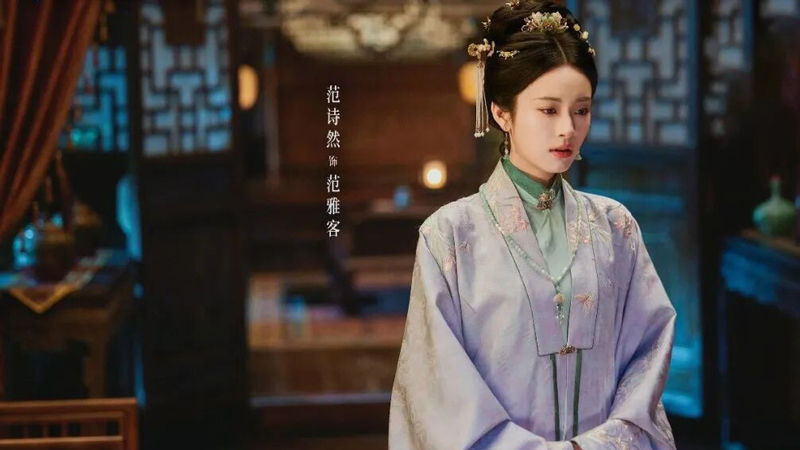
Think about that. The most sensitive political assassination plot in the capital was discussed in places where a new bride could simply wander in. No guarded chambers, no sealed orders, no clearance protocol. The Yu mansion operated like a public teahouse when it came to state-level crimes. Either the family was too confident in their servants’ loyalty, or they never bothered to establish basic security zones for critical discussions.
This points to a deeper managerial failure. In any hierarchical organization, certain rooms should be off-limits to certain people. But in the Yu estate, rank seemed to grant universal access. Fan Yake’s status as the young master’s wife let her roam freely—and that freedom exposed the family’s most lethal secret. A dynasty that cannot compartmentalize information is a dynasty that leaks from every seam.
The Servant Who Saw Too Much: When Training and Rewards Fail
The final blow came from an unlikely source: Concubine Wu, a low-ranking mistress with a signed indenture contract. She witnessed a critical moment when the Grand secretary’s steward dispatched assassins to intercept Zhao Ling, who was secretly returning to the capital with evidence of the Yu family’s crimes. Instead of reporting this to her masters, she struck a deal with Fu Tingyun and helped Zhao Ling get through safely. That evidence eventually destroyed the Yu clan.
How could such a pivotal operation be witnessed by a concubine who was supposed to be under constant watch? The answer lies in the Yu family’s lazy internal oversight. Lady Yu had ordered surveillance on Concubine Wu after she murdered Wu’s former mistress—but that surveillance was sloppy. Wu was even allowed to accompany Yu Jingxiu, and through him, she passed incriminating documents to the Fu camp. When Yu Jingxiu suddenly ordered a package delivered to Fu Tingyun and forbade anyone from touching it, why did no servant report this suspicious behavior to Lady Yu?

At that point, the Grand secretary had already publicly exposed his son’s obsessive love for Fu Tingyun, so the young master was under house arrest. Yet he still managed to send out a parcel. Either the guards were incompetent, or they did not know when to escalate an alert. This is classic middle-management failure: unclear reporting lines, no incentive for vigilance, and zero consequences for negligence. The Yu family never invested in training its staff or rewarding loyalty. When your own servants do not know whether to speak up, your fortress has already become a sieve.
Internal chaos invites external collapse. The Grand secretary spent decades expanding his power at court, but he ignored the basic principle of any empire: secure your home base first. The narcissus, the overheard plot, the unguarded servant—these were not random misfortunes. They were symptoms of a house that had rotted from within long before the emperor signed the decree of confiscation. In the end, the Yu family did not fall because of a single conspiracy. It fell because nobody inside was paying attention to the little things. And in politics, as in life, the little things always catch up with you.