

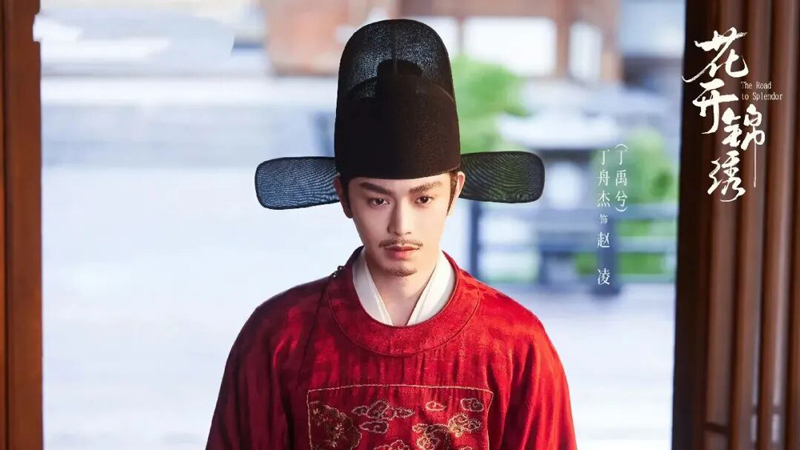
Ganlin (甘霖) Town and the Yu (俞) Family mansion serve as two opposing poles in this narrative, where the collapse of an entire dynasty isn’t triggered by an outsider’s sword but by the frost that builds from within. Readers often pinpoint Zhao Ling (赵凌) as the catalyst for the Yu Family’s downfall, yet a deeper look reveals that the rot was always there.
The real drama isn’t about a feud; it is about two women who stand as mirrors to each other. One, Fu Tingyun (傅庭芸), found warmth in a forgotten town and transformed; the other, Lady Yu, withered under the weight of a gilded cage. The conversation they shared within the palace walls wasn’t just idle gossip—it was the key that unlocked the true reason for the family’s destruction. What happens to people when they are stripped of connection? Is survival possible without love?
Two Paths, One Choice
Fu Tingyun emerged from the cold house of the Fu family, where blood was merely a currency for power. Her father lusted for authority, her mother was a prisoner of circumstance, and her grandmother would trade her for a single advantage. Logic dictates that she should have become a hollow shell, yet she didn’t. It is tempting to credit Zhao Ling for saving her, but the truth lies in the soil of Ganlin Town. Life there was hard, but the simplicity of that place fed her soul. She didn’t just survive there; she was revived by the lack of artifice. If she had remained cloistered in the capital’s schemes, she might have become a relentless climber, indifferent to the pain she caused. The fact that she didn’t proves that environment shapes character just as much as lineage does. She saw the desperate proposal she once made to Zhao Ling for what it was: a transaction. She grew beyond seeing marriage as a shield.
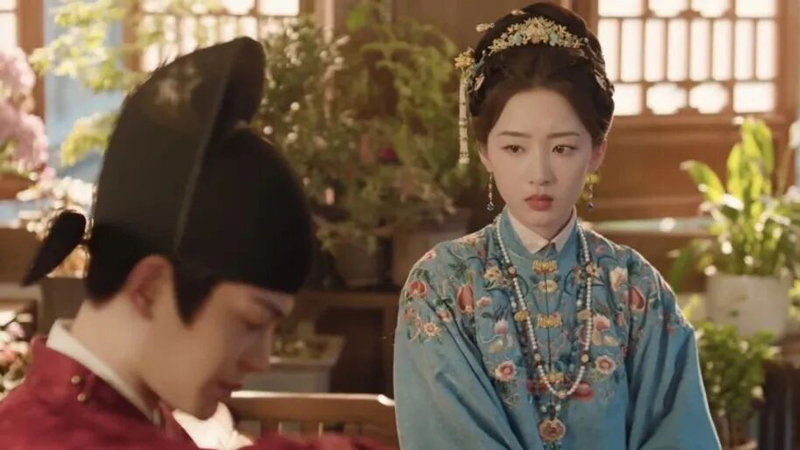
Lady Yu, however, navigated a different current. She sat at the head of the Yu Family table, yet she was more of a puppet than a matriarch. She consumed the finest delicacies but starved for a kind word. In her mind, she and Fu Tingyun were twins in misery, both victims of the same system. She looked at the younger woman and saw a reflection of herself. She couldn’t comprehend the laughter in Fu Tingyun’s voice. When she pressed her about the source of her resilience, Fu Tingyun didn’t preach. She simply mentioned the warmth of Ganlin Town. This admission struck Lady Yu like a physical blow. It shattered her worldview. She had been ready to pity Fu Tingyun, to see her as a soldier fighting a losing battle. Instead, she was the one who was pitied.
The Cost of a Verdict
Lady Yu’s world crumbled during a test she never should have administered. She wanted to prove that her husband needed her for more than just her utility. She faked an illness, hoping to see a flash of concern in his eyes. She desperately wanted to see the man behind the ambition. The response was brutal and swift. He didn’t see a wife in pain; he saw a malfunctioning tool. “Sick at this hour? The timing is terrible,” he spat. It was the verdict of a businessman assessing damaged goods. That moment stripped away the last of her delusions. She realized that to him, she was a function, not a person. Her health was irrelevant as long as the wheels of the house kept turning. She had convinced herself that her power was in her position. In truth, she was just as much a pawn as anyone else she controlled.
The tragedy of Lady Yu is that she had no escape. Once the truth was revealed, she was trapped by her own choices. She built the cage, and she had no key to unlock it. She had invested everything in the house of cards. She couldn’t walk away because she had nowhere else to go. Her identity was so intertwined with the Yu Family that she couldn’t see the path out. She resigned herself to the machinery of the estate. She knew that she would continue to serve, even if it destroyed what was left of her soul. This resignation marks the true moment of her defeat. She didn’t die; she simply stopped living.
The Turning Wheel
The downfall of the Yu Family wasn’t a sudden storm; it was a slow erosion of the foundation. It wasn’t Zhao Ling who delivered the final blow but the lack of genuine connection within the walls. A family that exists only to generate power is a building without a foundation. When people are treated like assets, they eventually lose their value or turn against the system. This is the core of the tragedy. Fu Tingyun was brought in for her ability, not her compatibility. The marriage was a merger. When the son needed a concubine, it was purely a logistical decision to secure connections. The woman’s feelings were irrelevant.
The disregard for human emotion was a habit for them. Fu Tingyun was valued for her skills, and when another woman, Fan Yake (范雅客), was deemed “mediocre” and unable to bring in new assets, she was simply discarded. There is no loyalty in such a system—only transactions. The Yu Family engaged in the business of humans. They sold their sons, daughters, and in-laws for a chance at the top. But they forgot that a house built on cold stone collapses when a tremor hits. When you drain the affection from a family, you drain the life from it. The downfall was inevitable. It was simply a matter of time before the structure crumbled under its own weight.