
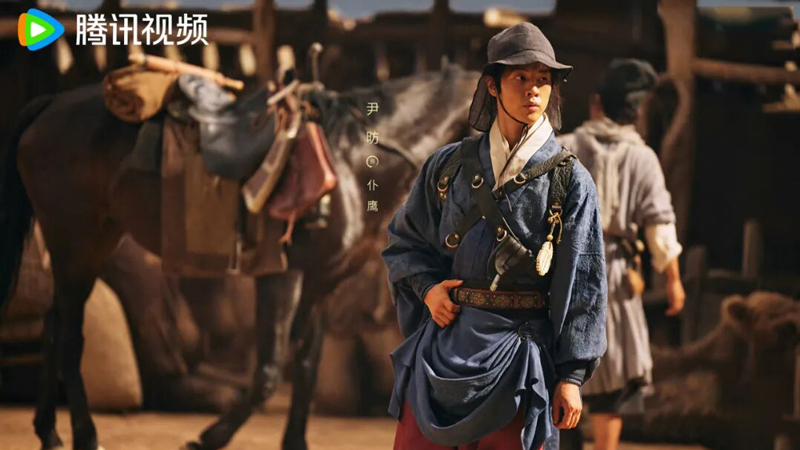
In a landscape dominated by fantasy epics and modern dramas, the arrival of a pure, grounded Wuxia series feels like a discovery of an ancient text. On August 25, the series Remnants of Gold (金色) premiered exclusively on the Tencent Video X Theatre. It is a bold adaptation of the legendary author Gulong’s (古龙) novel Land of Remnants of Gold Eagles (大地飞鹰), yet it is entirely its own beast. The story plunges us into a harsh, unforgiving world of desert outlaws and desperate souls. With a stellar cast and a director known for his uncompromising vision, it has already captured the audience’s attention, proving that the spirit of the Wuxia genre is far from dead; it has simply been waiting for the right storyteller to give it new life.
Reclaiming the Lost Art of Wuxia Storytelling
Director Xu Bing (徐兵) has captured the raw, desolate tone of Gulong’s work, moving away from the more romanticized swordplay of recent years. The narrative is built on a simple, powerful premise: a legend of three hundred thousand taels of gold hidden in the desert. This single rumor draws a flood of fortune seekers, each with their own desperate motives. The show immediately establishes a world where morality is fluid and survival is the only constant. The opening scenes, filled with poisoned men turning into vengeful spirits, set a tone of grim inevitability that hooks the viewer from the start.

The storytelling is driven by a classic revenge plot and a relentless treasure hunt, with the two threads intertwining and pushing the narrative forward. The heroine, Zhang Luyao (章路遥), returns to the Northwest after her family is massacred, becoming the central force of the story. The narrative structure is a “road movie” in the desert, where new characters are introduced with each passing mile, creating a vibrant and dangerous tapestry of life. This structure allows for a dynamic rhythm, keeping the tension taut while exploring the complex relationships and shifting alliances between the characters. Each new encounter reveals another layer of the corrupt world they inhabit.
Xu Bing’s direction focuses on the contrasts within his characters, placing them in extreme situations to reveal their true natures. A government official, a distant relative of the royal family, is trapped in the desolate region, his outward pride masking a deep-seated anxiety and ambition. A simple, morally upright Jin Yi Wei (锦衣卫, or Imperial Guard) agent finds his authority stripped away in this lawless land, his struggle to maintain his principles providing moments of dark humor. The show excels at creating tension through these character dynamics, where everyone is playing their own game, and trust is a currency that has long been devalued.

A Return to Physical Cinema
The authentic aesthetic of Remnants of Gold is one of its greatest strengths. The production team traveled to real locations like Dunhuang (敦煌), bringing the harsh, beautiful desert to life. This isn’t a studio backlot; the vast, unforgiving landscape is an active character in the drama, a silent witness to the greed and violence that unfolds upon it. This realism grounds the story, making the fantastical elements of Wuxia feel tangible and immediate. The use of natural environments and authentic sets, from crumbling earth walls to windswept inns, creates a world that feels lived-in and brutally real.
The action choreography is a direct reflection of this commitment to realism. The fight scenes are a revelation for fans of the genre, emphasizing hard-hitting, close-quarters combat. The philosophy here is that “action equals character,” and each character’s weapon and fighting style are unique extensions of their personality. The hero’s blade is a standard-issue government weapon, representing his official role and his straightforward nature. The heroine’s hidden chain dagger reflects her need to fight smart and avoid a direct confrontation. The weapons are not just tools for violence but a language that reveals their user’s temperament, history, and aspirations.

Xu Bing uses the action sequences to do more than just entertain; they serve a narrative purpose. Every clash, every parry, is a dialogue that reveals a character’s position and mental state. There is a clear influence from classic Wuxia filmmaking, but it’s processed through a modern lens that prioritizes clarity and impact. The result is a show where the action feels meaningful and dangerous, reinforcing the high stakes of the world. This approach draws the audience into a world where each sword stroke carries weight, making the viewing experience both visceral and intellectually engaging.
Slow Craftsmanship for the Modern Viewer
In an era of mass-produced content, Remnants of Gold feels like a singular, carefully crafted artifact. This is the signature of the Tencent Video X Theatre, a platform that has positioned itself as a haven for bold, director-driven storytelling.
Xu Bing has spoken about not wanting to treat Wuxia solely as a genre, but as a vehicle for exploring modern emotions and conflicts. This philosophy is key to the show’s success. It uses the ancient world of Jianghu (江湖), the martial arts underworld, to discuss timeless issues of personal freedom, individual dignity, and the choices we make when trapped by circumstance. By focusing on the psychological weight of a world defined by strict social orders and life-or-death decisions, Remnants of Gold connects with contemporary audiences on a deeper level.

The X Theatre’s approach is a testament to a long-term vision for quality over quantity. By giving creators the space and time to “slow grind” their work, they are constantly pushing the boundaries of what a television series can be. Remnants of Gold is another major success for this strategy, proving that there is a significant and hungry audience for intelligent, visually stunning, and emotionally complex storytelling. For the viewer, the X Theatre is becoming a trusted mark of quality—a reliable destination for the kind of bold, original content that redefines what we expect from a drama and reaffirms the enduring power of a great story.