
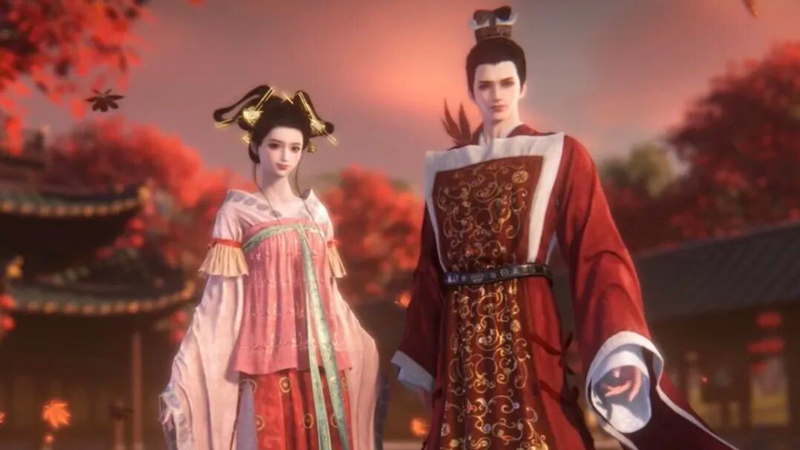
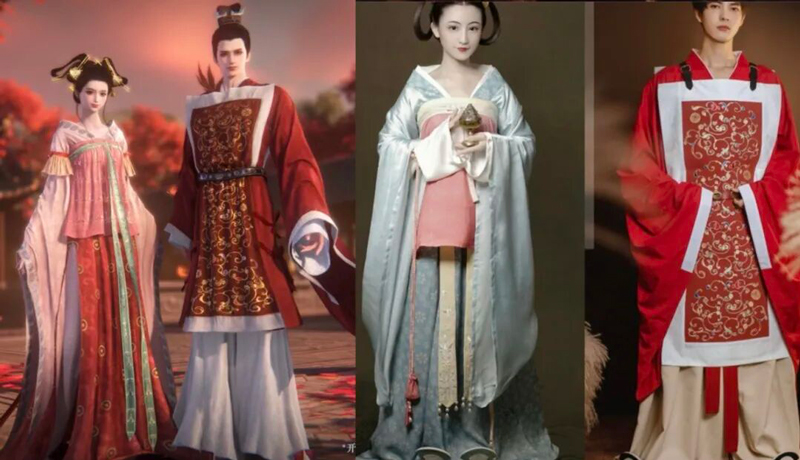
Justice, a popular Chinese online game, recently released a pair of historically inspired outfits. The female version, drawing from Sui-Tang and Wei-Jin dynasties attire, earned genuine praise from players and Hanfu enthusiasts. But the male counterpart? It triggered a flood of mockery. Players called it clumsy, awkward, and downright ugly. Some even joked, “It’s historically accurate, but that’s exactly why it’s so hideous.” How could one game produce two such opposite receptions from the same audience?
The answer lies not in the historical references themselves, but in how each design interpreted—or misinterpreted—the core principles of traditional garment construction. One succeeded by blending heritage with modern gaming aesthetics; the other failed because it copied surface details while abandoning the structural logic that made the original work. This split verdict offers a sharp lesson for any game studio venturing into cultural themes: authenticity isn’t a checklist of old names and basic silhouettes. It’s a discipline of fit, proportion, layering, and functional details—and missing even one can turn a tribute into a travesty.
Female Version: A Hit
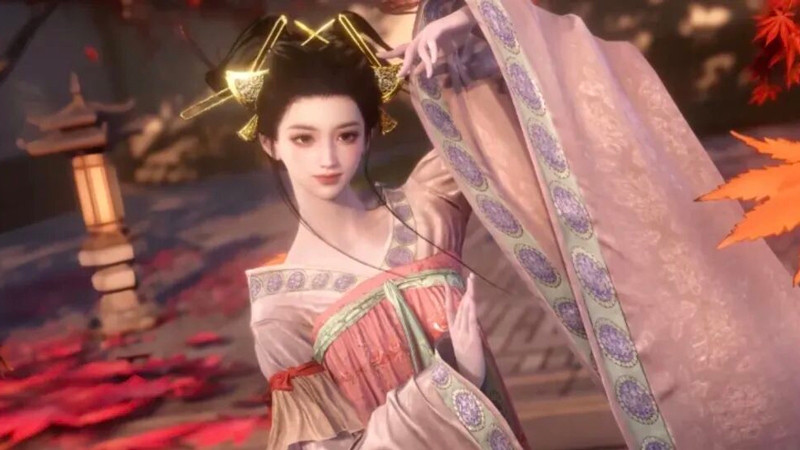
The female outfit’s standout feature is the Yaoqun (腰裙, waist skirt), an apron-like wrap that hangs from the chest—a design we’ve seen in historical references. Light feather-like sleeves add an ethereal flutter, complementing a butterfly-shaped bun that echoes Wei-Jin hairstyles. Though it’s a mix of Sui-Tang and Wei-Jin elements, the ensemble feels coherent. It doesn’t slavishly copy any single tomb mural, but it captures the spirit: flowing lines, delicate ornamentation, and a silhouette that flatters the avatar’s movements. Players appreciated that it looked like something a celestial being might wear, yet still recognizable as traditional attire.
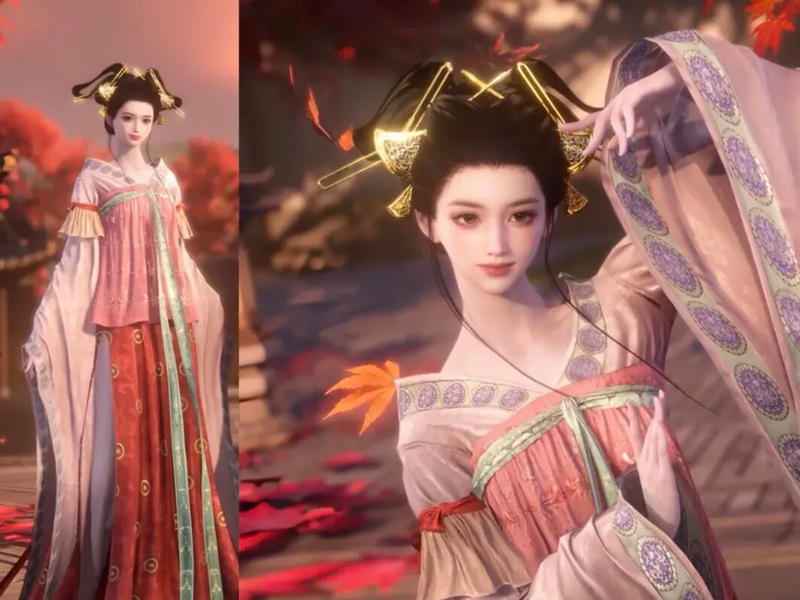
Why did it work? The designers respected the functional logic of each piece. The waist skirt actually wraps and ties, just as historical ones did. The sleeves are detachable accents, not structural burdens. The hairpiece sits at the right angle and scale. These may seem like small choices, but they preserve the original garments’ intended relationship with the body—loose where needed, fitted where appropriate. The result feels both authentic and game-friendly, because the underlying construction wasn’t broken for the sake of visual gimmicks.
This version also benefits from a clear focal point. The eye goes to the skirt’s drape and the sleeve’s flutter, not to any jarring proportion. Color palettes and material textures stay within a harmonious range. In short, it treats historical references as a foundation, not a cage. The team clearly studied not just what the garments looked like, but how they were worn and layered. That study paid off in positive buzz, with many calling it one of the game’s best cultural skins to date.
Male Version: A Flop
Now look at the male set. Its core piece is the Liangdang (裲档, a vest-like outer garment from the Wei-Jin and Northern-Southern dynasties), paired with a Pingjin Ze (平巾帻, flat-top headdress) and traditional trousers. On paper, this is a dignified ensemble worn by officials and guards in historical records. But in the game, it appears as two separate fabric panels hanging loosely over the chest and back, connected by barely visible straps. Players immediately compared it to “hugging a pillow”—bulky, shapeless, and utterly lacking the crisp, tailored fit that defines the real Liangdang.
The problem starts with the cut. A genuine Liangdang is a single square piece of cloth, held by shoulder straps, that lies flat against the torso. It’s meant to be upright and clean-lined. But the game version splits it into front and back patches, like stickers pasted on the character model. Without a continuous fabric connection, there’s no tension, no structure. It hangs awkwardly, creating folds where there shouldn’t be any and gaps where there should be fit. This isn’t a minor aesthetic quibble—it’s a fundamental misunderstanding of how the garment functions as clothing, not just as a visual motif.
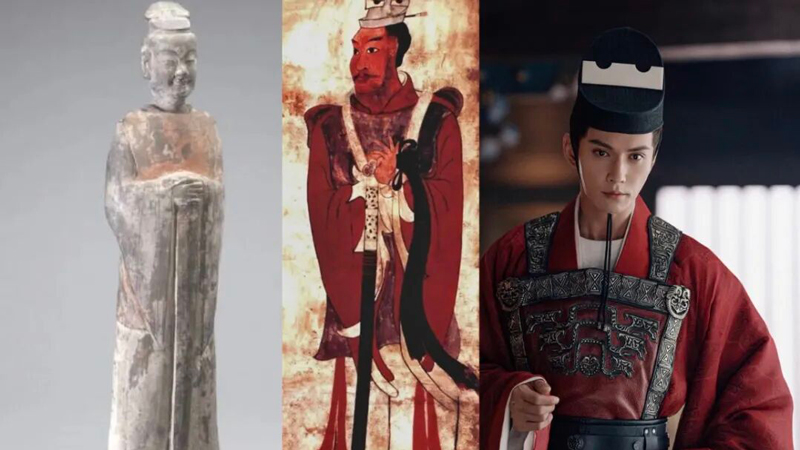
Then there’s the headgear. The Pingjin Ze, historically a large, flat-topped cap that covered most of the crown, was shrunk to a tiny crest. That downsizing throws off the entire upper-body proportion. In period art, the cap’s broad shape balances the Liangdang’s square form. Here, the tiny cap makes the shoulder pieces look even more oversized and disjointed. The trousers below are loose and baggy, but without any belt or wrap detail to anchor them. The whole figure feels like three separate costumes glued together—no rhythm, no unity. Players weren’t being harsh; they were being honest about a design that ignored every rule of traditional tailoring.
Lessons for Studios
This backlash isn’t just about one game. It highlights a recurring pitfall in the booming field of culturally themed digital content. Many studios assume that naming a costume after a historical dynasty and copying basic shapes qualifies as “cultural restoration.” But traditional Chinese clothing is not a collage of recognizable elements. Its beauty resides in precise cutting, layered wearing sequences, regional variations, and even seasonal adjustments. A Liangdang without its fitted cut is no longer a Liangdang—it’s a costume-shaped sack. A Pingjin Ze scaled wrong becomes a cartoonish prop, not a respectful nod to history.
The female version succeeded because its makers asked: “How would this piece move during combat or idle animation?” They preserved the wrap-around functionality of the waist skirt and kept sleeves light enough for dynamic posing. The male team, by contrast, seems to have asked only: “What does this look like in a static reference photo?” They copied the outline but ignored the inner structure—the seams, the stiffness of the fabric, the way shoulder straps should anchor the whole piece. That’s why it feels like a “skin” pasted over a generic body, not a garment worn by a living character.
For gamers and history buffs alike, the takeaway is clear: authenticity isn’t a binary checkbox. It’s a spectrum that demands craftsmanship, not just citation. Game artists need to study not only museum images but also practical reconstruction efforts—how replicas are sewn, how they behave on real human bodies. They should collaborate with historians and tailors, not just concept artists. And they must test their designs in motion, because traditional clothing was made for activity, not for mannequins. When Justice or any other title gets this right, the community celebrates. When they get it wrong, the community notices—and they have every right to call it out.
Ultimately, the industry should view this incident as a constructive alert. The goal isn’t to shame developers but to push for higher standards. Chinese games have already proven they can produce stunning world-building and character art. Adding culturally accurate clothing to that repertoire is a natural next step—but only if they treat it with the same rigor as their fantasy armor or sci-fi mechs. That means respecting historical proportions, material logic, and wearing customs. It means understanding that a Liangdang is not a “chest plate” but a tailored vest, and a Pingjin Ze is not a “headband” but a formal cap. With those fundamentals in place, the beauty will follow—organically, without forced “cultural symbolism” or hollow buzzwords. And that’s a future worth designing for.