
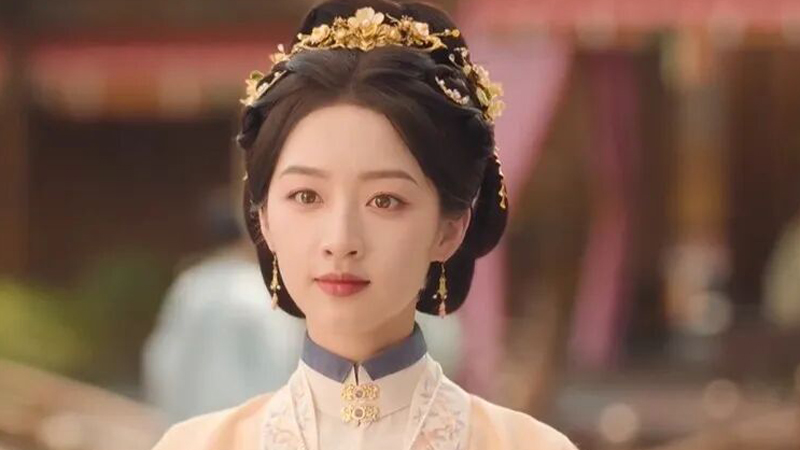
In the new series The Road to Splendor (花开锦绣), a quiet moment at the Wanfang (万芳) Garden poetry gathering turns into a puzzle for viewers. When Fan Yake (范雅客) first lays eyes on Fu Tingyun (傅庭芸), she blurts out: “Why are you still dressed like an unmarried girl?” Many audiences pause at this line. How could Fan Yake tell, at a single glance, that Fu Tingyun has not taken a husband? The answer lies not in gossip or intuition, but in a tiny cluster of buns on top of Fu Tingyun’s head.
That style—known as the “Three Small Bun” hairdo—was one of the most telling markers of maidenhood in the Ming Dynasty. And it turns out that unmarried girls in that era differed from married women not only in hair, but also in headpieces and daily attire. These visual cues were as clear as a spoken announcement—if you knew where to look.
Hair
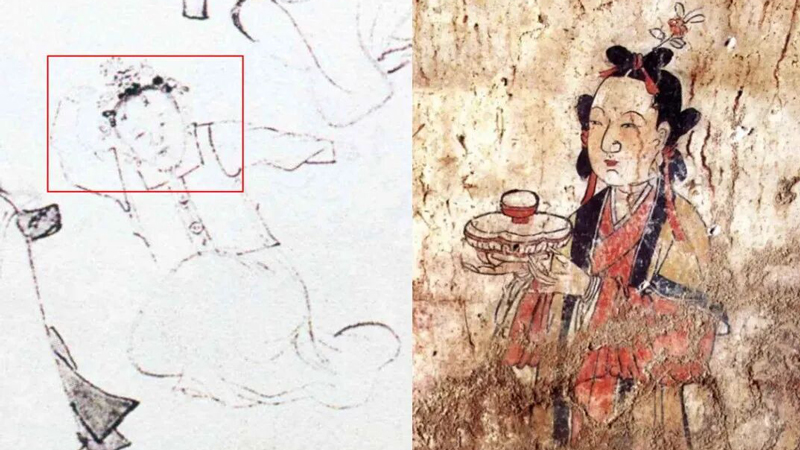
An unmarried girl in the Ming period never wore the large, neat bun that signified a married woman. Instead, she chose styles like the double-yarn bun, the hanging-ring bun, or the three-small-bun. The last one involved parting the hair into several sections and coiling them into three tiny mounds—one at the crown and one on each side. It was considered proper and graceful for a noble young lady receiving guests outside her chambers. If you browse Ming-era paintings like Song and Dance (歌舞图) or examine the murals from the Yongchuan (永川) tomb, you will spot the exact same silhouette. In The Road to Splendor, Fu Tingyun’s hair is gathered into small buns at the top and sides, mirroring that historical reference—though the production team softened the shape for a more natural on-screen look.
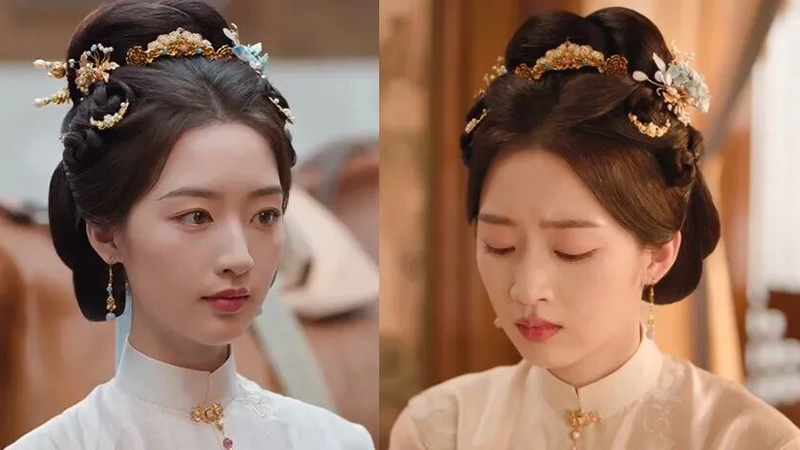
But why did this style matter so much? In a society where a woman’s marital status dictated her daily routines, social circles, and even her freedoms, hair became a non-verbal identity card. A maiden’s small buns signaled her availability for matchmaking, her place in her father’s household, and her limited but real autonomy before marriage. The “Three Small Bun” was not just fashion—it was a compact biography written in hair. When Fan Yake saw those buns, she read Fu Tingyun’s story instantly: still under her family’s roof, still waiting for the rite that would change her life.
Headpieces
Beyond the buns, the ornaments told an equally clear story. Unmarried girls could not wear the full set of formal headpieces reserved for matrons. They rarely used large phoenix pins or long swaying step-shakes. Their accessories were modest—tiny floral hairpins, small gold clasps, scattered and delicate. In the drama, Deng Enxi’s Fu Tingyun wears only a few gold pieces with miniature flowers near her crown and side buns. There is no sense of opulent layering, no crown-like heaviness. That restraint was exactly the daily norm for a Ming maiden.
Contrast this with Fan Yake’s own look: a tall, solid high bun, every strand pulled back tightly, no loose ends. Her side bun holds a step-shake with dangling tassels, and her floral ornaments are arranged in matching clusters. This was the standard “after-marriage” style. In Ming custom, the wedding ceremony included a ritual called “hair-pinning”, where a girl’s youthful buns were replaced with a single, full bun. That transformation was a public declaration: from this day on, she belonged to her husband’s lineage. No more small buns, no more girlish looseness. The change was so definitive that any woman in the street could read another’s marital status from ten paces away.
Clothing
The distinction did not stop at the neckline. Everyday wear for unmarried girls favored light, soft colors—pale yellows, gentle pinks, quiet blues—and rarely used large, heavy patterns like full round medallions. Instead, they wore small-branch flowers or curling grass motifs. Fu Tingyun’s light yellow jacket in the show has delicate bird-and-flower embroidery along the collar, paired with tiny gold buttons on a standing neckline. The cut is slender and graceful, a far cry from the dignified, heavier silhouettes of married women.
Fan Yake’s grey-purple jacket, on the other hand, leans toward deeper, more somber tones. Her collar embroidery is denser and more complex, matching the stately aura expected of a matron. Even the fabric drapes with more weight. These were not random choices—Ming sumptuary customs linked color, pattern, and cut directly to a woman’s stage of life. A married woman wore her status in every fold and stitch. By paying attention to these small details, The Road to Splendor avoids the common trap of modern historical dramas where everyone—married or not—sports similar buns and similar pins. That blurring of lines might look convenient, but it erases the very texture of Ming daily life. Here, the costume team chose accuracy over convenience, and it shows.
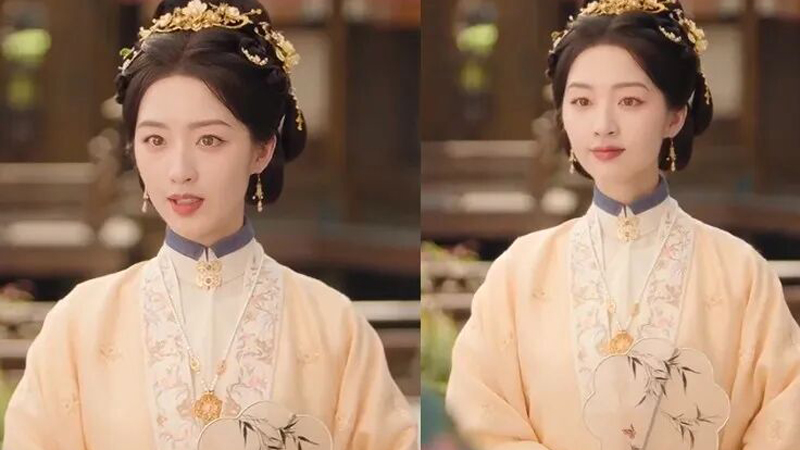
So when Fan Yake teased Fu Tingyun about her “unmarried” look, she was not guessing. She was reading a visual language that every Ming woman understood. The small buns, the sparse gold flowers, the pale jacket—each element whispered the same answer. And for today’s viewers, that whisper opens a window into a world where a hairstyle was never just hair. It was a biography, a social badge, and a quiet ritual of identity, all coiled into three tiny knots.