
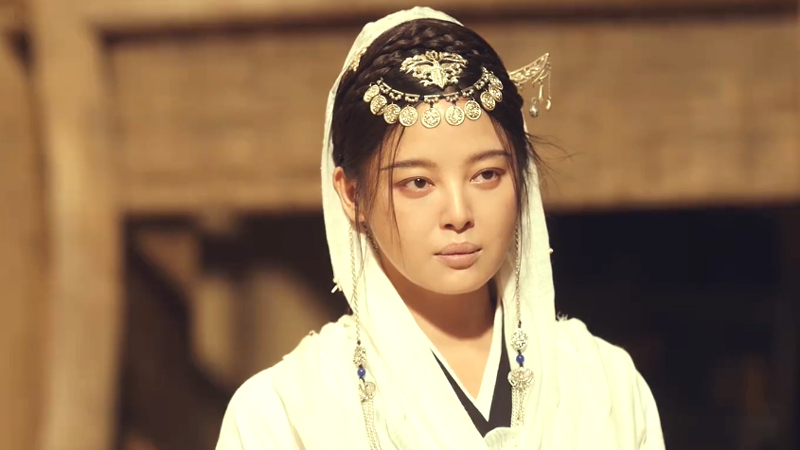
Xin Zhilei’s (辛芷蕾) new character in the period drama Remnants of Gold (金色) wears a forehead ornament that stops you cold. It is not the usual pearl choker or delicate gold filigree. Instead, a neat row of round metal discs arcs across her brow like a string of old coins. Why so strange? The show is set in the Ming dynasty desert, far from the Forbidden City’s pearl-studded courts. This is not a costume department’s wild guess. The design borrows from two real traditions: the Ming dynasty Weiji (围髻) headband and the ancient habit of wearing coin-shaped charms for protection. Together, they turn a simple accessory into a map of cross-cultural exchange along the Silk Road.
The Ming Framework
The Weiji was a common forehead piece for Ming women. Made of bead strands or metal flower plaques, it sat along the lower edge of the bun, framing the face. Noble ladies wore it with pearls and rubies; commoners used silver pieces or glass beads. Its job was both decorative and practical—it tamed stray baby hairs while adding a touch of grace. Portraits from the era, as well as excavated tombs like that of Princess Sun, the secondary consort of Prince Yixuan (益宣) in Jiangxi, confirm its popularity. One gold Weiji found in her burial is a stunning example.
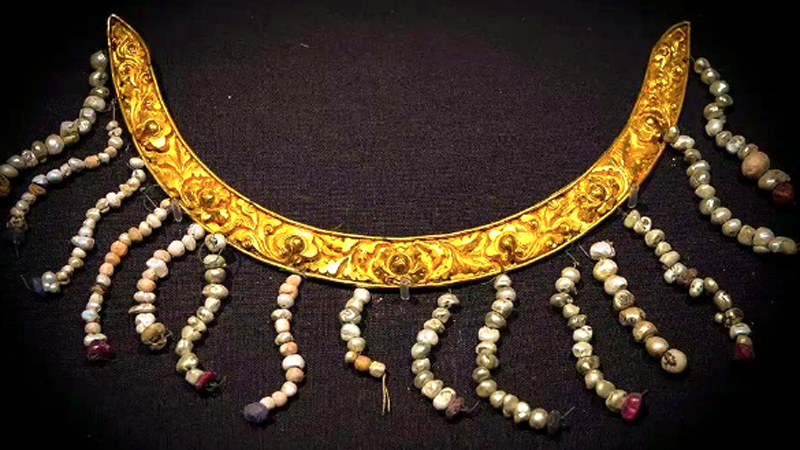
Xin’s ornament follows the same arc and placement as that classic Ming piece. But the show replaces the usual bead net with a row of individual metal discs. That is a bold move. Yet the silhouette and logic remain Ming. It is not a fantasy invention; it is a creative interpretation grounded in historical form.
Why change the material? Because the story demands it. Her character is not a court lady. She is a woman of the desert trails. A delicate beaded Weiji would look out of place on her. The metal discs give her a tougher, more nomadic edge while keeping the Ming structural identity intact.
Coin Charms Travel Far
Central Asian tribes and steppe nomads had a long tradition of stringing coins and coin-like metals into headdresses and necklaces. For people who lived on trade routes, coins were direct wealth. But more than that, many cultures believed coin patterns could ward off evil and bring luck. Wearing them was a portable prayer for safety on dangerous journeys.
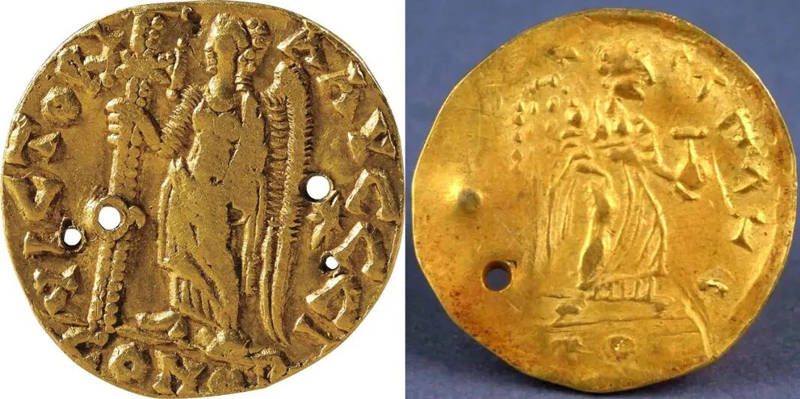
Archaeological finds along the Silk Road back this up. For instance, Eastern Roman gold coins from the Northern Zhou period have been unearthed in Shangluo (商洛) and Ningxia (宁夏). Each coin has a small hole, leading experts to think they were worn as personal ornaments by the deceased. That is not a one-off. Similar coin-ornaments appear across regions, showing how widespread this custom was.
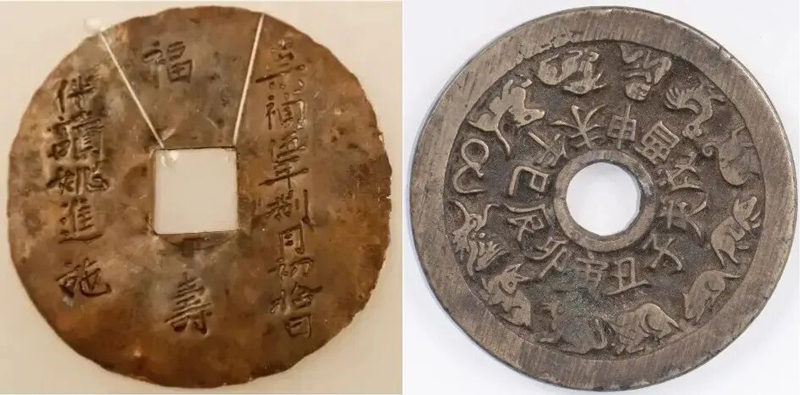
In central China, a similar tradition existed under the name Yansheng Qian (厌胜钱), or “charm money.” These were not legal tender but looked like coins. Examples date back to the Han dynasty, with their peak in the Ming and Qing periods. People wore them for the same reasons: to dispel bad fortune and invite good. The show’s designers merged these two streams—the Ming Weiji structure and the coin-charm motif. The result is a row of patterned discs that is both historically resonant and visually striking.
Bats and Meaning
Above Xin’s row of coins sits a silver bat ornament. This is not a random decorative flourish. The bat motif was one of the most popular auspicious symbols in Ming and Qing jewelry. Folk silversmiths and court artisans alike loved it. One classic lucky combination is a bat above a coin. In Chinese, “bat” sounds like “fortune,” and “coin” hints at “before.” Together, they form the phrase “fortune before your eyes.”
Xin’s bat piece sits right above the center of her forehead, aligned with her brow. Below it, the row of coin discs falls into place. The visual pun is complete: fortune right in front of her. That is not a coincidence. It is a deliberate nod to traditional jewelry symbolism, giving the ornament a layer of narrative meaning beyond mere decoration.
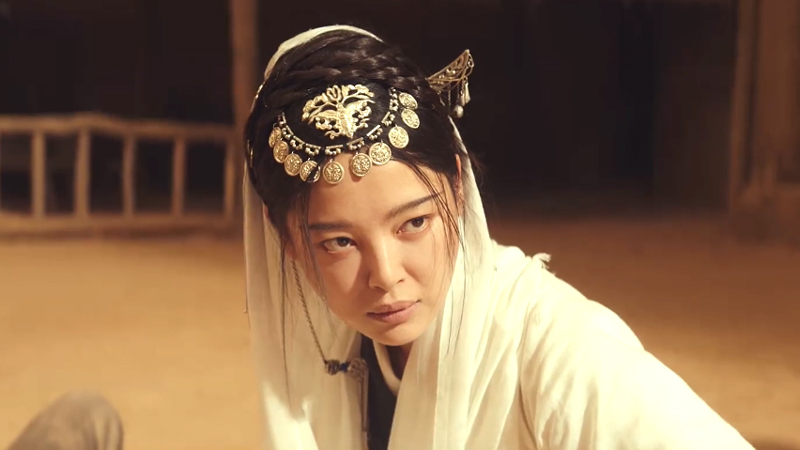
Ancient accessory styles were never monolithic. Trade, migration, and cultural mixing constantly reshaped what people wore. The Silk Road brought many foreign elements into central Chinese dress. Yet most period dramas stick to mainstream court styles, rarely touching these regional or hybrid forms. That is why Xin’s headpiece feels fresh, even strange. But for her character, who roams the desert and reads the wind, a coin-and-bat Weiji fits far better than a jade hairpin. It tells you who she is before she speaks a single line—a woman of the road, carrying her luck on her forehead.