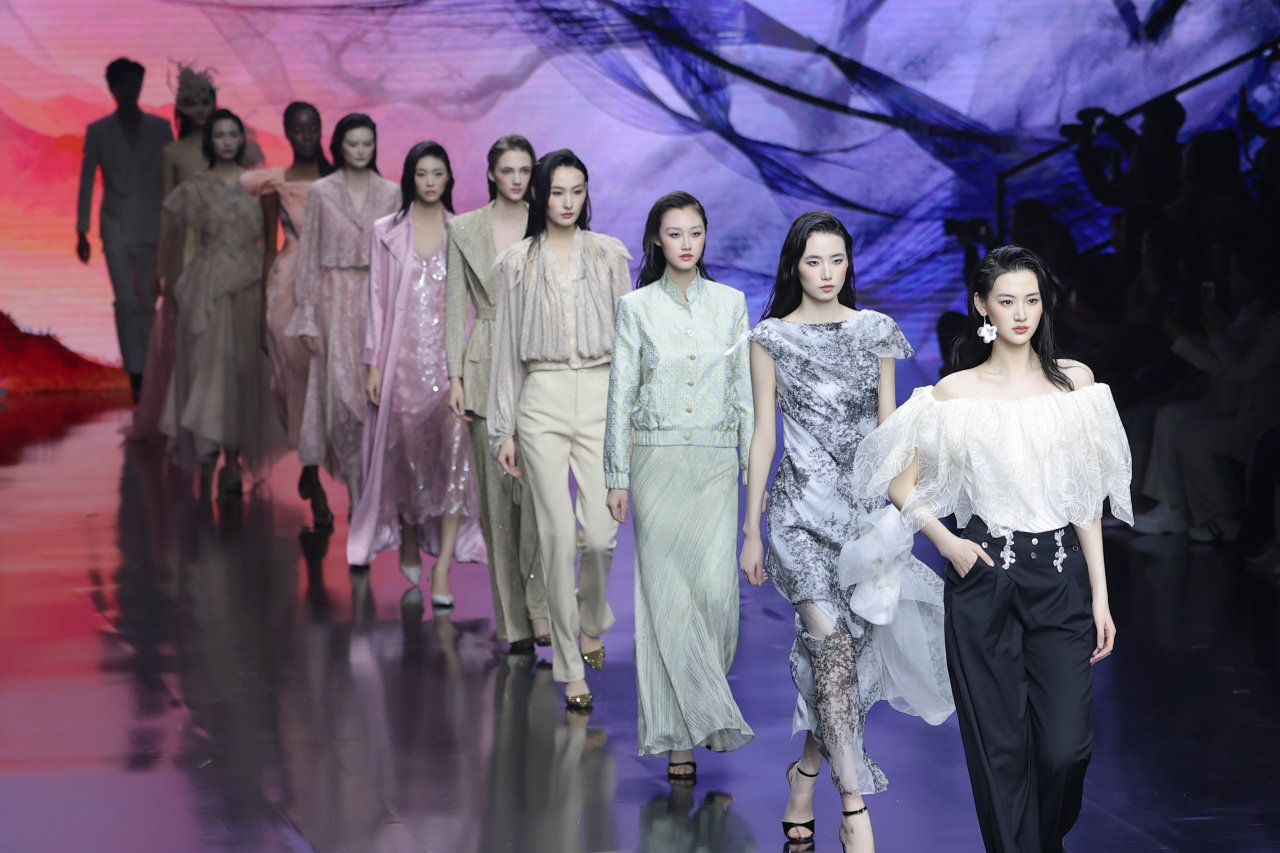
Neo-Chinese style has moved from a niche runway statement to the headline category of China’s most important fashion platform. The autumn edition of China Fashion Week runs September 3-10 in Beijing with roughly 220 brands from China, Japan, South Korea, Russia, France, Switzerland, the United States, Colombia, Zambia and Malawi, and close to a hundred shows, forums and trade events built around the twin tracks of “Neo-Chinese guofeng” and heritage-craft revival.

A Season Built on Neo-Chinese Style
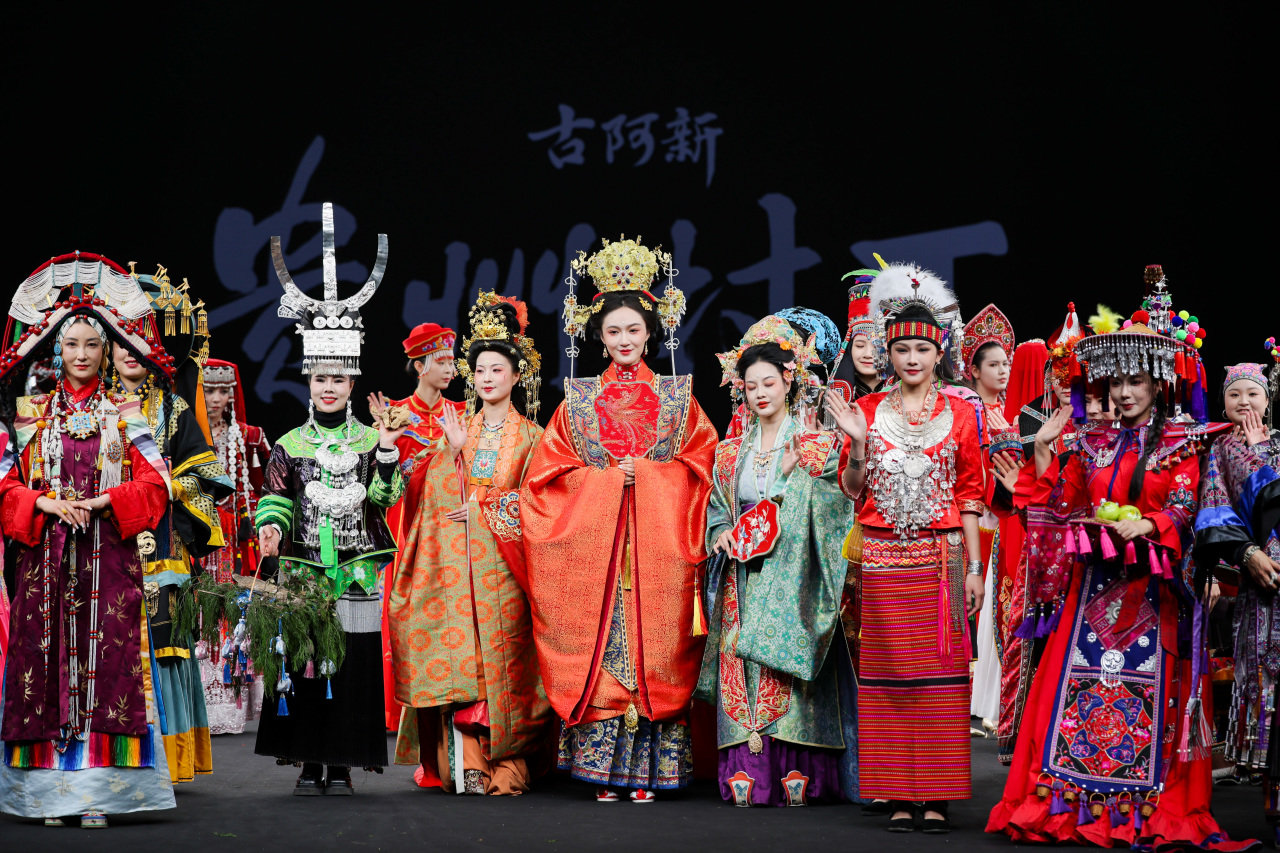
The organizers frame the edition under the theme “Jinxu Dongfang” (金序东方), an invocation of a golden order in the East, tied to the country’s 15th Five-Year Plan push to build a strong cultural sector and to the commerce ministry’s pilot program for new consumption formats, models and scenarios. The shows spread across multiple venues: the 798 Art District, the Beijing Exhibition Center, the CAFA Art Museum, Shougang Park and Longfu Cultural Center. Categories span business menswear, premium womenswear, haute couture, Neo-Chinese guofeng, heritage craft revival, sustainable fashion and functional outdoor wear, with dedicated units for Neo-Chinese innovation, the contemporary remaking of intangible heritage, and ethnic-minority culture. The organizing committee’s stated goal: move Eastern aesthetics from the runway into daily life, and turn cultural depth into a brand’s core competitive edge.
VICUTU Stages the Opening Show
VICUTU opens the season on September 3 at 3 p.m. in the 79 Tank at 798, with a show titled “Off the Label”, drawn from its film “Label Characters” and built on the idea of stripping away tags and staying true to oneself. The collection layers three product narratives: simple commuting wear, mixed styling, and a wilderness theme. It also includes a limited co-designed capsule with actor Liu Haoran (刘昊然), who took part in the design. The autumn-winter 2026 line centers on all-scenario dressing, with earthy tones and woodland-inspired maillard colors, lightweight functional fabrics and minimal tailoring, backed by the brand’s 32 years of craft. In the days after, ELLASSAY, LANCY, UOOYAA, Xtep, SNOWFLYING, Jeanswest and Dison take the calendar, many of them veterans of the platform who now sell from the runway directly into stores.
Six designers who have won China Fashion Week’s top honor lead the heritage push this season: Liu Yong, Wang Yutao, Wu Xuewei, Wu Xuekai, Liu Wei and Zeng Fengfei. Their briefs dig into the silk of the Qi region and traditional brocade weaving, merging hand crafts with contemporary urban dressing across couture, menswear trends and Neo-Chinese creation. Wang Yutao’s brand Beautyberry shows its spring-summer 2027 collection “Aishang” (艾尚) at the Beijing Exhibition Center on September 6, taking the solar-term festival of Duanwu as its starting point: appreciating mugwort, racing dragon boats, and mugwort-tiger charms against the five poisons appear as motifs in gray-pink, pomegranate red, jade green and stamen yellow, cut with a mix of Chinese and Western tailoring.
A Matrix of Neo-Chinese Designers
The Neo-Chinese lineup runs deep. NANCY’SUN designer Sun Yao (孙瑶) presents the couture show “Rhythm of the Season, Borderless” at 7:50 p.m. on September 4 in Workshop One at 798, drawing on Su embroidery (苏绣) and hand-sewn Pankou (盘扣) closures under modern minimalist cuts. Xiangshan (向扇) by Zhou Yujun (周雨君) brings “Fengwudu” (风物渡) to the Central Hall at 1:10 p.m. on September 7, built on Xiangyunsha (香云纱) silk and mulberry silk with standing collars, fine Pankou and intricate embroidery. Shangjiukai (上久楷) by Bian Huizhong (边惠中) appears in the Shengze (盛泽) Fashion Day slot at 5:50 p.m. on September 7, centering on the thousand-year-old Song brocade (宋锦) alongside technical fibers and sustainable fabrics. Shanhai Yinfeng (山海吟风) by Lili (丽丽) shows at 10:30 a.m. on September 4 and Xiaozhuang Tangyun (孝庄唐韵) by Mi Tuoyu (米拓宇) at 1:50 p.m. on September 4 in the 79 Tank.
Emerging names get their own platform through the 10+3 SHOWROOM support program, whose 15 selected labels include Zhongyong Yunsha (中雍云纱) by Jin Yongxuan (金泳萱) working in Xiangyunsha, LockFlyDuck by Suofeiyan Kali (索菲燕·卡力), SIMPLISM by Zheng Shuman (郑树曼), CRICLE HUES by Yuan Wan (袁婉), MOMIWEI by Shan Wei (单薇), Y2FREEDOM by Hu Yingying (胡莹莹), Xiangshan by Zhou Yujun and Chenmeng (辰莔) by Liu Weixia (刘伟霞). A digital-art unit adds more than a dozen young creators experimenting with virtual garments and digital shows. The new-designer bench matters for the category’s trajectory: many of today’s established Neo-Chinese labels started in exactly these incubator slots.
Regional clusters and design schools run dedicated days that connect fabric research, smart manufacturing and design output on a national stage. Shengze Fashion Day focuses on Song brocade and sustainable fabric innovation; Haining (海宁) Day gathers leather-goods brands from the self-styled leather capital of China; Fashion Xiamen showcases the port city’s industry; Dalian (大连) Day highlights high-end apparel design; Keqiao (柯桥) Day leans on the textile hub’s fabric-driven design; and BIFT Day ties academic creation, teaching, research and industry service into one chain.

Exhibitions, Forums and Trade
Off the catwalk, the week builds a full industry ecosystem. The DPARK garment ODM trade show runs September 6-8 at the 97 Tank for design trading, order placement, trend release and brand investment. “Rushi Mogao” (如是莫高), a Dunhuang art exhibition staged at the Beijing Exhibition Center from September 6-10, brings mural aesthetics into a fashion setting, while the Yunshang Town (云裳小镇) fashion-technician competition show runs September 6-9 at the 79 Tank. Forums include a September 6 dialogue on the intangible-heritage industrialization of Beijing-style qipao hosted by Hongdu (红都); a September 7 international trend briefing for autumn-winter 2027-28 by Nelly Rodi; a September 8 color-and-trend talk from Yisiyun (忆丝芸) with ME plus a PANTONE color research launch; and the 2026 International Consumption Trends Conference closing the agenda on September 10.
Retail partnerships extend the week beyond Beijing. China Resources Mixc Lifestyle brings the runway into its Taiyuan and Zhengzhou Mixc malls with more than twenty commercial and designer labels, among them ELLASSAY, V-GRASS, Koradior, Naersi, MO&Co, JNBY, MM, EXCEPTION, MAXCII, EP Yaying, Marisfrolg, ELSEWHERE, Edition, ERDOS, LANCY FROM 25, MAXRIENY, CRZ, JAKET, MM Menswear, Lacoste, Saint Angelo, DESCENTE, SALOMON, The North Face and FILA, with shows tied to in-mall sales. Taobao’s super fashion release returns as the e-commerce partner, linking the runway directly to marketplace sales.

Star Power and Live Streaming
The guest list mixes screen and sport. Actor Liu Duanduan (刘端端) serves as fashion friend, actress Hai Lu (海陆) as fashion star promoter, and Olympic champion Chen Yibing (陈一冰) as style witness, alongside a roster of young actors and bloggers as trend reviewers. Global promotion ambassadors include Milan Winter Olympics gold medalist Ning Zhongyan (宁忠岩), plus Hu Bing (胡兵) and Qu Ying (瞿颖). The Shangze Night (尚仄之夜) closing gala ends the season on September 10. Viewers who cannot attend can follow the shows through official livestreams on WeChat Channels, Weibo, Douyin and Kuaishou.
More than any single show, the programing this season reveals the market’s direction. Neo-Chinese guofeng now sits as an industry track equal to business menswear and premium womenswear, backed at the top by six award-winning designers working national weaving traditions and at the bottom by a 15-label incubator slate heavy with Xiangyunsha and Su embroidery names, with cluster days such as Shengze’s giving the category an industrial backbone. For eight days in September, Beijing’s runways will test whether Eastern aesthetics can carry a commercial fashion season on their own.