
A deer is about to walk out of a sixth-century cave and onto a Beijing runway. On September 7, 2026, at 11:50 a.m., designer Liu Weixia (刘伟霞) presents “Desert Mirror Future – Spirit Deer” at Workshop One in the 798 Art Zone, a featured show of the autumn 2026 China Fashion Week, which runs September 3-10 in the capital under the theme “Oriental Gold Order: Rising Together”. The collection’s lead character is the Nine-Colored Deer (九色鹿), the beloved protagonist of one of the most famous murals in the Mogao Caves.
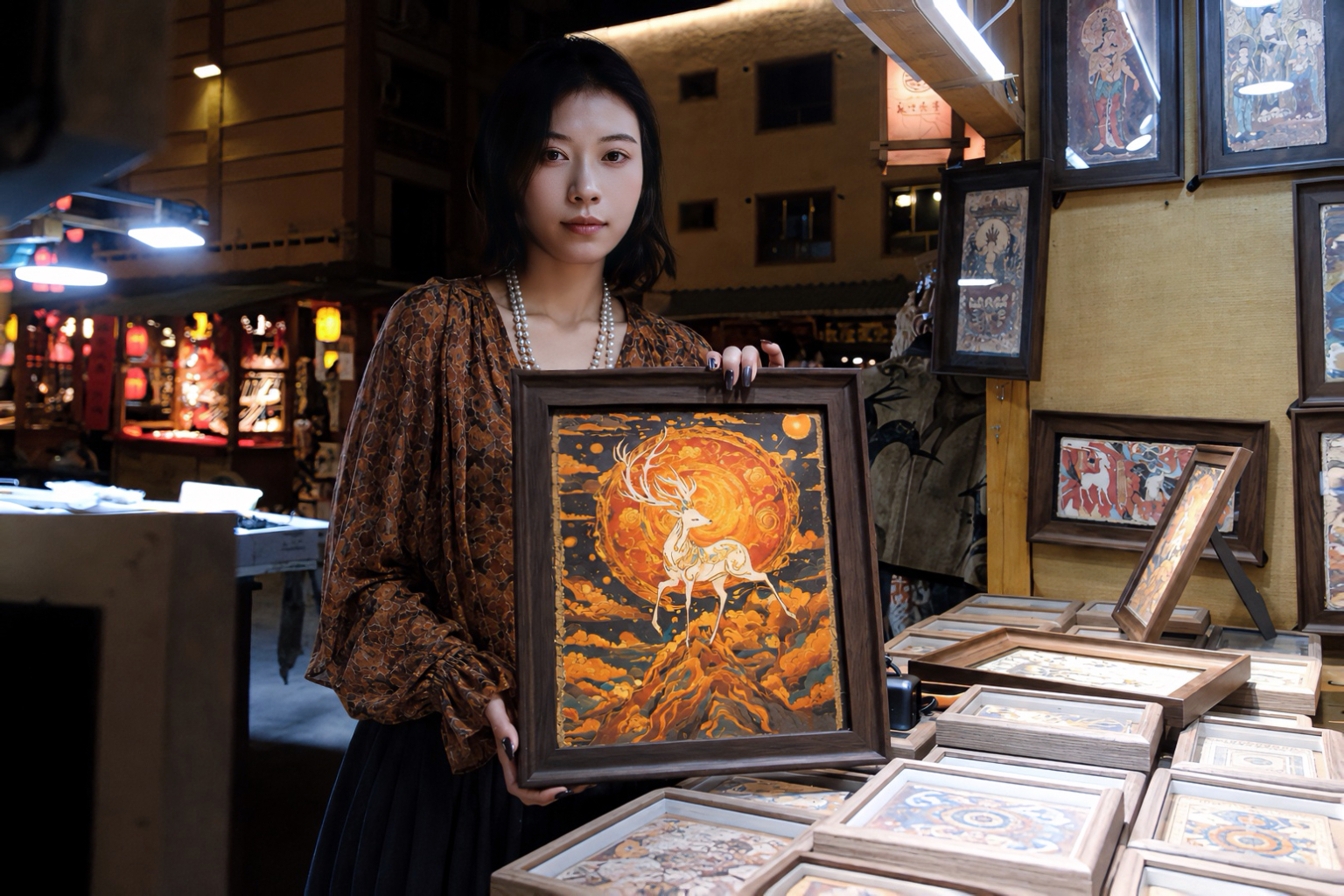
Liu Weixia is founder of Hangzhou 37 Degrees Fashion Co., Ltd. and art director of the independent label Chenmeng (辰莔), romanized CHENMENG. Her résumé tracks a fast climb — named one of Zhejiang’s Top Ten Designers in 2023, winner of the China-Korea Fashion Week Golden Collar Award in 2025, and co-creator of capsule collections with Bosideng and JNBY. She studied at Jiangxi Institute of Fashion Technology, trained at Central Saint Martins in London, and later completed an EMBA at the China-Europe Fashion Institute. The label positions itself in the “light literary Neo-Chinese” lane — culturally grounded, wearable, and restrained in decoration. “Desert Mirror Future – Spirit Deer” continues her previous season’s “Desert Mirror Future” line: the wind-scoured poetry of Dunhuang meeting a mirrored, futuristic chapter.
A Deer Steps Out of Cave 257
The creative well is the Northern Wei mural in Cave 257 at Mogao Caves, the Deer King Jataka (鹿王本生图). Painted in the Northern Wei period (386-534), it tells of a nine-colored deer king who dives into a river to rescue a drowning man — a tale counted among the most representative early Buddhist murals in China and the source of the Nine-Colored Deer as a cultural symbol. Around it Liu groups two companion murals, the Hunting scene and the Four Flying Apsaras mural, and draws the collection’s core design language from the deer’s motif, the shared-ear rabbit pattern (三兔共耳) and the murals’ own texture lines.
Her process moved deliberately through dimensions: from the flat painted deer to a sculptural one, from a static image to something in motion and back to stillness, layering tradition and heritage motifs into a contemporary expression. In early May 2026, she returned to her hometown for fieldwork — standing inside the cave studying the mottled colors of the deer on the wall, then walking the smoky lanes of the night market at dusk, letting the murals’ spirit and the everyday bustle fuse into one design vocabulary.
Three Murals and One Design Language
The series opens with the deer’s pattern and closes with a “deer in symbiosis” composition. Technically, the collection is a concentrated display of craft: the panyin coiling stitch (盘针), hand Su embroidery (苏绣) and wool fringe render the deer’s changing postures, while the overall style is pitched as “light literary Neo-Chinese” (新中式). The shared-ear rabbit and the Chinese knot, a symbol of “great unity,” thread through the entire line.
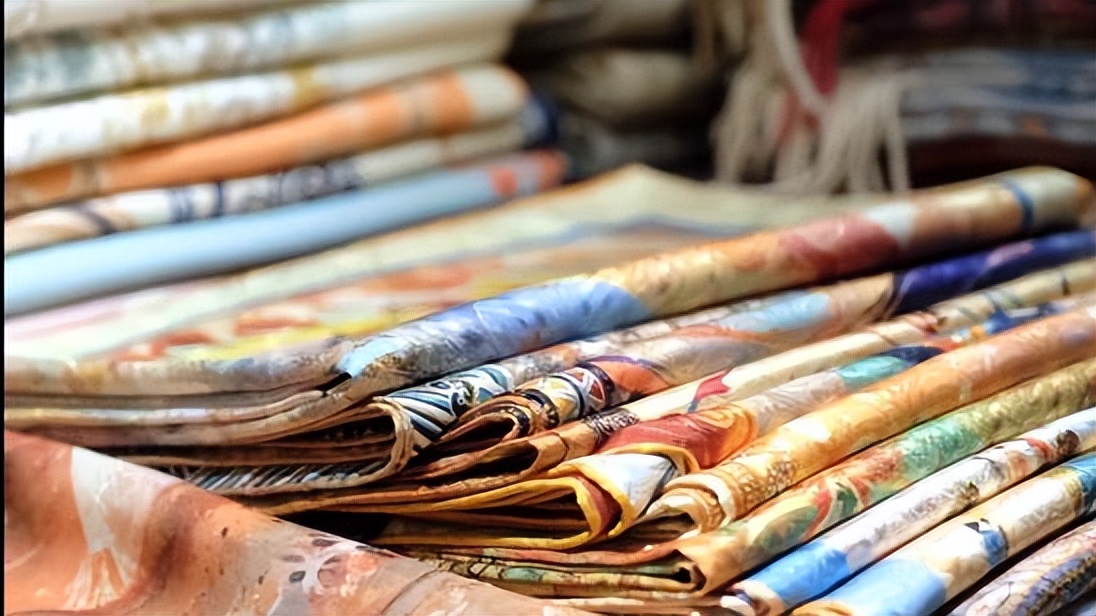
Fabric work is where the material story lives. Silk gauze supplies tensile lightness, Xiangyunsha (香云纱), the gambiered Canton gauze, brings structure and texture, cotton-linen blends drape, and suede fringe adds an elegant, artisanal edge. Fishbone seam outlines lead into floating silk gauze, all carrying the deer’s embroidered motifs from the inside out. Sequins, coiling stitches, hand weaving and laser cutting join hand beadwork to sharpen the line’s fashion attitude. Heritage stitchwork and machine precision sit side by side, which is what pushes the collection toward ready-to-wear rather than stage costume.
Color follows the desert. The base is sand tone, opening out of an earth palette that feels warm and minimal; it extends into the mottled stone gray of the cave walls, then closes on caramel and green-coffee shades that pick up Xiangyunsha’s distinctive texture. The design pairs minimalism with Renaissance references, but deliberately avoids copying the old paintings. Lightweight fabrics and modern Neo-Chinese cutting are meant to carry the mural’s Eastern mood out of the cave and into clothes that can actually be worn — the result is minimal and romantic, not archaeological.

The Motif’s Second Life in Craft
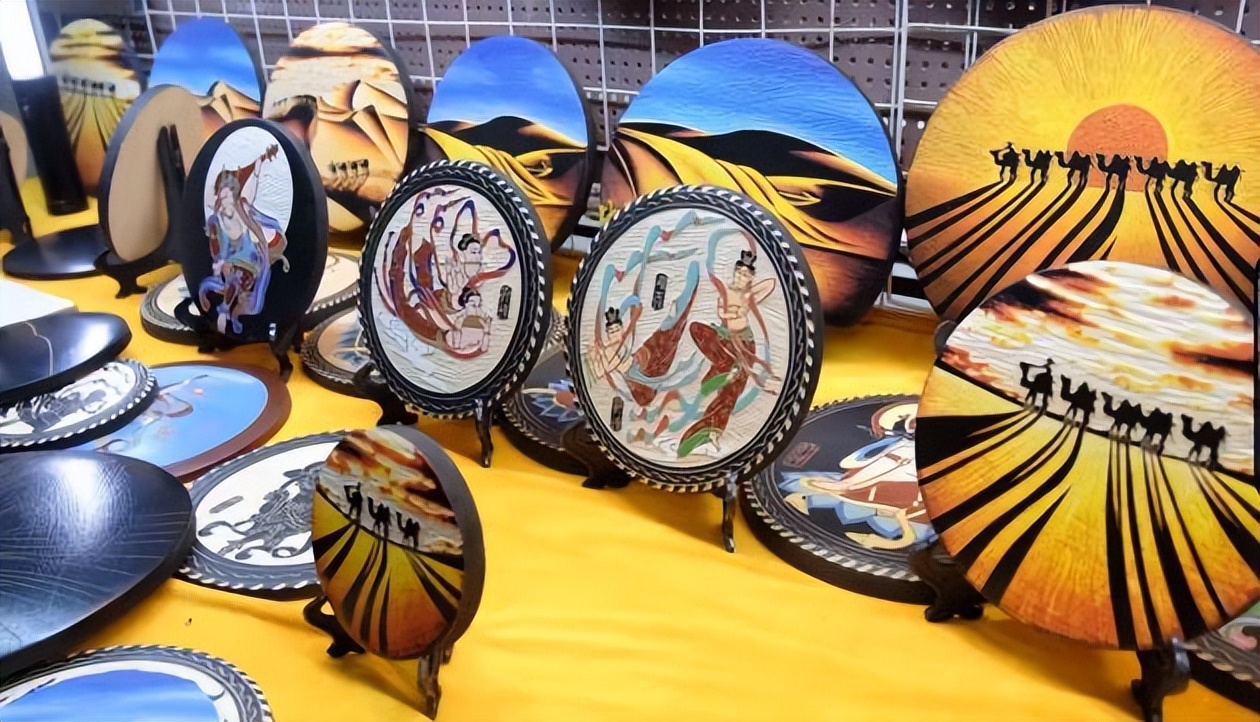
Beyond the runway, the Nine-Colored Deer has become one of the most active motifs in Chinese cultural-creative production. At the Shenzhen ICIF fair (深圳文博会) in May 2026, Yang Kai (杨凯), an inheritor of the dough-sculpture craft from Pingliang (平凉), spent more than three months building a three-dimensional dough version of the Deer King Jataka — the deer and nine flying apsaras — which became a highlight of the Gansu pavilion; his research courses let a beginner finish a piece in two and a half hours. Earlier, master artisans Zhu Bingren (朱炳仁) and Cheng Shumei (程淑美) collaborated on “China’s Nine-Fortunes Deer”, a copper sculpture with filigree inlay combining two national-level heritage crafts — and the first contemporary Chinese Dunhuang heritage artwork collected by the United Nations Headquarters.
On the commercial side, Nine-Colored Deer Mamianqun skirts and stage costumes sell steadily, proving the thousand-year-old motif’s pull in today’s market. Liu’s show pushes the same image upmarket: Dunhuang’s millennial character as the core, futurist design as the vehicle, and the desert reborn between mirroring surfaces.
According to the fashion week’s organizers, the show space will be staged as a desert mirage — glass mirrors and reflections against the desolation of the Gobi, redrawing the boundary between ancient and contemporary. The pieces run mainly in plain white and sand gold, with sheer fabrics and mirror-finish materials reproducing the lightness of a deer crossing the dunes. Four categories — resort, retro, outdoor and commuter — carry the collection into daily life.
China Fashion Week is the country’s only national-level fashion authority platform. This autumn edition adds dedicated units for Neo-Chinese innovation, the contemporary transformation of intangible cultural heritage (ICH), and the renewal of ethnic culture, pairing heritage inheritors with cultural institutions for immersive experiences. The deer here is not a novelty print; it is the organizing idea of the line. Liu Weixia’s show on September 7 is one designer’s complete statement on Dunhuang culture and its modern expression — a deer, six centuries after it was painted, stepping into 2026.