
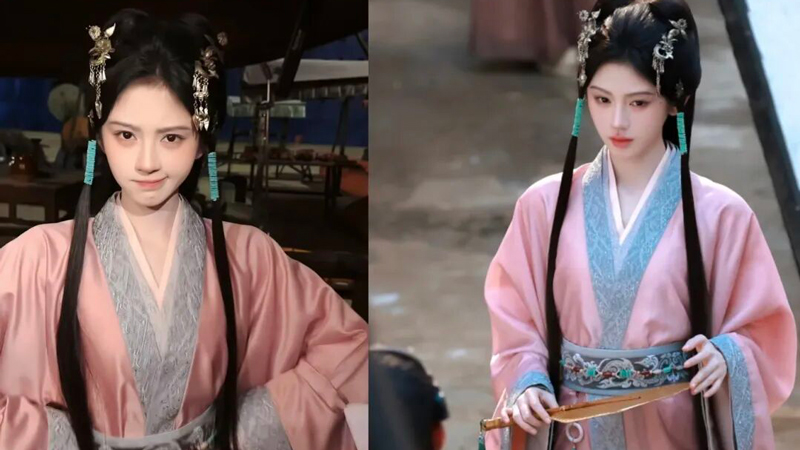
Ju Jingyi’s latest costume drama Wanhua Shijie (万花世界) has sparked a fiery online debate. A single on-set photo of her flowing robe went viral, with fans instantly labeling it a “Warring States robe”. But within hours, traditional costume enthusiasts cried foul: “That’s not a real Warring States robe! It’s a studio-fantasy mashup that doesn’t even match the Mashan Chu Tomb (马山楚墓) straight-hem robe!” The irony? The production never used that term. They called it a “Warring States–inspired long robe.” Yet the internet’s shortcut naming has muddied history, turning a creative costume into a false archaeological claim. So what separates the authentic from the fake? Let’s skip the outrage and look at the cloth—literally.
Sleeves Tell the First Lie
If you want to spot a fake, start with the sleeves. The Mashan Chu Tomb yielded three verified sleeve types: narrow (N22), drooping‑fox (垂胡袖, N15), and wide‑straight (N10). Each has precise measurements. The N15 drooping‑fox sleeve, which most people imagine when they hear “Warring States robe,” has a total arm span over 3.45 meters and a single sleeve width beyond 40 centimeters. The robe’s body length exceeds two meters—taller than the tomb owner himself. Yet many modern replicas shrink the proportions, then add a dramatic, wide‑arc curve that makes the sleeve puff out like a balloon. That curve is the first red flag.
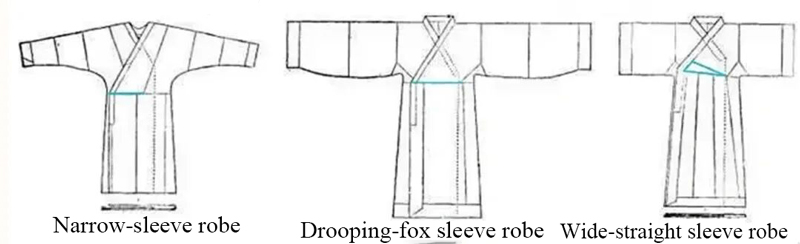
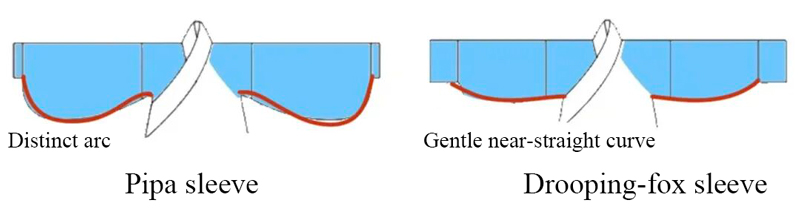
Authentic N15 sleeves are surprisingly gentle. The width at the shoulder and at the cuff differ only slightly, creating a slow, graceful taper. There is no exaggerated middle bulge. That smooth line gives the robe its heavy, ceremonial drape—a deliberate effect of extreme length, not structural puffiness. In contrast, today’s viral “Warring States robes” often borrow a sleeve shape from a completely different dynasty: the Ming period’s pipa sleeve (琵琶袖). That sleeve is narrow at the armpit, swells into a round, prominent curve in the middle, and narrows again at the cuff. It looks like a lute’s body—hence the name. It is elegant, but it belongs to the 14th century, not the 4th century BCE.
So when you see a robe with that juicy, rounded upper‑arm curve, you are not looking at a Warring States garment. You are looking at a Ming sleeve stitched onto a Warring States–style body. And that mismatch is everywhere—on e‑commerce sites, in photo studios, and now on screen. The viral Wanhua Shijie outfit uses exactly that rounded arc, paired with an unusually wide cuff trim. It is a creative collage, not a restoration. But because it looks dramatic in photos, the label “Warring States robe” sticks—and with it, a false memory of what ancient tailoring actually achieved.
The Hem Exposes the Second Fake
Now look down. The term “straight‑hem robe” comes from the front overlapping panel that crosses from the left side of the chest, passes under the right armpit, and drops straight down—hence “straight.” In genuine tomb garments, that crossover is generous. The front flap wraps far around the body, sometimes reaching the back of the hip, so the lower hem overlaps tightly. When viewed from the front, the hemline forms a clean, almost closed line, with little to no gap between the two sides. You rarely see the under‑skirt peeking through.
But modern studio costumes—including many so‑called “restorations”—cut corners on fabric volume. With less cloth, the crossover becomes shallow. The front hem opens into a wide V‑shape, exposing the inner skirt or trousers. That V‑split is a dead giveaway. It is not a minor style variation; it fundamentally changes the silhouette. The original robe was meant to wrap the body like a second skin, using excess material to create vertical folds that elongate the figure. The shallow‑wrap version looks flimsy and theatrical—fine for a photoshoot, but historically inaccurate.
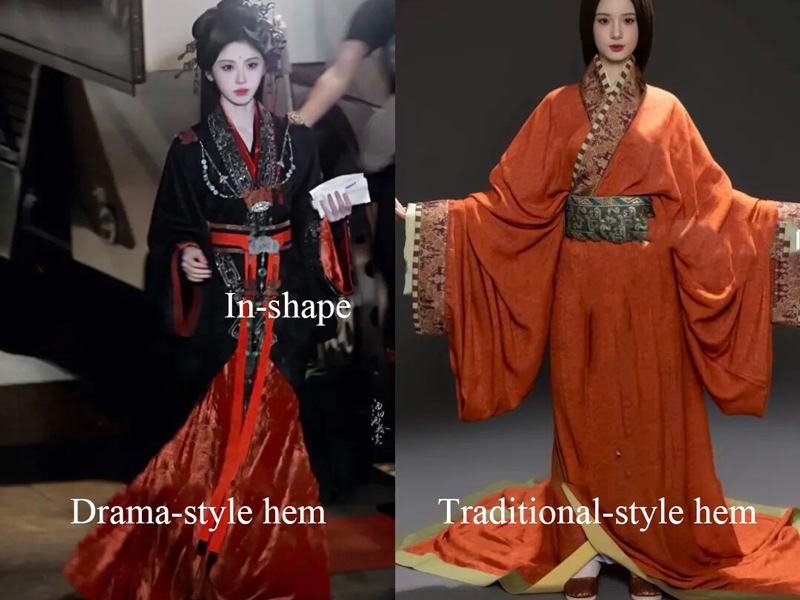
Interestingly, the Mashan Chu Tomb’s N15 robe has a hem circumference so large that the front panels nearly touch when closed. The wearer’s movement would be restrained, dignified—exactly the point of court attire. Today’s versions, however, prioritize ease of walking and dramatic flare. They open the hem wide, add a belt to cinch the waist, and pair it with flowing under‑dresses. That is not a revival; it is a reinvention. And while reinvention is not evil, calling it “authentic” distorts what our ancestors actually wore—and why.
Why the Mix‑Up Hurts More Than History
The real problem is not the costume itself. It is the marketing. Many online sellers and even some film promoters slap the label “authentic Warring States restoration” onto these hybrid garments. They use words like “tomb‑grade replica” and “Hanfu standard” to boost prices and credibility. But when you measure their sleeves and hems, they match neither the tomb data nor the dynastic chronology. This is not about gatekeeping fashion; it is about truth in labeling. If you sell a Ming‑sleeve, V‑hem, cinched‑waist robe as a Warring States piece, you are not spreading culture—you are spreading confusion.
For everyday wear or creative cosplay, these robes are perfectly fine. They look gorgeous on camera, they move well, and they make people excited about ancient aesthetics. That excitement is valuable. But excitement without accuracy becomes a fairy tale. Young buyers who genuinely want to connect with their heritage end up with a wardrobe full of anachronisms—and they never know it because no one tells them the difference. The conversation gets reduced to “this looks cool” versus “this is wrong,” with no middle ground for education.
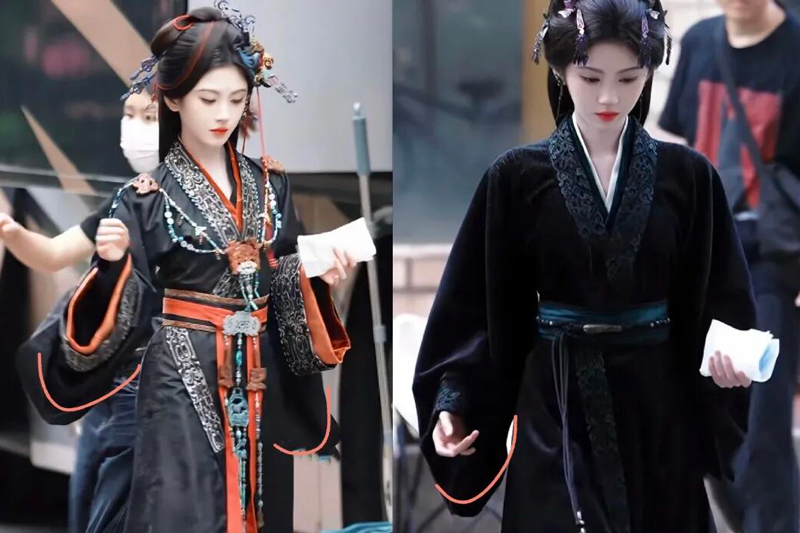
So what is the takeaway? Distinguish between “inspired by” and “restored from.” Wanhua Shijie never claimed restoration; the internet did. The show’s costume team designed a dramatic, photogenic piece for a fantasy narrative—and that is their job. But when we, the audience, rename it as history, we rob the real Warring States robe of its own story. That story is not about puff sleeves or tight hems. It is about a civilization that measured cloth in meters, draped its elite in overwhelming length, and valued gravity over glamour. Next time you see a viral “Warring States robe,” ask two questions: Do the sleeves curve like a lute? Does the hem split like a V? If yes, it is a beautiful phantom—not a ghost from the tomb.