
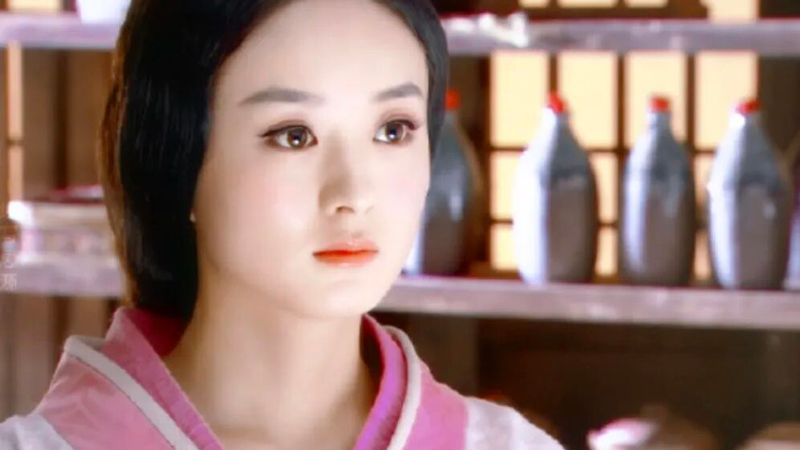
For years, viewers have watched her command battlefields as a general, navigate political intrigue as a clever official’s wife, and wield magic as a powerful deity. Now, rumors swirl that Zhao Liying (赵丽颖) is in talks to step into the sandals of Wei Zifu (卫子夫), the legendary Han Dynasty empress. The proposed project, Han Dynasty Epic (大汉赋), allegedly casts her in multiple roles, including Wei Zifu, Consort Gouyi, and Empress Yin Lihua, which immediately sparks a single question: can she finally shatter her own well-established screen persona?
The Role That Defies Her Image
Her most memorable costume dramas are firmly rooted in the Tang, Song, and Ming dynasties, or in entirely fictional worlds. From the spirited Princess Agents to the resilient The Story of Minglan, she has built a career on characters with a distinctly modern, defiant spirit. But Wei Zifu’s story belongs to the Western Han, a period with a completely different aesthetic and social code.
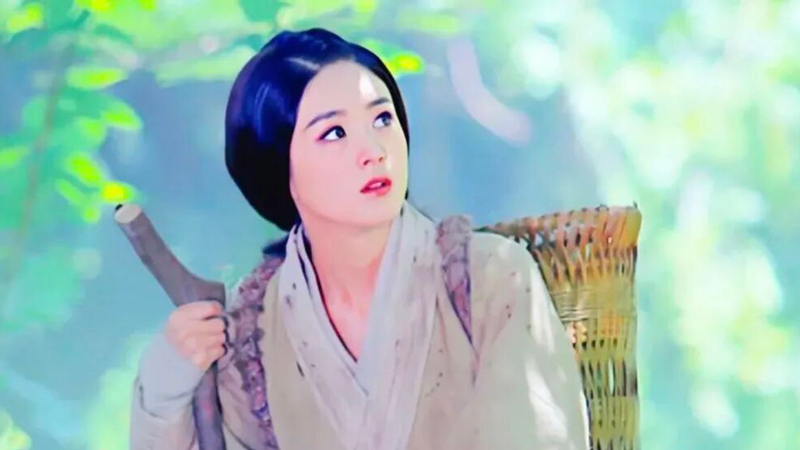
The historical figure herself presents a fascinating contrast to her usual roles. Wei Zifu began as a humble singer in the household of Princess Pingyang, surviving through caution and quiet grace. She rose to become empress for nearly forty years, navigating the treacherous currents of the imperial harem not with sharp wit or open rebellion, but with immense, water-like resilience. Her power was internal, a long exercise in self-restraint and endurance. This is not the familiar Zhao Liying who fights her way out of corners; it is a woman who must preserve her family and herself within the gilded cage of the palace, a performance demanding subtlety and deep emotional restraint.
Recreating Han Dynasty Aesthetics
Beyond the performance, history enthusiasts and costume drama aficionados are fixated on a different challenge: will the production accurately portray the clothing of the Han Dynasty’s golden age? Many period dramas lazily borrow costumes from later eras, draping Tang-style wide sleeves or Ming-style phoenix crowns on Han characters, creating a jarring historical inaccuracy.
Wei Zifu lived during the reign of Emperor Wu, the peak of the Western Han. The formal attire for noblewomen was the Quju Shenyi (曲裾深衣), a style meticulously documented in artifacts like the Ma Wang Dui (马王堆) Han tombs. This robe features a crossed collar, always folding to the right, with a lengthened front panel that wraps around the body. The hem is long and narrow, designed so the wearer’s feet are not exposed when walking—a stark contrast to the voluminous robes of later dynasties. The cut was tailored to fit the body, with sleeves available in both narrow and wide styles. The layered collars, revealing multiple undergarment edges, created the famous “three-layer garment” effect.
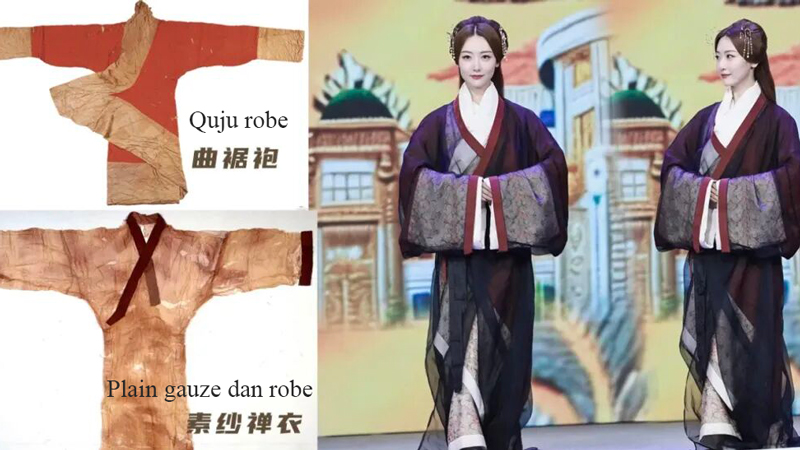
Color and pattern were also highly symbolic. The Han preferred subdued, elegant hues like deep red, tea-brown, off-white, and dark green over the bright dyes popular in later periods. Decorative motifs favored dynamic cloud patterns, dragons, phoenixes, birds, and geometric dogwood designs, reflecting the free-flowing style of the Chu culture. Elaborate floral patterns were rare. The accessories were equally restrained; empresses didn’t wear heavy, jewel-encrusted crowns. Their hair was often simply arranged with jade hairpins and a walking step, while a jade pendant at the waist would chime softly with each step, a sound that was itself a part of courtly etiquette.
A Nuanced Performance in the Making
If the production team commits to historical accuracy, referencing tomb figurines and textiles from archaeological finds, they have the opportunity to redefine the public’s visual perception of Han Dynasty fashion. However, the real test for Zhao Liying lies in the script and how she channels the profound transformation of her character.
Her journey requires navigating a life that traverses extreme social strata. The costume design itself must tell this story: from the simple short jacket and long skirt of a common singer, made of plain hemp cloth, to the luxurious silk and intricate embroidery of an empress. These visual cues are not mere decoration; they are integral to her performance, marking her ascent and eventual descent.
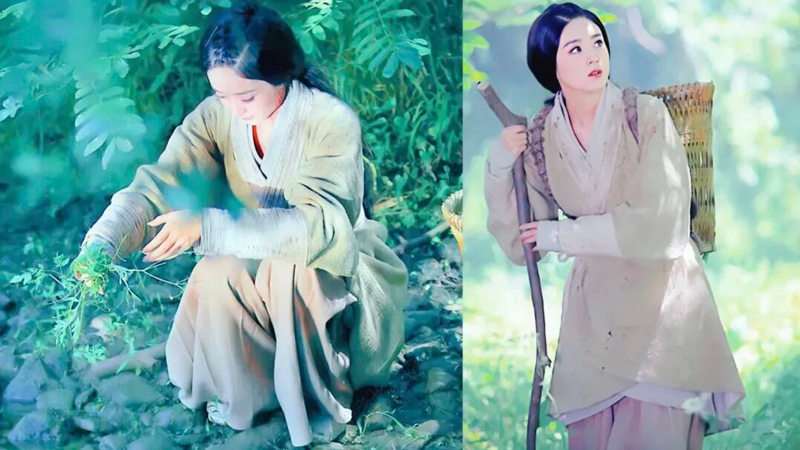
To strip away the aggressive aura of her “strong female” characters and embody a queen who survives through quiet endurance under the absolute power of the emperor is a formidable acting challenge. It demands a departure from the fiery defiance she is known for, asking her to find strength in stillness and tragedy in restraint. The public is accustomed to watching her fight; this time, they might watch her survive. Can she do it? The answer will determine whether this becomes a definitive role in her career or just another historical footnote. What do you think?