
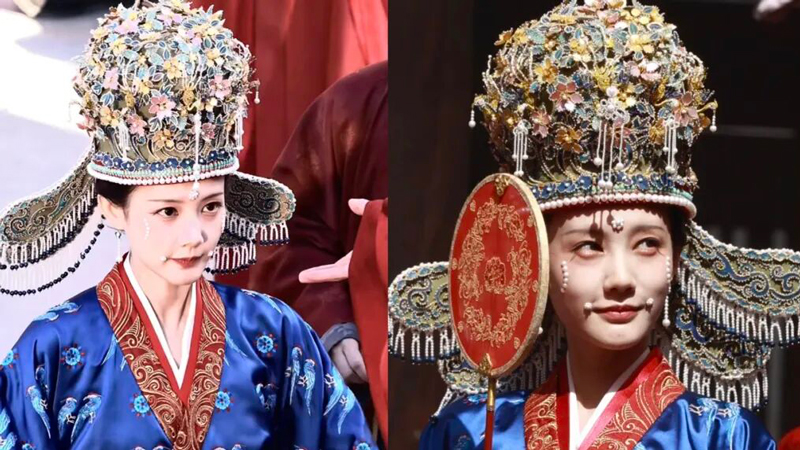
Is it possible that a costume from a historical drama could double as a museum exhibit? If the praise for Li Yitong’s latest on-screen look is anything to go by, the answer is a resounding yes. Her outfit in the upcoming series Jin Zhi (金枝) has not only captivated audiences but sparked a specific kind of admiration: a recognition of authenticity.
Viewers felt as if they were peering into a glass display case rather than watching a costume drama, a testament to how rarely such visual reverence is achieved in the genre. This reaction signals a significant shift in audience expectations, moving beyond mere aesthetics toward a demand for historical substance.
The Blueprint from the Archives
What exactly did Li Yitong wear that generated such a buzz? The centerpiece is not a classic Fengguan (凤冠), or phoenix crown, as many assumed, but rather a specific type of ceremonial headdress known as a Huachai Guan (花钗冠). This style was strictly regulated for use by royal consorts and the crown princess during the Song Dynasty.
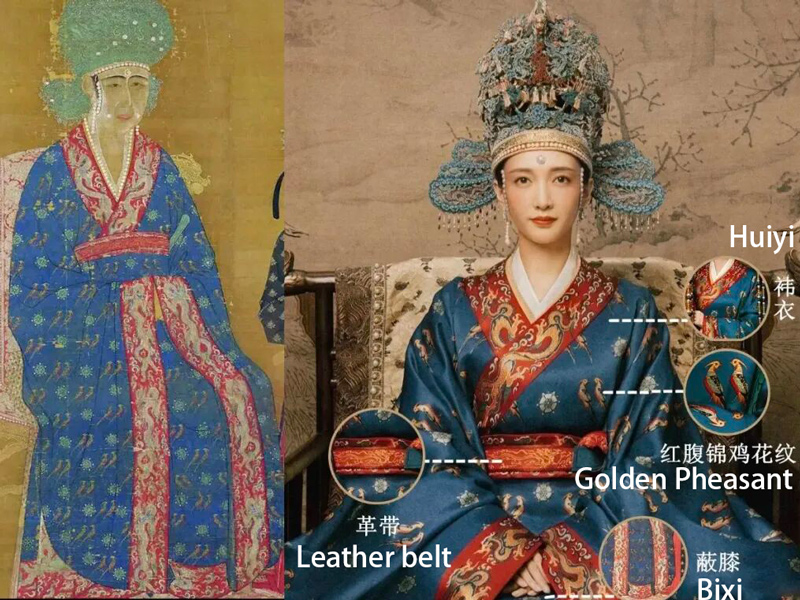
The overall ensemble, known as Di Yi (翟衣), was the highest form of ceremonial attire for noblewomen. While there are undeniably some creative liberties taken for the screen, the production team clearly consulted the same visual archives that historians do—the well-preserved imperial portraits from the Song era. These ancient paintings served as the primary reference, making the costume a commendable effort in an industry often criticized for its lack of historical rigor.
A Century of Disruption and Revival
To appreciate the outfit’s significance, one must understand the turbulent history it represents. The Song Dynasty’s refined ceremonial codes were so detailed that they dictated everything from the number of flower ornaments to the direction a mythical bird faced. However, this unbroken lineage was violently interrupted when the Yuan Dynasty came to power. The Mongol rulers abandoned the traditional Han Chinese court attire, adopting their own steppe customs, and the intricate system of the Di Yi was effectively erased from the official court for nearly a century.
It was not until the establishment of the Ming Dynasty that this lost tradition was resurrected. The founding emperor, seeking to restore Han cultural identity, ordered a wholesale revival of ancient rituals. The Hongwu (洪武) Emperor’s officials painstakingly reconstructed the Di Yi regulations, establishing a new standard. This explains the striking similarities and minor differences between the Song and Ming styles, which frequently lead to confusion among costume designers and audiences alike. The Ming revival was a conscious act of cultural reclamation, making the Di Yi not just a garment, but a symbol of a civilization’s enduring legacy.
The Language of Silk and Gold
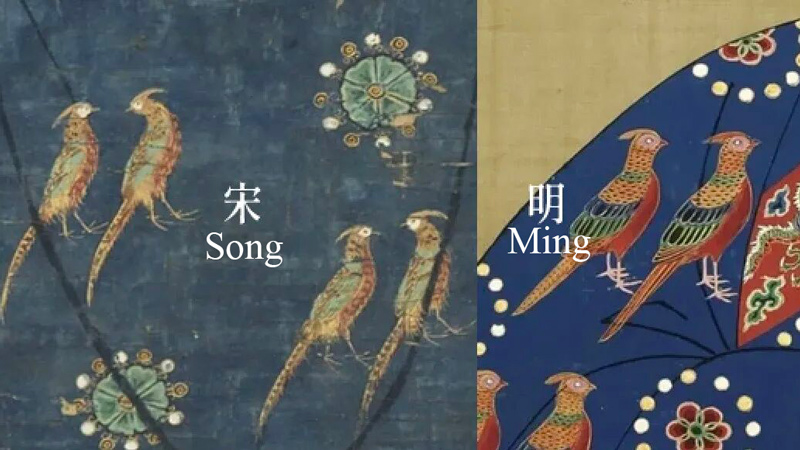
The most telling detail of the costume is the Di bird itself, which is an embroidery pattern based on the “Golden Pheasant”. This Chinese bird, with its golden head and crimson belly, perfectly matched the “red base and five colors” stipulated in ancient texts. Its status was supreme, making it the exclusive emblem for the emperor’s highest-ranking female family members. The strict arrangement of these birds—in groups of twelve pairs, separated by small flowers known as Xiaolunhua (小轮花)—created a visual language of power and order that is fundamental to understanding feudal hierarchy.
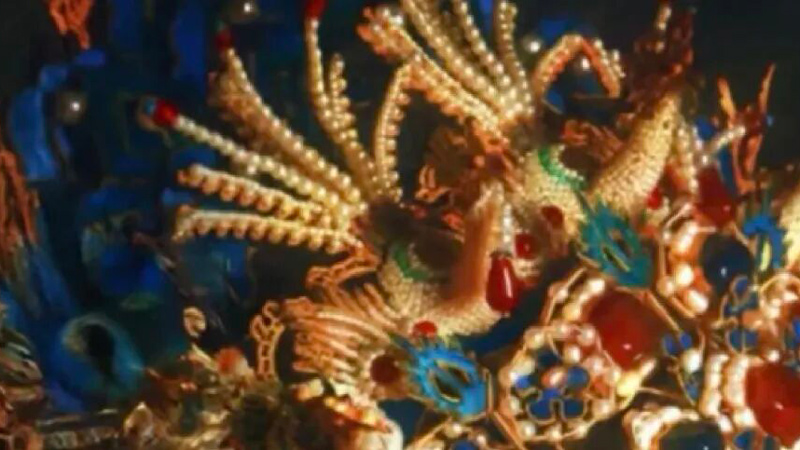
For the casual viewer, the easiest way to distinguish a Song costume from a Ming one lies in the headdress. Song-era crowns were lavish with pearls, with the empress’s crown boasting up to twenty-four floral ornaments and a spectacular “Queen Mother of the West” figurine. The History of Song (宋史) explicitly details the use of pearls throughout the crown. In contrast, the Ming style shifted toward intricate gold filigree and precious stone inlay. While the Ming crowns were heavier, with one surviving example weighing nearly three kilograms, they moved away from the pearl-dominated aesthetic of their predecessors, showcasing the evolution of Chinese craftsmanship over the centuries.