
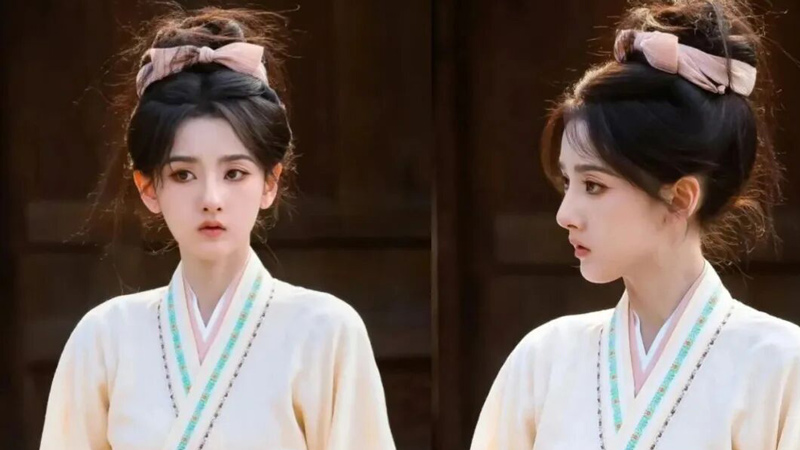
Does a simple ribbon bow on a historical drama heroine’s head signal a fashion faux pas? When Song Zuer ‘s trailer for the upcoming period drama Si Gong Ling (司宫令) dropped, sharp-eyed viewers immediately zeroed in on her hairstyle. Tied neatly into her updo was what looked like a modern ribbon bow, the kind you might see in a contemporary accessory shop. Whispers of historical inaccuracy began to circulate.
Yet, a closer examination of the Song Dynasty (960-1279) setting reveals that this wasn’t a blunder but a deliberate nod to the everyday reality of women’s lives over a thousand years ago. For ordinary women, a ribbon wasn’t just a decoration; it was a practical necessity.
Heavy gold and jade hairpins were the luxury of the elite, but for those tending to housework and farming, a soft cloth band was the most sensible tool to keep hair securely out of the way. Texts like Zhu Zi Jia Li (朱子家礼) and Shi Wu Ji Yuan (事物纪原) document the widespread use of these bands for securing hair, proving its deep roots in daily life.
An Ancient Utility
The instinct to tie back long hair is primal. As far back as the Neolithic Age, people used ropes and strips of cloth for the purely practical purpose of keeping hair manageable during hunting and labor. This wasn’t about fashion; it was about function. During the Shang (c. 1600–1046 BC) and Zhou (1046–256 BC) dynasties, while the elite used ornate Ji (笄) and Zan (簪) to secure their sophisticated buns, commoners relied on the versatility of silk ribbons. They would tie these around the base of their buns, creating simple knots to keep everything in place.
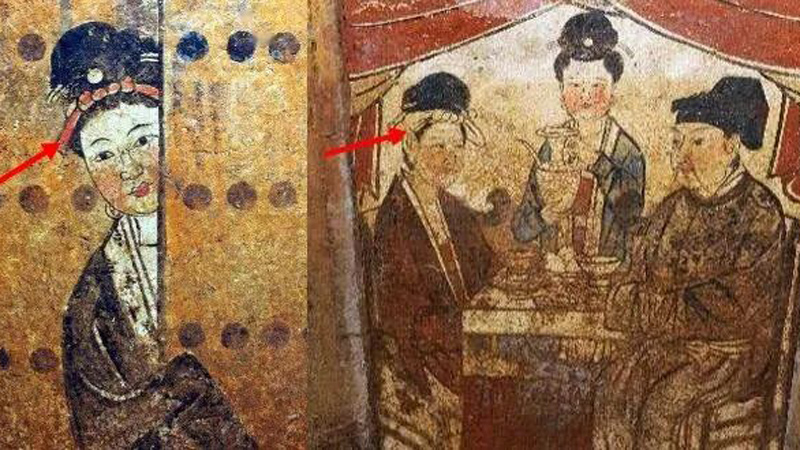
These were the earliest, most rudimentary ancestors of the bow. It wasn’t until the Song Dynasty that this practical solution evolved into a widespread trend. Mural paintings discovered in a Song tomb at Dengfeng, Henan, offer vivid evidence, depicting numerous women with bows tied in their hair, strikingly similar to the style worn by Song Zuer in the series. The very structure of this knot, known as a double-loop knot, has an even longer history, appearing as a decorative belt ornament on a male pottery figure from the Warring States period (c. 475–221 BC) excavated in Shanxi.
From the Qin (221–206 BC) and Han (202 BC–220 AD) dynasties, all the way through the Tang (618–907), Song, Yuan (1271–1368), Ming (1368–1644), and Qing (1644–1912), this dual-loop knot persisted as a significant decorative element in Chinese attire. It was not confined to hair. The famous murals in the tomb of Princess Yongtai (永泰公主) from the Tang era, alongside Tang dynasty female figurines, clearly show its use as a sash tied at the waist. The knot was a flexible and enduring feature of the Chinese wardrobe.
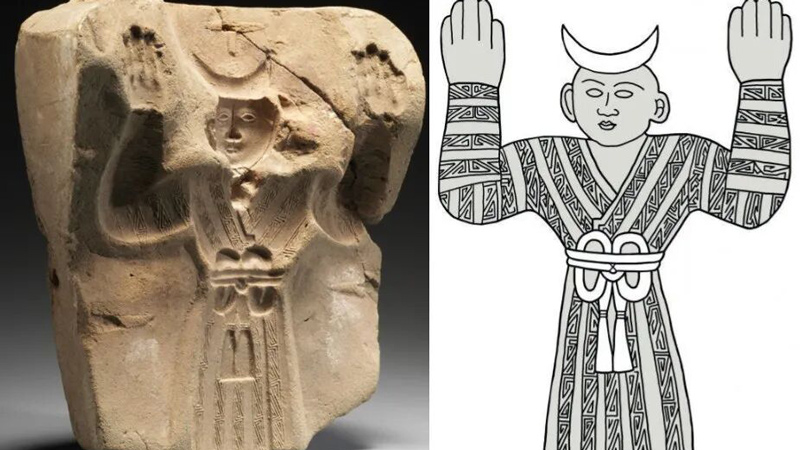
By the Qing dynasty, its decorative function reached a new peak. It became more ornate, with vibrant colors and intricate patterns, often paired with auspicious symbols to convey blessings for good fortune and longevity. It’s important to note that this technique is a direct precursor to the structural core of many foundational knots used in the intricate Pan Kou (盘扣, frog closures) that became iconic during this later period. This continuous, documented lineage firmly establishes it as a native tradition, challenging any notion that it was a Western import.
An Aesthetic of Simplicity
Why did the Song Dynasty, in particular, become a golden age for the ribbon bow? The answer lies in a distinct cultural shift. Compared to the opulent and extroverted style of the preceding Tang Dynasty, the Song era was characterized by a more restrained and introspective aesthetic. This was a period of great philosophical and literary achievement, where simplicity and subtlety were prized above all. This preference for clean lines and understated elegance permeated every aspect of life, from the celebrated celadon ceramics to minimalist clothing designs and the sleek forms of everyday objects. A plain-colored cloth tied into a bow perfectly embodied this spirit. It allowed a woman to present a neat, clean appearance without appearing ostentatious, harmonizing with the societal ideal of gentleness and refinement. It wasn’t a statement of wealth, but of quiet, good taste.
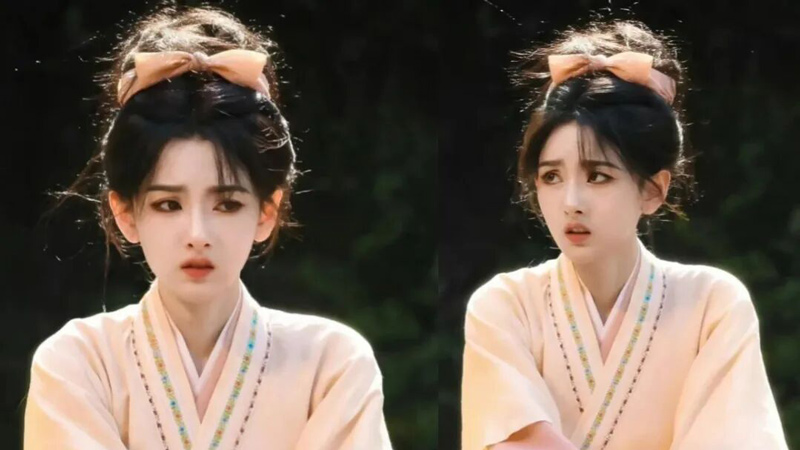
Furthermore, it aligned perfectly with a cultural obsession that ran deeper than just aesthetic trends. The people of the Song Dynasty had a profound appreciation for butterflies, an affinity that surpassed that of earlier dynasties. The Chinese word for butterfly, “Hu” (蝴), shares a homophonic relationship with “Fu” (福), meaning good fortune or blessings. This linguistic connection made the butterfly a potent and universally beloved symbol of luck and happiness. This fascination permeated the arts and literature of the era. The Northern Song poet Xie Yi (谢逸) famously composed over 300 poems dedicated solely to butterflies. Literary giants like Lu You (陆游) and Su Shi (苏轼) also penned verses celebrating the insect’s beauty and symbolic meaning. By wearing a bow that mimicked the shape and grace of butterfly wings, women were not just styling their hair; they were directly channeling a popular cultural motif, weaving an emblem of good fortune and literary reverence into their daily appearance.
A Continuous Thread
This wasn’t a fleeting trend but a deeply embedded cultural practice. The core function remained constant: to secure those pesky wispy strands of hair while simultaneously adding a touch of grace to the overall silhouette. A hairstyle with a bow is a mark of a woman who is both practical and mindful of her appearance. The bow’s ability to be practical, neat, and gently attractive made it a mainstay for women from all walks of life for centuries. Its enduring presence across so many periods speaks to its versatility. It could be adapted to suit the opulence of the Tang, the grace of the Song, or the intricacy of the Qing, always retaining its essential character.
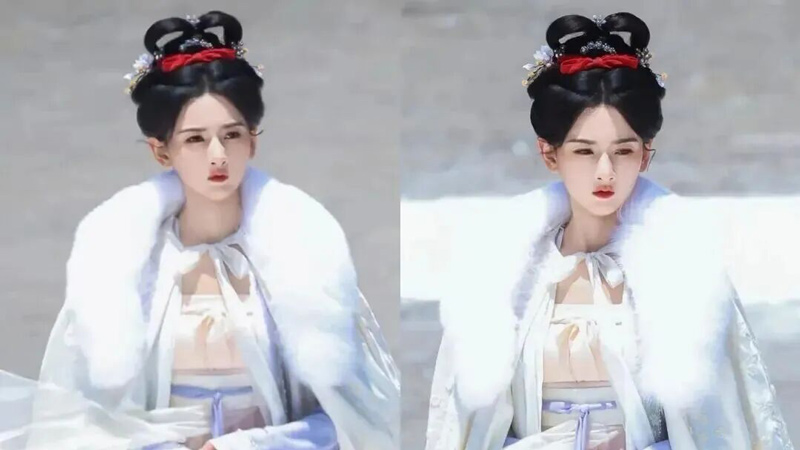
So, what about Song Zuer’s hairstyle in Si Gong Ling? The observation that she is sporting a ribbon bow is entirely accurate for the period her character inhabits. However, the common assumption of anachronism stems primarily from a gap in our collective visual memory. Period dramas from the past few decades often focused on the elaborate hairstyles of nobility, leaving the simpler, more common fashions largely unseen. This created an incomplete picture of historical dress. In truth, the hair ribbon is not an anomaly but a signature element of authentic Song Dynasty fashion for women. The modern “ribbon” trend we see in shops and on the street today is not a modern invention but a revival. It is a direct descendant of this long tradition, drawing inspiration from its ancient roots. The materials may have diversified and the tying methods multiplied, yet the dual purpose of securing and adorning has remained unchanged over the centuries, connecting the modern fashionista to her Song-era counterpart.