
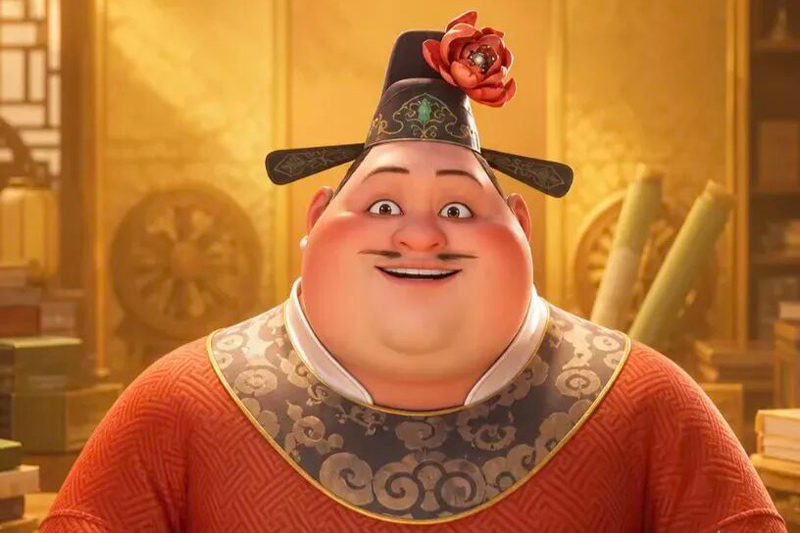
The latest Chinese animated feature Ba Xian! (八仙!) has ignited fierce debate, not for its plot or visuals, but for one character’s shocking makeover. Cao Guojiu (曹国舅), traditionally the most dignified and aristocratic member of the legendary Taoist pantheon, appears on screen as a plump, flamboyantly dressed figure with a flower tucked in his hat, swaying and smirking with theatrical flair. Many viewers are asking: is this a bold reinvention or a careless distortion that confuses a generation raised on classic tales? The answer lies not in simple outrage, but in a fascinating journey through history, opera, and religious mythmaking.
The Shocking Cinematic Design
In the film, he wears a Ming-style futou (幞头, a traditional official’s headdress) but with decorative elements borrowed from Qing dynasty opera, paired with a modified round-collared robe that mimics ancient court attire. Critics point to two glaring issues: his obese, almost comical physique and his deliberately effeminate mannerisms—raised eyebrows, twisted postures, and delicate hand gestures—which have been labeled by some as a caricature of femininity. The film’s defenders claim this is a modern twist, a satire of the overworked celestial bureaucracy that breaks stereotypes and injects fresh humor. Opponents, however, argue that when children watch this, they may mistake this parody for the actual historical figure. This tension between creative liberty and cultural memory is what makes the controversy so compelling.
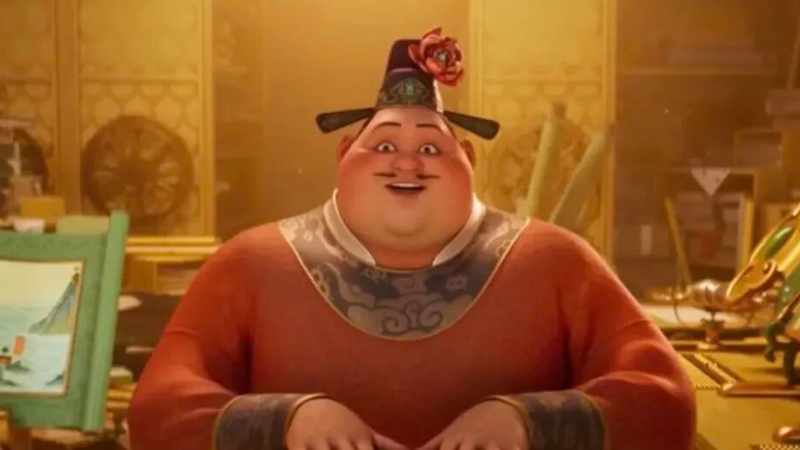
To understand the backlash, one must look at traditional portrayals. In classic folk paintings, New Year prints, and old regional operas, he is always the embodiment of nobility. He wears a flowing red official gown, a black gauze cap, and holds a pair of jade tablets (which were actually a novel addition from Ming dynasty fiction). His face is solemn, his beard neat, his posture impeccably upright—a retired imperial relative who carries himself with quiet authority. There is no trace of obesity, buffoonery, or flamboyance. The film’s exaggerated performance style turns that dignified minister into a court jester. The flower on his head—a nod to the Song dynasty custom of men wearing blossoms—is historically valid, but its execution here only amplifies the discord, as it clashes violently with the gravitas expected of a celestial official.
History vs. Folklore
His historical prototype, Cao Yi (曹佾), was a real person. The History of Song (宋史) describes him as the grandson of a founding general and the younger brother of Empress Cao, the wife of Emperor Renzong. He was known for his graceful appearance, gentle temperament, mastery of music, skill in archery, and a talent for poetry. Emperor Shenzong (神宗) once praised him as a self-disciplined and utterly loyal subject. He held high military office for decades, carefully avoided any hint of political intrigue, served four emperors, and died peacefully at the age of seventy-two, posthumously honored as a prince. His true life contained no scandal, no flight into the mountains, and no religious awakening. He was, by all accounts, a model courtier.
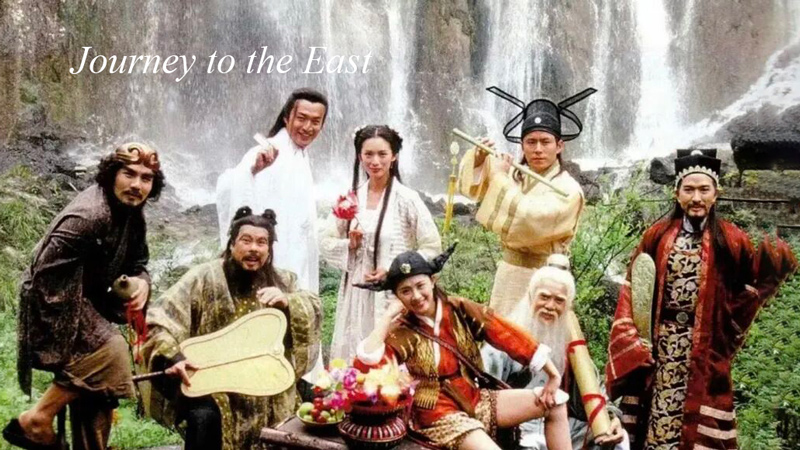
So where did the familiar story of the remorseful sinner come from? During the Jin and Yuan dynasties, the Quanzhen (全真) sect of Taoism was actively constructing a pantheon of immortals to attract followers. They needed to co-opt historical figures, and the name “Imperial Brother-in-Law” was too good to waste. Yuan dynasty plays and Taoist hagiographies began weaving a fictional tale: his younger brother terrorized the populace, and he, ashamed of his family’s crimes, gave away his fortune, retreated to the mountains, and was eventually enlightened by Zhongli Quan (钟离权) and Lü Dongbin (吕洞宾), two legendary Taoist masters. This fiction was cemented in the popular Ming novel Journey to the East (东游记). The entire narrative was invented to convey a moral lesson about renouncing worldly wealth—a core Taoist ideal—but it borrowed only the historical title, not the man’s real character.
Protecting the Legacy
Over centuries, the character evolved. In Yuan drama, he was a hermit-teacher; in Ming and Qing art, he became the elegant, red-robed official we remember. At no point was he ever a clown. The modern animated version breaks this uninterrupted chain of dignified representation. While adaptation is necessary for art to remain alive, there is a crucial difference between innovative reinterpretation and the wholesale erasure of a character’s essence. The core of his identity, whether in history or folklore, is his introspection, his rejection of vanity, and his serene dignity. That quiet strength is what made him relatable as a figure who chose silence over power. The film’s gag-heavy, exaggerated portrayal does not subvert this; it simply replaces it with a hollow punchline.
Critics worry that many young viewers, lacking historical knowledge, will absorb this parody as the definitive version. This is not a trivial concern. In an age where visual media is the primary source of cultural education for many, films carry a heavy responsibility. When a character’s fundamental traits—honor, composure, self-restraint—are stripped away for cheap humor, the loss is not just artistic but educational. The line between “creative adaptation” and “cultural misrepresentation” becomes dangerously blurred. Mythological figures, by their very nature, are endlessly rewritten. Every generation projects its values onto them. However, that fluidity does not grant immunity from criticism. Rewriting must engage with the core spirit, not mock it.
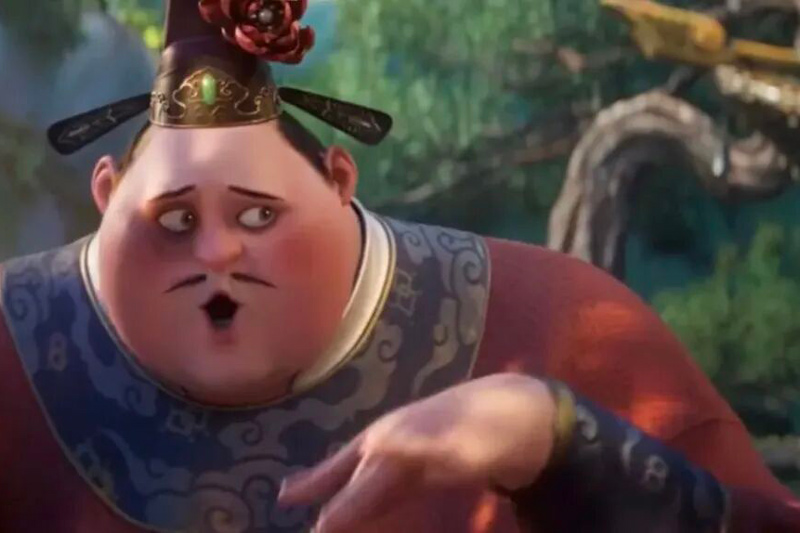
Ultimately, the Ba Xian! controversy is a mirror reflecting our own anxiety about preserving tradition in a rapidly modernizing world. The film’s creators had the freedom to experiment, but audiences also have the right to reject a portrayal that feels disrespectful to a shared cultural inheritance. The debate is healthy, forcing us to articulate what we value in these ancient stories. Perhaps the most important takeaway is the conversation itself—a reminder that these characters are not just relics but living symbols that we are still negotiating. Whether future adaptations will heed this backlash or double down on shock value remains to be seen, but for now, Cao Guojiu’s bloated, grinning ghost serves as a cautionary tale about the price of forgetting where we came from.