
On August 8, 2026, the launch ceremony for the Yanjing Bada (Eight Imperial Crafts of Beijing) Harbin Exhibition Center, themed “Jingyun Gongyi, Huiju Longjiang” (京韵宫艺 汇耀龙江), was held at the Harbin Museum. Co-hosted by the Beijing Yanjing Bada Museum and the Harbin Museum, the ceremony marked the first permanent display window for the eight imperial crafts in Heilongjiang Province. Arts-and-crafts masters and intangible heritage inheritors from Beijing and Harbin gathered in the ice city to witness the court crafts of the capital take root in the northeast.
Eight Imperial Crafts, One Center
Xie Ping (解萍), deputy curator of the Harbin Museum, delivered the welcome address. Bai Qun (柏群), curator of the Beijing Yanjing Bada Museum, said in his speech that the Yanjing Bada tradition grew out of the imperial workshops of the Ming and Qing dynasties, gathering eight national intangible heritage crafts and carrying a millennium of court technique and Eastern aesthetics. Bringing the center to Harbin, he said, is an important exploration of cross-regional heritage innovation and a living practice of spreading fine traditional Chinese culture across regions.
Guo Chonglin (郭崇林), vice chairman of the China Folk Literature and Art Association; Xia Lijun (夏立军), curator of the Gold Lacquer Art Hall of the Harbin Museum; and Li Chunke (李春珂), a master of ivory carving under China Arts and Crafts, each shared views on heritage protection, craft inheritance and cultural dissemination. They hoped the platform would become a window onto the beauty of intangible heritage and a bridge connecting the cultural veins of Beijing and Harbin, drawing more people toward heritage appreciation and participation in its preservation.
Museums, Masters and a Cooperation Pact
At the ceremony, Bai Qun and Zhang Jianxin (张建鑫), curator of the Harbin Museum, signed a strategic cooperation agreement covering heritage protection, exhibition exchange and talent training, establishing a long-term platform for cultural exchange and mutual learning between the two cities. After the signing, the Beijing Yanjing Bada Museum presented the center with a gold-lacquer inlay imperial appreciation plate titled “Mayou Fu” as a treasured collection — the name puns on “fortune on horseback” and “fortune arriving at once” — carrying the two cities’ shared hopes for craft exchange. With all guests witnessing the moment, Lang Qingsong (郎庆松), secretary-general of the Heilongjiang Folk Literature and Art Association, declared the Yanjing Bada Harbin Exhibition Center officially open.
Jingxiu and Seven Other Court Crafts
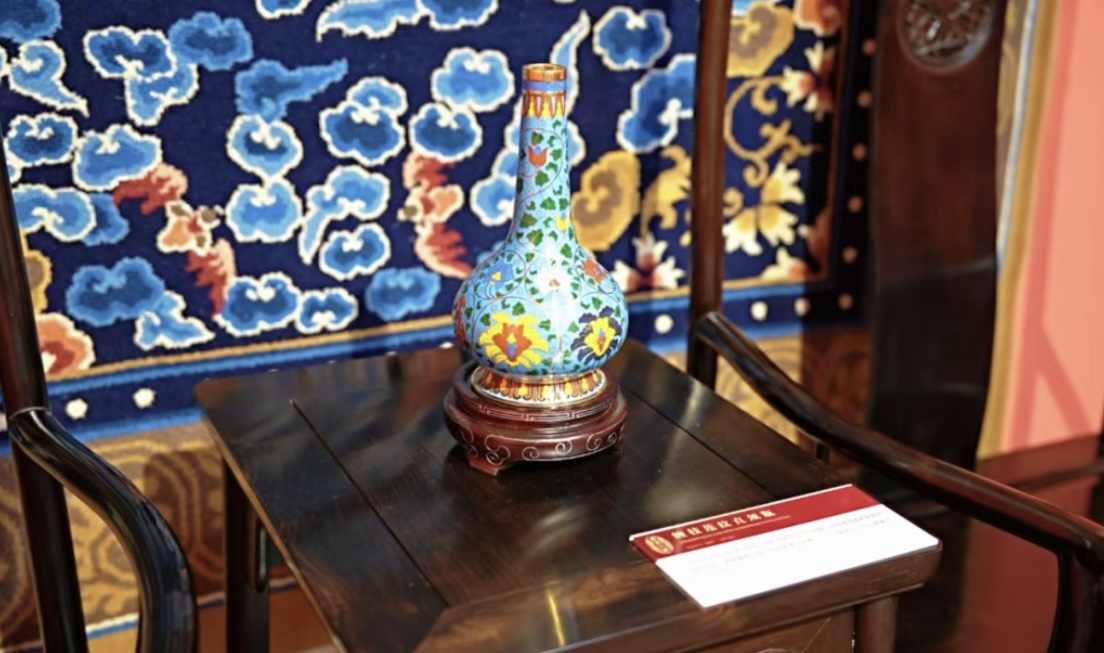
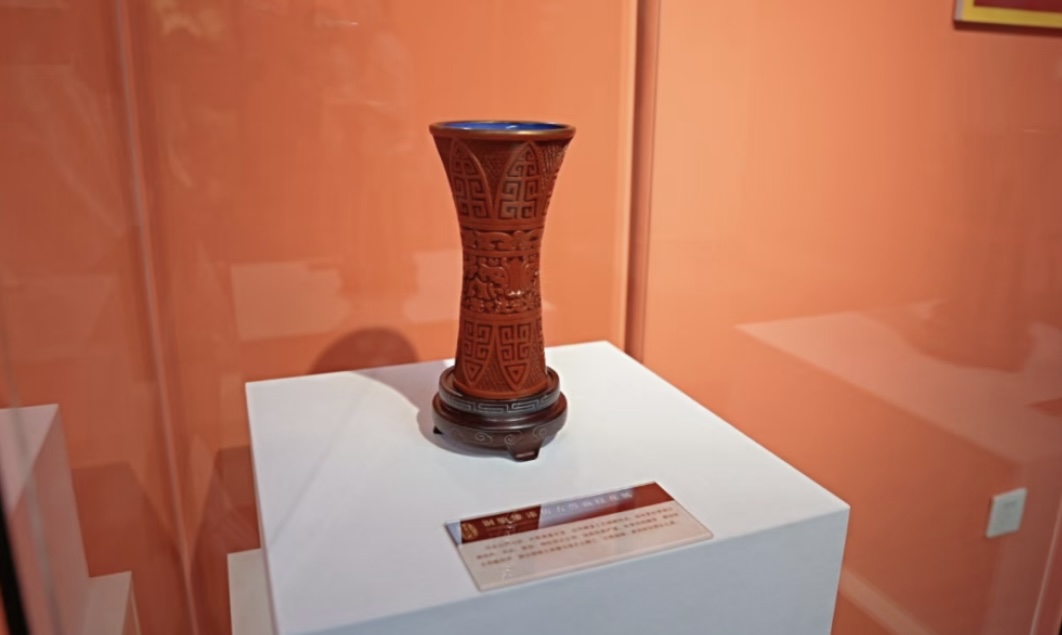
The center presents eight national intangible heritage techniques — gold-lacquer inlay, filigree inlay, cloisonné, ivory carving, jade carving, carved lacquer, Jingxiu (Beijing embroidery) and imperial carpet — combining static displays with interactive experiences so that the public can get close to the refined workmanship of imperial art. Among them, Jingxiu is the culmination of Qing-dynasty court embroidery, known for its dense composition, vivid colors and intricate stitching, and it shares the same lineage as court textile crafts such as Yunjin brocade and Kesi silk tapestry. Its arrival in Heilongjiang gives northeastern audiences a close view of imperial embroidery.
The Harbin Museum said the launch of the center is an important result of deepened cultural cooperation between Beijing and Harbin, injecting new cultural momentum into the city and building a high-end carrier for heritage exchange between the two regions. The museum will continue to deepen heritage co-construction, cultural sharing and resource exchange, and explore new paths for intangible heritage protection and innovative development rooted in Heilongjiang, keeping the millennial court crafts alive in the northeast.