
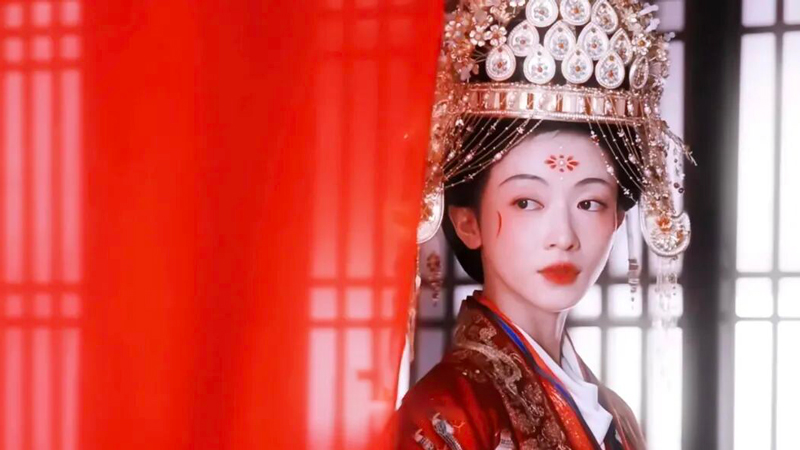
Yangzhou (扬州), 648 AD. A queen’s crown is lowered into the earth beside her emperor. Nearly 1,400 years later, that same crown – shattered into a hundred fragments – forces a question: why does Royal Betrothal (御廷谣) turn its most authentic relic into a strange, tasseled spectacle?
The answer is not about bad taste. It is about a collision between archaeological truth and the visual shorthand of modern costume dramas. When Wu Jinyan (吴谨言) appears as Meng Tinghui (孟廷辉) wearing that twelve‑gold‑flower crown, half the audience sees a museum piece; the other half sees a Qing‑dynasty curtain dangling from a Sui‑dynasty frame. This tension – between what was and what sells – makes her look not wrong, but weirdly out of time. And that weirdness has a story of its own.
The Crown That Never Slept
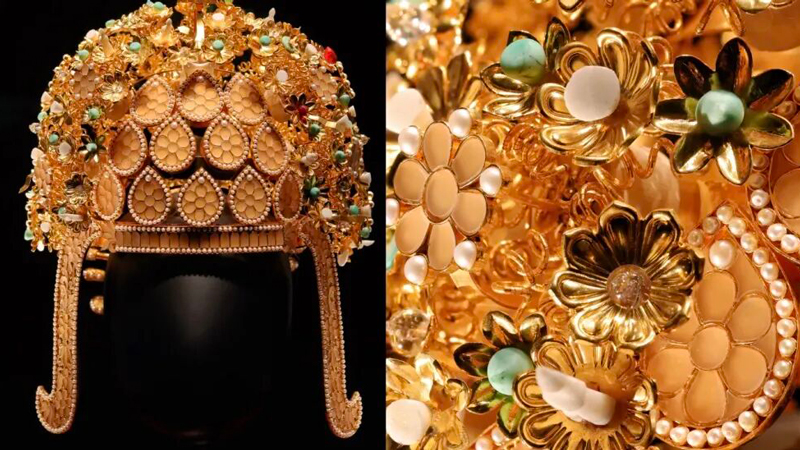
Let us name the ghost: the Empress Xiao (萧) crown, unearthed near Yangzhou in 2013. It belonged to Empress Xiao (567–647), wife of Emperor Yang of Sui (隋炀帝), a woman who outlived six dynasties and was buried with full royal honours. When archaeologists opened her tomb, they did not find a crown – they found a pile of gold leaves, copper wires, and corroded pearls, so broken that no one could tell it was once a phoenix headpiece.
Restorers spent years reconstructing it. The original is a marvel of modular design: a black silk cap base as the foundation, two side wings framing the face, twelve gold droplets arranged like a blooming lotus on the front, and a forest of tiny flowering trees made of bronze and wood springs. Each of those twelve droplets was not decorative – it was a rank badge. Twelve meant empress. Nine meant imperial concubine. Eight for a second‑rank noblewoman, seven for a third. The crown was a legal document worn on the head.
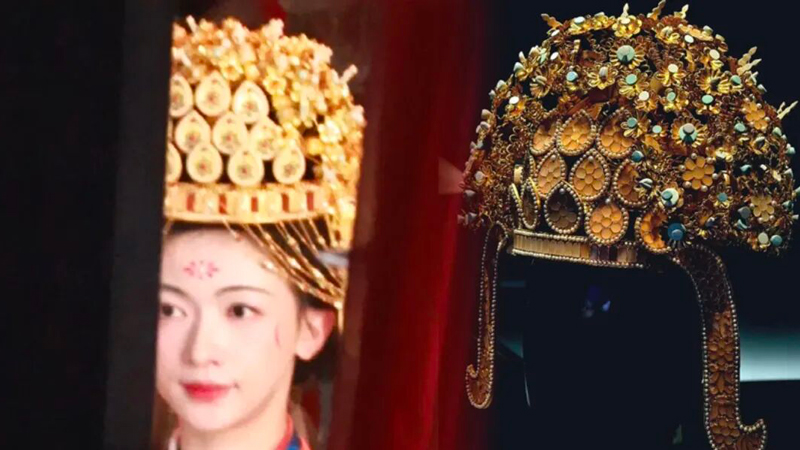
Wu Jinyan’s prop replicates that twelve‑droplet count perfectly. In terms of status, her character>Meng Tinghui wears the highest possible rank. But the restorer’s precision stops at the count. The original crown had no long face‑veil tassels – those dangling strings of beads that swing with every head tilt. That feature belongs to late Qing dynasty bridal headdresses, nearly a millennium later. The show’s designer grafted it onto the Sui frame, and that hybrid creates the uncanny valley: too historically loaded to be pure fantasy, too fantasised to be respectful history.
What the Tassels Hide
The tassels are not a small detail. In the original Empress Xiao crown, the face was fully visible – the crown sat high and forward, allowing courtiers to read the empress’s expressions during ceremonies. That visibility was political. A Sui empress was not a hidden jewel; she was a public co‑regent in ritual space. The long curtain, by contrast, obscures the face, turning the wearer into a decorative object. That shift from political presence to aesthetic mystery is precisely what feels jarring to viewers who sense that something is off.
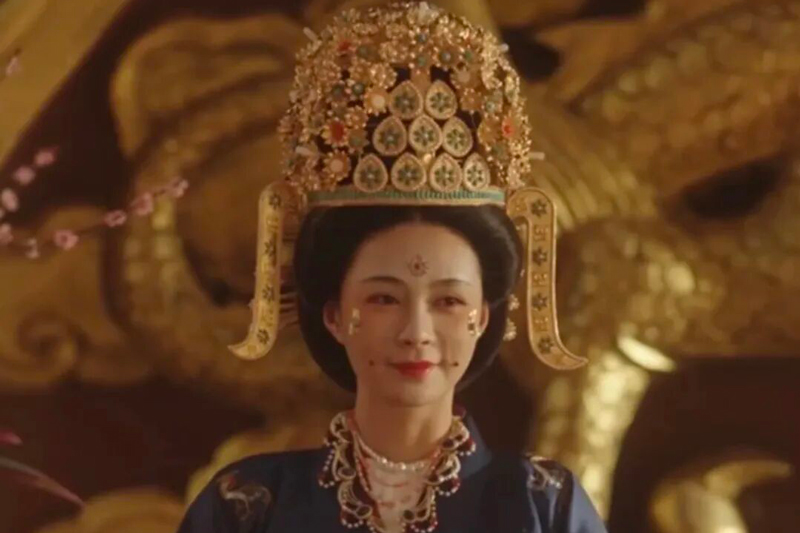
Previous dramas have used the same crown type without the tassels. In Wind From Luoyang (风起洛阳), Song Y (宋轶) wore a nine‑droplet version – clean, stark, and immediately readable as Tang‑adjacent formality. In Flourished Peony (锦绣芳华), Shen Mengchen (沈梦辰) donned similar pieces that followed the archaeological silhouette. None of those looks sparked confusion. The only variable is that dangling curtain, which transforms a ceremonial object into a stage prop.
Why did the costume team add it? Likely for dynamic screen appeal – tassels catch light, move with the actor, and signal “royal” to a modern audience trained by Qing‑era epics. But that appeal comes at a cost. The crown’s original majesty lay in its stillness and structural logic: each gold droplet sits on a springy copper stem, surrounded by twelve spiral wires, so the whole flower tree trembles slightly with the wearer’s pulse – not with exaggerated sway. The tassels overwrite that subtle life with a theatrical flourish, making the empress look less like a ruler and more like a bridal doll.
Authenticity vs. Audience Joy
Critics online have asked: “Should artistic adaptation have boundaries?” It is a fair question, but the answer is not a simple yes or no. Costume dramas are not documentaries. They borrow from multiple eras to build a visual language that feels “ancient” without being strictly accurate. Royal Betrothal is set in a fictional dynasty, so historical fidelity is not legally required. Yet when a prop directly quotes a famous museum artefact – and the Empress Xiao crown is now displayed in the Yangzhou Mausoleum Museum (扬州隋炀帝陵遗址博物馆) with its replica side‑by‑side – the audience brings that knowledge into the viewing experience.
That is the real tension. The show invited comparison by using a recognisable artefact. Once invited, the audience becomes a jury. They compare the screen version with the glass‑case original, and the tassels fail that test – not because they are ugly, but because they violate the crown’s internal grammar. The original crown’s twelve droplets are its syntax; the tassels are a foreign dialect. Viewers do not need a degree in archaeology to feel the mismatch; they just need eyes that have seen both images online.
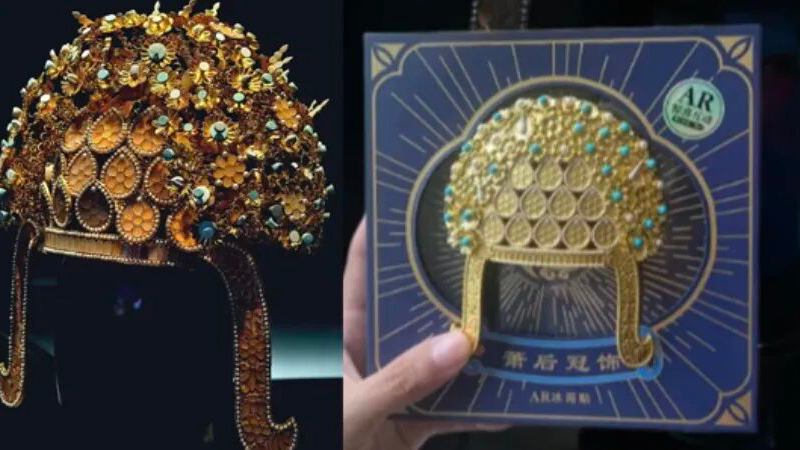
What could the show have done differently? It could have kept the tassels but changed the droplet count, signalling a fictional hybrid. Or it could have kept the exact crown and added a narrative reason – say, the empress adopts a foreign fashion to assert exotic power. Instead, it mixed real rank markers with anachronistic decorations without explanation, leaving the audience to guess whether it was ignorance or intention. That ambiguity creates the “weird” feeling – not offence, but cognitive dissonance.
For those who fall in love with the original, the Yangzhou museum offers the real experience: the restored crown, the scattered original components, and the replica that shows how every spring and bead worked. It is a quieter spectacle than any drama. No tassels swing. No dramatic lighting. Just gold and bronze and the weight of a woman who lived through chaos and was finally laid to rest with her husband. That crown does not need a face veil – it already holds a whole dynasty’s face. Whether future dramas will learn to let such artefacts speak for themselves, or continue to drape them in borrowed flourishes, is a question only the next costume designer can answer.