
At 14:30 on August 12, 2026, “Wei-Jin Hanfu: A Survey of Period Dress” — part of the museum’s traditional-culture costume program — opened at Gallery 5 on the second floor of the Zhuhai Guyuan Art Museum. The exhibition runs from August 7 through 10:30 on the morning of August 16, anchoring the venue’s summer programming around traditional Chinese dress and part of a wider regional push to weave traditional craft heritage into public exhibition calendars. It joins two other shows to form the August arts lineup, and the opening drew local heritage enthusiasts and Hanfu club members alike.
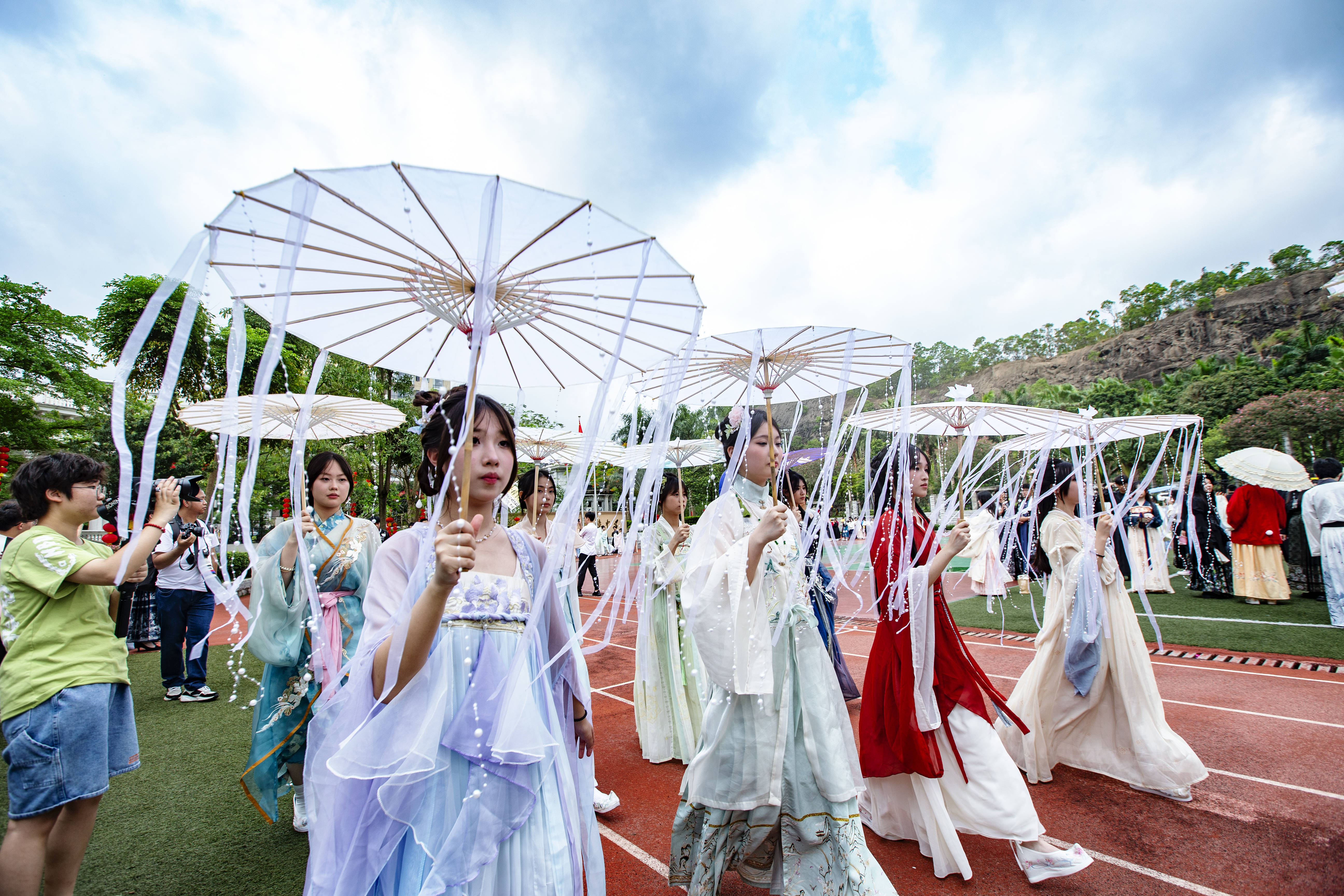
The “Wei-Jin Hanfu” display focuses on Hanfu forms and dress aesthetics of the Wei-Jin period (220–420 CE), systematically presenting the wardrobe character of that historical stage and giving visitors a close look at traditional costume culture. The era followed the Han and preceded the Northern and Southern Dynasties, and its robe culture prized naturalness over rigid formality — a visible contrast with the tighter ritual dress of earlier courts. Wei-Jin attire is known for its loose, flowing silhouette: wide sleeves and ample hems (Baoyi Bo Dai) that mirrored the period’s intellectual turn toward metaphysics and an unrestrained, self-expressive spirit. Lengths fell past the ankle, and layering grew softer, signalling status through restraint rather than ornament.
Beyond the display, the exhibition situates Wei-Jin dress within a broader turn in Chinese garment history. Where Han dynasty ritual dress stressed hierarchy and fixed forms, Wei-Jin robes loosened — longer, wider, often worn with few fastenings — as courtiers and scholars pursued a cultivated ease. The look later fed directly into the romanticized “floating immortal” silhouette of figure paintings, and its influence still reads in modern Hanfu revivals that prize drape over structure. Curators framed the show as a chance to read philosophy through cloth rather than through texts alone. That ease distinguished the period from the martial pragmatism of the preceding Han court.
The show shares the building with two companion exhibitions. On the second floor, Gallery 6 hosts “Knife and Brush, Inherited Warmth — Gu Yuan Woodcut Inheritance Special Exhibition” (August 7–September 6). On the first floor, Galleries 1–4 host “Dao yi jian Dao — The 9th Guangdong Chinese Painting (Gongbi) Exhibition” (August 8–October 11, opening August 16). The Guyuan Art Museum, named after the printmaker Gu Yuan, a pivotal figure in 20th-century Chinese woodcut art, is a key Zhuhai cultural venue hosting rotating shows of printmaking, fine-brush painting and applied arts; together the three exhibitions span woodblock, painted silk and worn garment across three artistic forms.
The Zhuhai Guyuan Art Museum is open Tuesday to Sunday, 9:00–17:00, with last admission at 16:30 (closed Mondays, except statutory holidays). For visitors, the timing pairs with midsummer travel: the museum’s climate-controlled halls offer a cool counterpoint to Zhuhai’s August heat, and the three concurrent shows let a single visit bridge craft, painting and dress. During the run, the exhibitions let visitors trace a line from carved woodblock to painted silk to worn garment in a single afternoon.