
On August 11, the People’s Daily Overseas Edition published “China Chic Wins Foreign Consumers — Bringing China’s ‘Good Products’ Home,” spotlighting the export momentum of Caoxian, Shandong, the country’s core original Hanfu production hub. Caoxian concentrates 2,822 Hanfu enterprises and more than 15,000 online stores. Its complete modern supply chain covers dyeing, embroidery and garment assembly, and can move from design to shipment in just seven days.
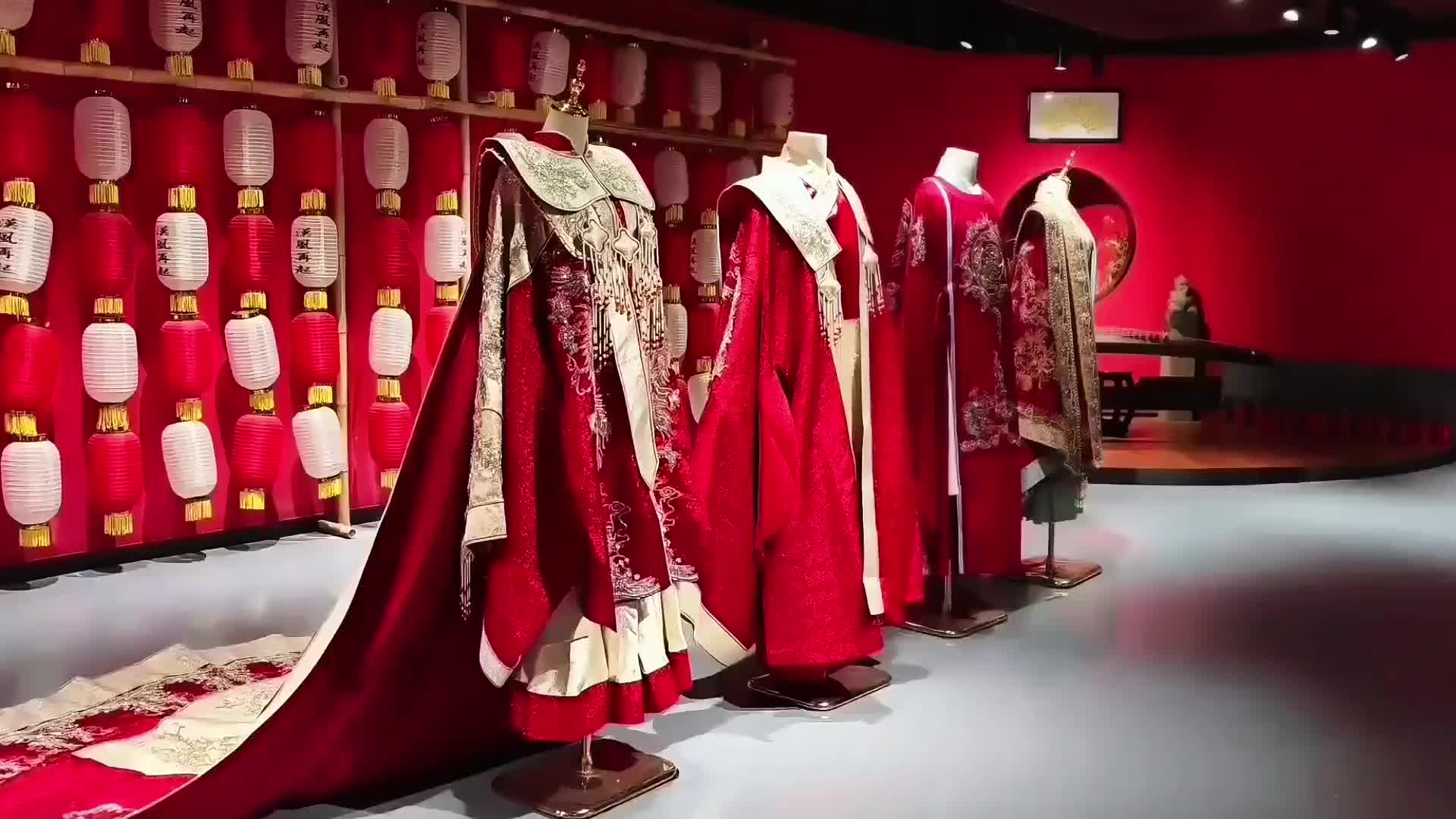
“Companies have long stepped out of the passive OEM model, blending international fashion elements into their designs and folding simple cuts and daily-wear needs into traditional motifs to keep sparking new demand,” said Hou Guodong, head of Caoxian Shengming Garment Co. “By the middle of this year, orders had already multiplied several times over.”
At the Hanfu showroom of the Jizhi Youai tech-industrial park in Caoxian, Emily, a tourist from Australia, tried on a jujube-red gold-threaded Mamianqun in front of the mirror; as the hem swayed, gold patterns glinted under the lights. Staff explained that the Mamianqun takes its name from the skirt’s central panel, which resembles the “horse-face” design of ancient city walls, and is among the most popular Hanfu styles. The showroom also displayed Yuehua skirts and Fengwei skirts in various patterns. Emily bought two Mamianqun — “one to wear, one for my sister” — praising the fusion of ancient Chinese weave-and-embroidery craft with contemporary design as “elegant, light, comfortable, and handmade.”
Hanfu’s outward journey is shifting from “product export” to “cultural export.” Universities in Malaysia have founded overseas Hanfu clubs. The Palais des Nations in Geneva, Switzerland, selected Caoxian Hanfu as a featured state gift. On Italian Hanfu runways, Tang-, Song- and Ming-dynasty systems took turns on stage, and short clips of foreign visitors trying on and touring in the outfits spread widely across overseas social platforms.
Across Caoxian’s workshops and the old-town lanes of Luoyang, Nanjing and Shanghai, Hanfu has become a Guochao symbol that can be experienced, taken home and shared. In Luoyang, Henan, many European and American visitors changed into high-waisted Qixiong Ruqun and silk Pibo shawls for photos at the Longmen Grottoes and along the Luo River; a published photo caption showed foreign visitors in Hanfu at the Luoyi Ancient City scenic area (photo by Zhang Yixi). In Nanjing’s Laomen East district, foreign visitors favored the understated Song-style Beizi jackets and hundred-pleat Baidie skirts. At Shanghai’s Yuyuan Garden, visitors in Ming-dynasty Hanfu with hairpins posed for “life photos” on the Nine-Bend Bridge. “Putting it on, I feel closer to China,” one foreign visitor said.
On social platforms, posts carrying the Hanfu hashtag have racked up hundreds of millions of views, and Caoxian alone logs annual Hanfu export value above USD 10 million. The People’s Daily report tied the surge to rising inbound tourism and a younger global audience discovering traditional Chinese dress through short-video platforms. As heritage goods find new life, “China Chic” consumption keeps growing, letting more foreigners read the gentle, distinctive charm of the East through everyday objects and personal experience.