
In the summer of 2026, a sleeveless jacket that predates the Ming dynasty re-entered the social media spotlight. “Ming-style Hanfu is not impractical — this Bijia is perfect for summer outings!” circulated across Chinese platforms, with leading Hanfu brands such as Shisanyu (十三余) releasing modified Bijia pieces. The garment in question — the Bijia (比甲) — has a history spanning more than six centuries, from the Mongol Yuan cavalry grounds to the wardrobes of Ming dynasty commoners. This guide covers the Bijia’s definition, historical evolution, surviving artifacts, styling system, and modern revival.

What Is Bijia? Form and Naming
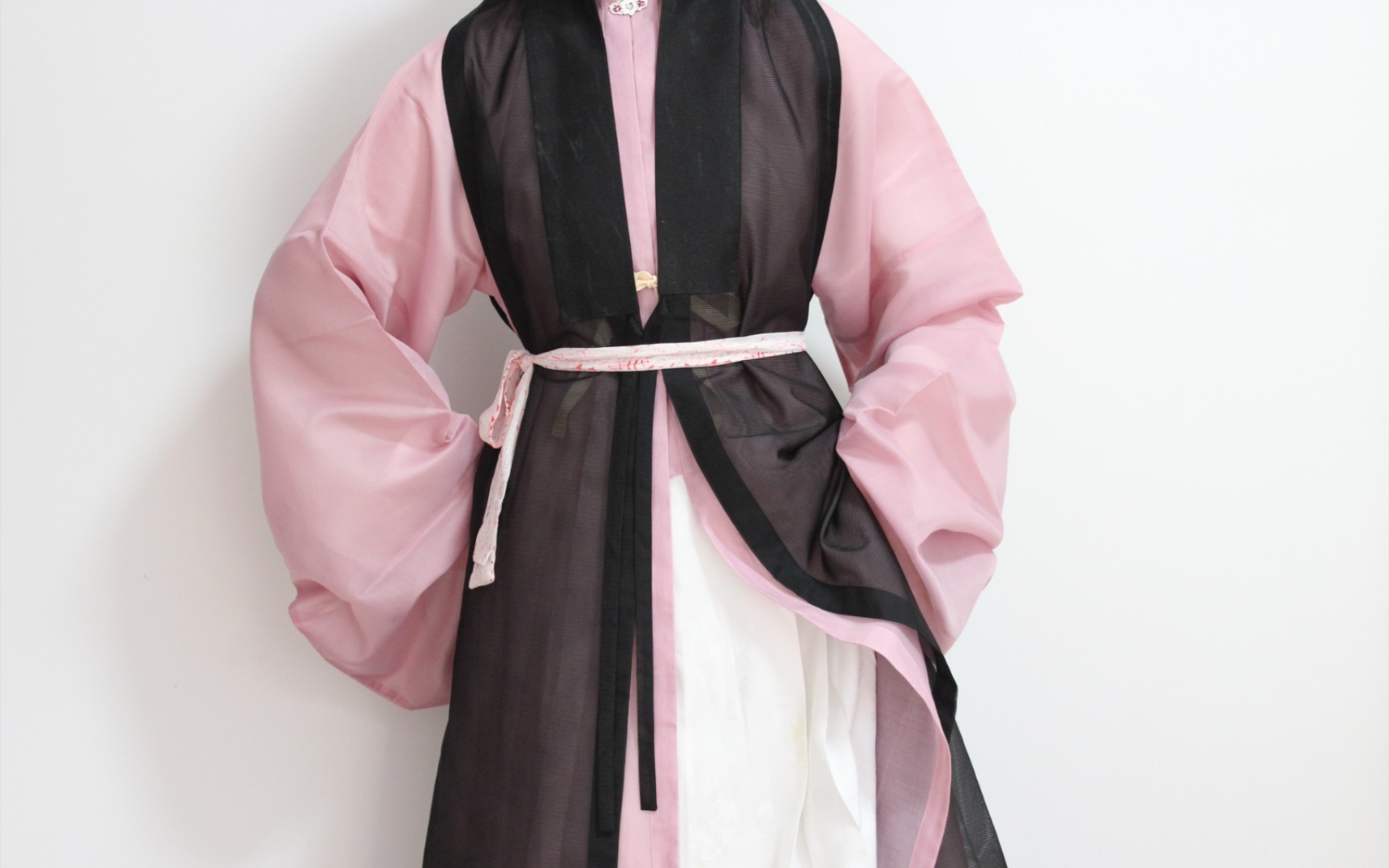
Bijia, also referred to as Beida (背褡) or beixin (背心, “vest”), is a sleeveless, Duijin (对襟, center-opening) short outer garment, typically worn over a short ao (袄) or a Ruqun (襦裙). According to collection notes from the Confucius Museum (孔子博物馆), the name Bijia derives from its resemblance to the soldier’s short armor (jia, 甲) that fits close to the body — bi (比) conveys the sense of “flush against.” The core structural features are: sleeveless construction, a front-opening Duijin closure, a hemline reaching the waist or just above the knee, and side slits for ease of movement. Collar variations include straight collar, square collar, and round collar. In function, it is best described as a sleeveless jacket in ancient Chinese fashion.
Bijia shares a continuous lineage with the terms Majia (马甲) and Kanjian (坎肩). During the Ming dynasty it was called Bijia; by the Qing dynasty it had evolved into Kanjian (also referred to as Majia), though the sleeveless, center-opening core remained unchanged. The Palace Museum (故宫博物院) collection includes a Qing-dynasty “Pin-yue-se Kesi Haitang Jia Da Kanjian” (品月色缂丝海棠袷大坎肩), a padded Kanjian made of Kesi tapestry with crabapple flowers on a moon-white ground — a direct descendant of the Ming Bijia, illustrating the garment’s cross-dynasty continuity and adaptability.
Historical Origins: Yuan Cavalry to Ming Everyday Outerwear
Yuan Dynasty Founding: Empress Chabi’s Equestrian Innovation
The Bijia’s cut can be traced back to the Yuan imperial court. According to the History of Yuan (元史·世祖后察必传), Empress Chabi (察必, of the Hongjila clan), consort of Kublai Khan, pioneered a garment style that was “shorter in the front, longer in the back, collarless and sleeveless,” secured by double breast fastenings to accommodate horseback archery. The design rationale was purely practical: the sleeveless cut freed the arms for shooting, while the front-shorter-back-longer hem made sitting firmly on the saddle easier. Empress Chabi was not only a reformer of Yuan court attire but also the originator of a garment tradition that would endure for more than 600 years.
Mid-Ming Dynasty: From Court to Common Wardrobe
The Bijia completed its transition from court attire to everyday wear during the mid-Ming period, gradually becoming a staple of young women’s daily dress. The mid-Ming era saw the maturation of women’s clothing forms: the Aoqun (袄裙), Mamianqun (马面裙), Bijia, and pifeng (披风, cape) coalesced into a fixed layering system. The Bijia, with its versatility, light weight, and ease of movement, spread from the daughters of official families to the wives of common households and even maidservants — becoming a genuinely “national outer garment.”
Gu Yanwu’s Rizhi Lu (日知录, volume 28) records: “During the Hongzhi period (1488–1505), women’s garments barely reached the waist; the wealthy used patterned gauze, satin, and gold-thread damask with full-sleeve gold-pattern knee borders. By the Zhengde period (1506–1521), sleeves grew wider and pleats more abundant.” This passage vividly captures the opulent mid-Ming fashion climate, where the Bijia as an outer layer was often worn over gold-embroidered short jackets, creating richly layered outfits.
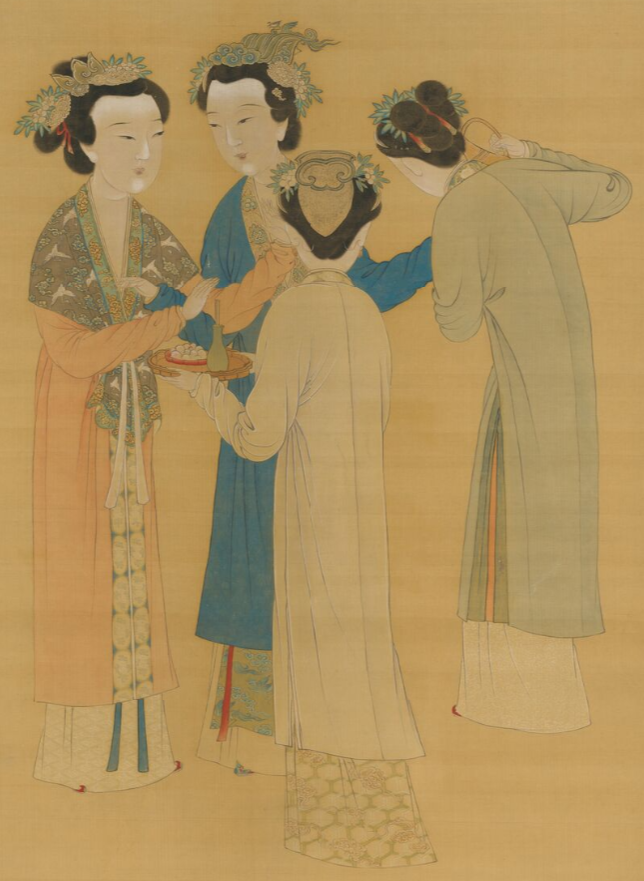
Notably, the Bijia transcended social rank and season. Ming paintings frequently depict it: Tang Yin’s Wangshu Palace Beauties (王蜀宫妓图) shows palace ladies in ornate Bijia, while Qiu Ying’s Figures in a Bamboo Grove Appreciating Antiques (人物故事图·竹林品古图) portrays women in Ruqun with Bijia and Pibo — evidence of the garment’s central place in Ming dress.
Qing Evolution: Kanjian Reborn
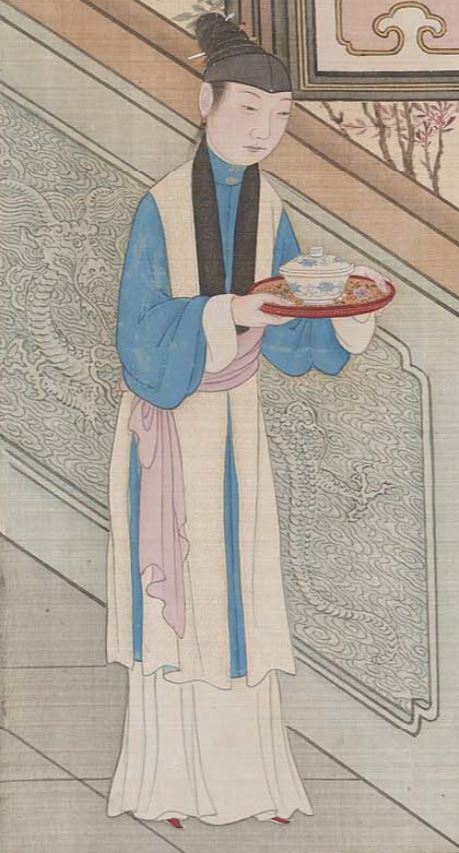
After the Ming-Qing transition, the Bijia evolved into the Kanjian (also called Majia) with a wider range of styles. Beyond the Ming-era Duijin opening, new varieties appeared: slant-front (dajin, 大襟), pipa-front (pipa jin, 琵琶襟), one-stroke-front (yizi jin, 一字襟), and herringbone-front (renzi jin, 人字襟). The Palace Museum’s “Pin-yue-se Kesi Haitang Jia Da Kanjian” showcases crabapple blossoms woven in Kesi tapestry on a moon-white ground, reflecting late-Qing women’s fashion trends. Qing Kanjian straddled both Manchu and Han preferences — incorporating the Manchu standing collar while preserving Ming tailoring DNA, exemplifying a deep cultural fusion between the two ethnic dress traditions.
Historical Bijia in Museum Collections
Confucius Museum: Moon-White Swastika Ruyi Cloud-Pattern Gauze Bijia
The Confucius Museum houses a Ming-dynasty “Moon-white Swastika Ruyi Cloud-pattern Gauze Bijia” (月白色卍字如意云纹纱比甲), a treasured piece from the Kong family collection. Its dimensions: body length 74 cm, shoulder width 27.5 cm, hem width 79 cm, sleeve opening 32.5 cm, collar trim 2.5 cm. The fabric is plain-weave gauze with weft-float patterning, featuring Swastika (卍) and Ruyi (如意, wish-granting scepter) cloud motifs. The garment has a round collar, Duijin front, narrow shoulders, and side slits; the front placket is trimmed with red diameter-gauze piping on white silk border, and the sleeve openings have white silk edging. The moon-white shade (an extremely pale blue tone) was highly fashionable in the Ming period, and the overall piece exemplifies a typical aristocratic young woman’s everyday garment.
The Confucius Museum now holds over 8,000 pieces of Ming, Qing, and Republican-era woven and embroidered textiles from the Kong family collection. These came through two channels: imperial bestowal and independent procurement by the Kong mansion. Owing to the Duke Yansheng’s (衍圣公) special status, the bestowed garments are exceptionally well preserved. In 2020, the Shandong Museum and Confucius Museum jointly mounted the exhibition “Grand Attire: Ming Dynasty Costume Culture Exhibition” (衣冠大成——明代服饰文化展), which featured this Bijia among other rare Ming garments. The exhibition was named one of the “Top 100 Museum Exhibitions of the New Era” and one of the “18th National Top Ten Museum Exhibition Highlights.” Although the physical exhibition has concluded, an online virtual gallery remains accessible.
Changzhou Museum: Lingering-Flower Patterned Satin Bijia from Hutang Ming Tomb
The Changzhou Museum (常州博物馆) holds a linging-flower patterned satin Bijia (缠枝暗花缎比甲) excavated from a Ming tomb in Hutang, Changzhou. The garment uses dark-patterned satin woven with trailing floral motifs, a typical example of mid-to-late Ming women’s clothing in the Jiangnan region. Because of the humid subtropical climate south of the Yangtze, Jiangnan Bijia were often made from lightweight gauze, leno, and satin — providing breathable comfort without sacrificing decorative aesthetics. This archaeological find confirms the Bijia’s widespread popularity in the Jiangnan area.
Dingling Excavation: Wanli Empress Xiaoduan’s Woven Gold Brocade Padded Garment
The Ming Dingling (定陵, the tomb of the Wanli Emperor) yielded the highest-grade Bijia-type garment ever excavated — a padded jacket (织金妆花缎夹衣) belonging to Empress Xiaoduan (孝端皇后). The garment measures 79 cm in body length with an extraordinary full-sleeve span of 240 cm. The base fabric is green satin, woven with multicolored silk and twisted gold thread, with cloud-and-dragon chasing-pearl gold-thread motifs on the lapel area. The shoulder-and-sleeve section features three-dimensional cloud-dragon patterns, with all gold-thread portions woven from fine twisted gold. The Zhuanghua (妆花) technique used here represents the pinnacle of Ming silk technology: a method of weaving multiple colored silk threads and gold onto localized pattern areas, allowing free-form “applied color” within the brocade structure. Fewer than ten pieces of this rank of empress’s formal-wear woven-gold fabric survive today, making the Dingling examples exceptionally rare.
Bijia and the Ming Dynasty Women’s Layering System
Within the complete Ming women’s wardrobe, the Bijia typically served as the outermost layer in a three-tier composition: the base layer consisted of a bodice or undershirt, the middle layer a cross-collar or standing-collar long blouse, and the outer layer a Bijia or pifeng cape. This layered approach combined warmth with visual aesthetics — contrasting fabric colors and motifs created depth. By the mid-to-late Ming, the Bijia’s usage had expanded across seasons: in spring and autumn it paired with a long blouse for casual wear; in summer it was worn alone over a Luo (罗, leno-gauze) skirt for cooling; and in winter it was layered over a padded jacket for warmth. The sleeveless plus Duijin core structure has proven so functional that it remains a recurring element in contemporary fashion design.

Modern Revival and Styling Guide
In 2026, the Bijia is experiencing a resurgence within the Hanfu revival movement. Since July, leading brand Shisanyu has been promoting its modified Bijia piece “Xiuluo” (绣萝) on social media — a summer-adapted version that retains the sleeveless Duijin core while using wisteria-purple tones and lightweight fabric. The brand’s Weibo campaign, framed around the tagline “Ming-style Hanfu is not impractical — this Bijia is perfect for summer outings,” has sparked broad discussion, reflecting strong consumer interest in “lightweight” Hanfu streetwear.
Three major styling directions define the modern Bijia:
- Traditional restoration style — follows Ming-dynasty cuts and fabrics strictly, paired with Mamianqun and yunjian (云肩, cloud collar), suitable for formal Hanfu events.
- Modified everyday style — shortens the hemline and simplifies the patterning, using solid-hued or subtly patterned textiles, paired with jeans or wide-leg trousers for a Hanfu-modern daily mix.
- Xinzhongshi (新中式) style — layers the sleeveless Duijin structure over modern dresses or shirts, integrating the Bijia silhouette into the Neo-Chinese design language.
From Empress Chabi’s equestrian innovation in the Yuan court, through its reign as a virtually universal Ming-dynasty garment, to the Qing courtly Kanjian that fused Manchu and Han aesthetics — the Bijia has traversed six centuries without losing its appeal. Museum pieces from the Confucius Museum collection and the Dingling excavation reveal the exquisite tailoring, fabric artistry, and sumptuary codes embedded in Ming Bijia, while the 2026 brand revival proves that the vitality of traditional dress lies not in enshrinement but in daily wear and creative adaptation.