
As Qixi approaches, wearing Hanfu on a date is becoming the most romantic way for young couples to spend the festival. Strolling gardens, drinking coffee, watching night views — the mood is maxed out. But Hanfu styles vary widely, and a wrong pick gets awkward: aiming for sweet but dressing like “a formal opera cast,” or trying scholar elegance but looking “fresh from the exam hall.” This guide walks through form choice, color pairing, and accessory detail to help you wear a Qixi heart-fluttering ancient look.
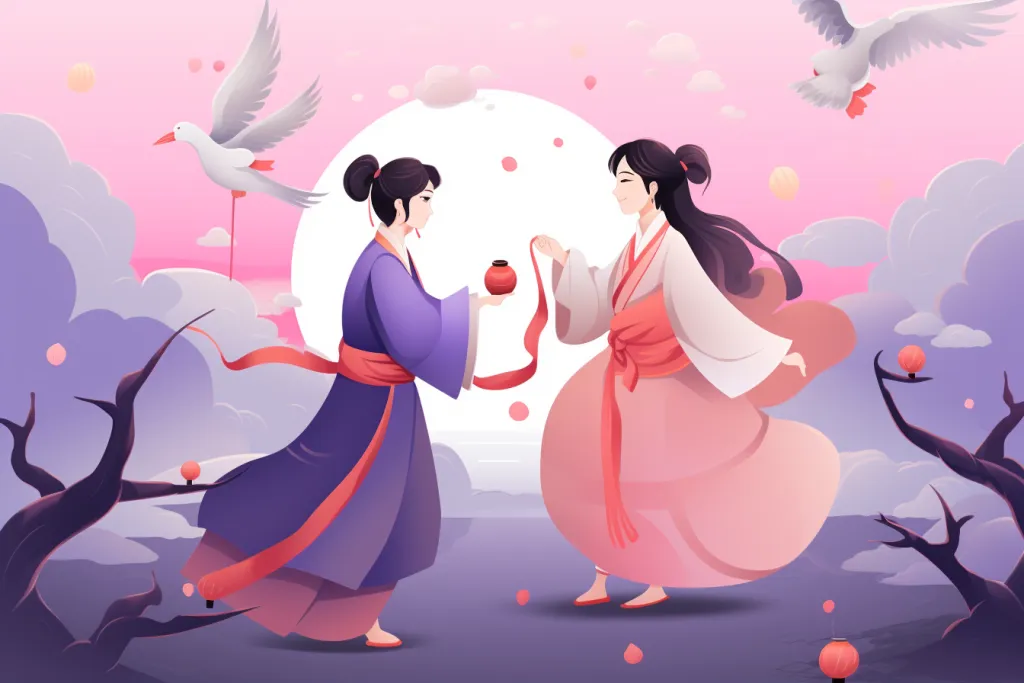
Qi Xiong Ruqun: First Pick for Sweet Dates
The qi xiong Ruqun is the “sweet-girl heaven-sent” of Hanfu dating. The high-waist design lengthens the legs; the skirt spreads like a small umbrella, flowing with every step. But wearing it well takes tricks: pick macaron tones with low saturation — light pink with white is the classic “sakura pairing,” the upper Ru in pearlescent light pink, the lower skirt white with small cherry embroidery, like a walking cotton-candy in sunlight; goose-yellow with light green is the summer-exclusive “lemon soda” pairing. Patterns should be small florals, tiny animals, or geometric motifs, concentrated on the lower half of the skirt to look taller and thinner. Avoid deep purple, ink-green, and other dull colors, and never exceed three colors overall.
Hair and accessories should be “few but fine”: twin tails with pom-pom ties, or double-loop buns with small pearl hairpins, are simplest; choose pearl-tassel hair sticks or Ronghua combs — never phoenix crowns or Hua Sheng “wedding-style” pieces. Qixi heat calls for light cotton-linen, silk, or chiffon Ruqun, paired with a light Luo fan, evoking Du Mu’s line “silver candle, autumn light, cold painted screen; light Luo fan swats the drifting fireflies.”
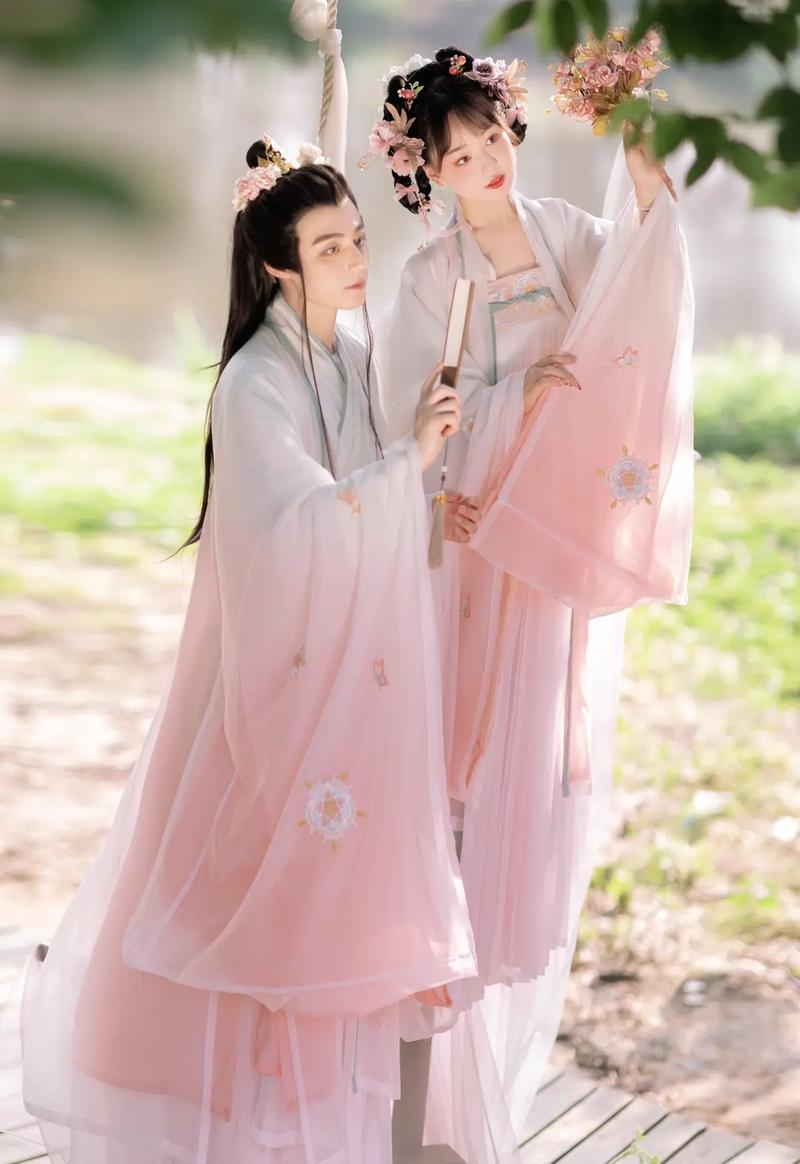
Ming-Style Mamianqun: Scholar Elegance
Ming-style Hanfu suits couples after a refined look. Follow “same color family, different cuts”: the woman wears a Mamianqun with a standing-collar long shirt, the man a Daopao or Zhiduo. Daily pairings: rice-white with light blue, smoke-pink with navy — one light, one deep, building mood. For couple coordination, echo the patterns and accessories — both using bamboo-leaf or cloud motifs, wearing matching jade pendants or Hebao. Qixi nights cool slightly; Ming fabric weight is moderate, fit for evening-to-night activity.
Song-Style Duijin: Refined CP Feel
Song-style Hanfu is known for minimal, elegant, floating grace, carrying a bookish literary air. CP pairing uses “same style different color” or “same color different cut”: the man wears a Zhiduo with a Beizi, the woman a Duijin Beizi with a baidie skirt; both wearing Beizi, similar silhouette but different detail — from afar like “couple outfits,” up close each with character. Colors: low-saturation blue with green, pink with purple, or classic black-white. Song’s standout advantage is coolness — Duijin Beizi outer layer, baidie skirt light and ventilated, fit for Qixi’s sticky heat.
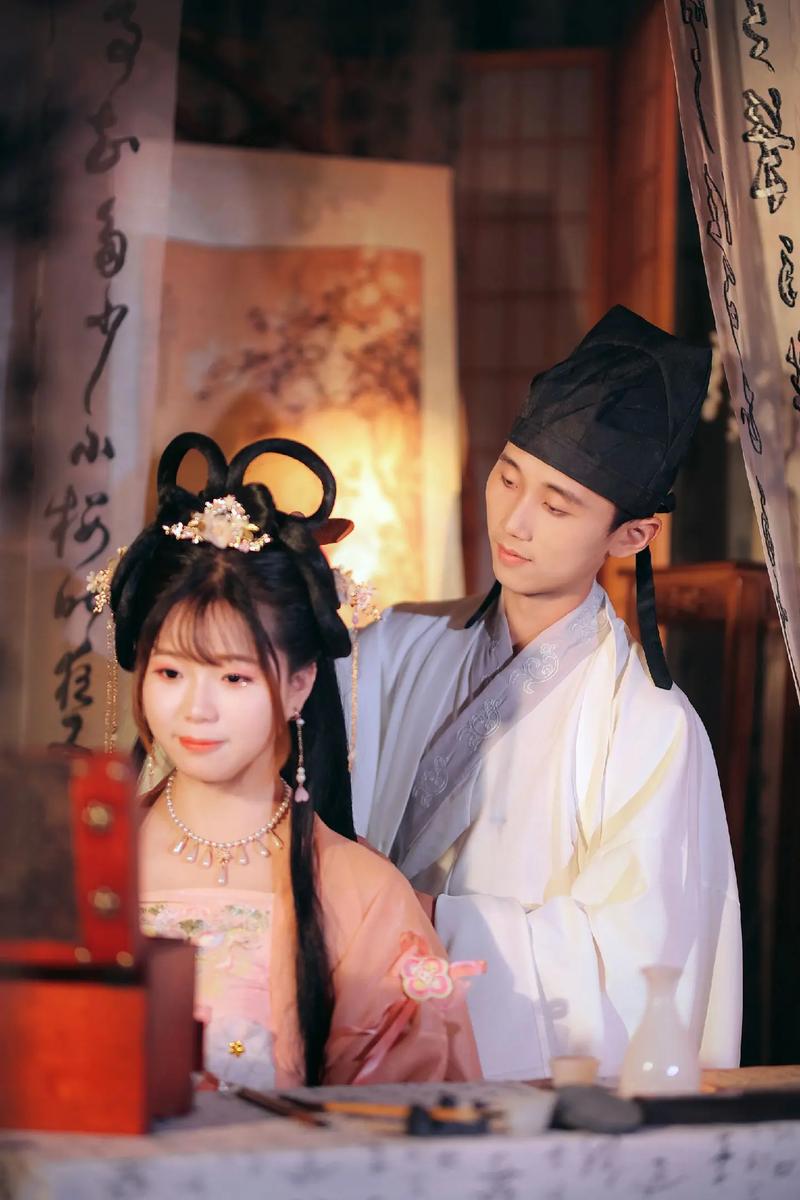
Couple Color Harmony Rules
Hanfu couple pairing prizes “harmonious matching.” Two rules: first, same color family — both in blue (man navy, woman light blue) or green (man ink-green, woman bean-green), harmonious and high-end; second, analogous colors — blue with green, pink with purple, yellow with orange, fresh and natural. Avoid: both in large-area high-saturation clashing colors, which reads messy. Couples can also choose “element echo” — same motif (small bamboo leaf, cloud, water ripple), same accessory (jade, Hebao, hairpin); the small detail touches more.

Romantic Ritual of a Hanfu Qixi
On Qixi night, the traditional custom is women praying for skill, watching the moon and stars. In Hanfu, with a light Luo fan, under the water-cool moonlight, lying to watch the Herd-Boy and Weaver-Girl stars, is deeply poetic. Choose guofeng gardens, ancient walls, or water-town old streets as date spots, shooting with ancient lanterns or river-lamp scenes. Carry a Tuan Shan or folding fan — both ornament and heat relief. This Qixi, let Hanfu add a touch of ancient rhyme and romance to your date.