
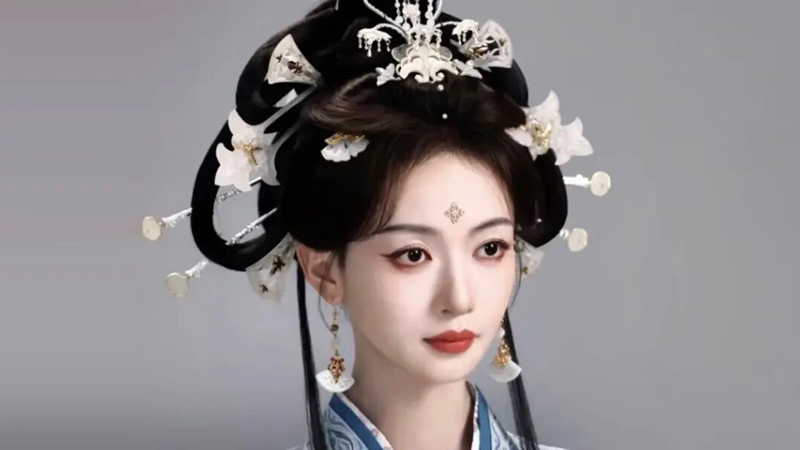
Why does Wu Jinyan’s (吴谨言) new drama hairstyle have everyone talking? In the historical drama Feng Bu Qi (凤不栖), her look isn’t just beautiful—it’s a historical deep dive. The entire styling references the aesthetic codes of the Wei and Jin dynasties, and the long hairpins flanking her high bun are anything but ordinary. They look like miniature fans or guitar picks, deliberately odd to modern eyes. Y
et this unusual shape was once a iconic and highly symbolic accessory. It is called the Bo Xing Zan (拨型簪), or the “plucked-string hairpin,” for its resemblance to a Pipa (琵琶) pick. More than just decoration, it was a marvel of ancient engineering, designed to support gravity-defying hairstyles while broadcasting the wearer’s status. This isn’t just about a TV show; it’s a window into a forgotten fashion logic where practicality and prestige were pinned together.
The Hidden Logic
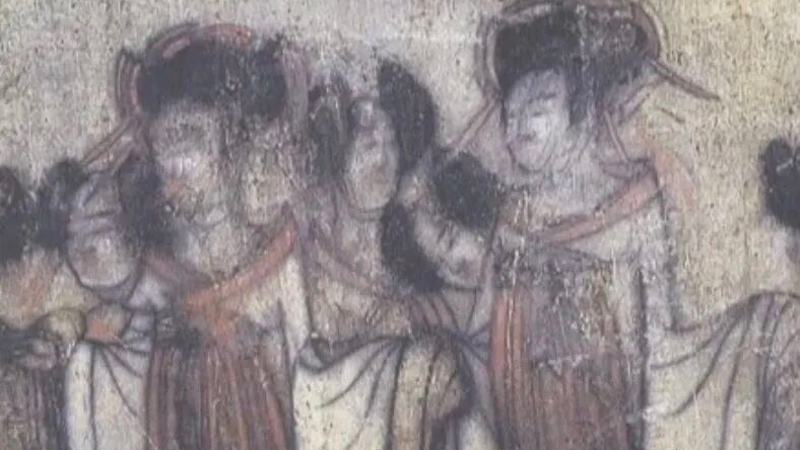
To understand the Bo Xing Zan, we must first understand the hair it held. During the Eastern Han, Tang, and Five Dynasties periods, towering buns, or high ji (髻), became the ultimate marker of feminine grandeur. But natural hair simply wasn’t enough. Aristocratic women relied heavily on padded wigs and extensions to achieve that massive, rounded silhouette. The higher the bun, the more formal the occasion, and the more support it desperately needed.
This is where the Bo Xing Zan became essential. It wasn’t just a pin; it was a structural anchor. Its broad, flat head acted as a counterbalance, spreading the weight of the heavy bun and securely holding the thick layers of false hair in place. This design cleverly used width to counter gravity, a far cry from the delicate, dainty pins we often imagine from ancient times.
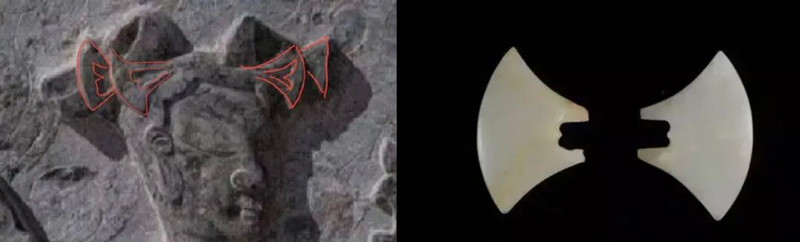
Furthermore, symmetry was the golden rule for aristocrats. These pins were almost never worn alone—they came in matching pairs. They were inserted on both sides of the high bun, framing the face with an unmistakable “V” shape. This mirrored placement created a sense of formal, rigid opulence that was deeply appealing to the noble class. It wasn’t just about beauty; it was about mathematical precision and order.
The only known exception to this rule was a particular large, dome-headed style, which could be worn as a single, statement piece right on top of the head. According to Ye Zhong Ji (邺中记), a court lady once used just one round gold pin for a simpler look, proving that even within the rules, there was room for individual choice. However, for high-stakes events like banquets or formal audiences, the pair of wide-head pins was non-negotiable, instantly separating the noble matron from the common woman.
A History Carved in Metal
The materials used for the Bo Xing Zan were just as carefully coded. While common versions were made of silver or gilt bronze, the truly exquisite pieces were crafted from precious materials. jadeite and nephrite were rare and reserved almost exclusively for the imperial family. Historical notes from the Bei Shi (北史) mention an Empress Dowager shooting an ivory hairpin, which historians believe was likely a large, flat-headed Bo Xing Zan. This suggests that beyond beauty, these pins were also objects of sport and display.
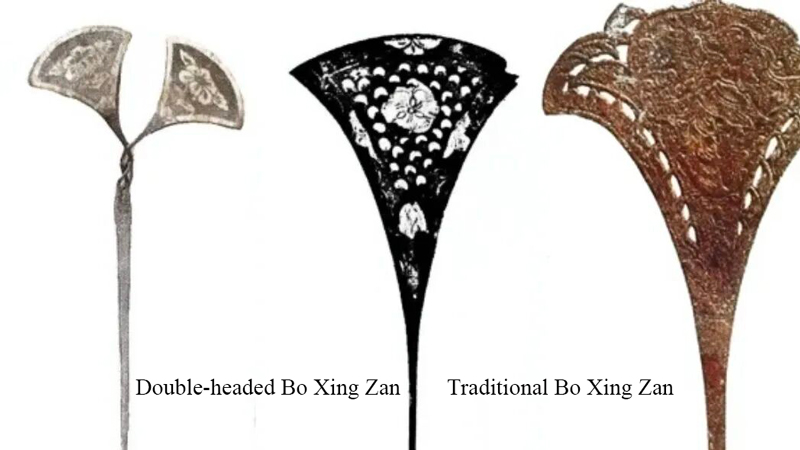
In the Tang Dynasty, the craftsmanship peaked. Artisans mastered intricate techniques like filigree, granulation, and gold and silver hammering. A famous gilt-silver Tang relic unearthed in Shaanxi shows the standard Pipa-pick shape, decorated with openwork vines and engraved with mythical birds. The long, slender stem was designed to slide deep into the bun, while the wide head cradled the falling hair, preventing the entire structure from collapsing. It was a brilliant blend of utility and high art.

The cultural connection runs deeper. The famous poet Bai Juyi (白居易) wrote in his Song of Everlasting Regret (长恨歌), “Her jade hairpin stirs, and the golden bird taps the sky.” While he used the general term for a hairpin, the “jade scratcher” he described may well have been a version of this wide, fan-like pin. It symbolized a status that was both rigid and ethereal. It’s also worth noting that these pins were not a monolithic invention. Later, a double-headed version evolved.
The two heads, often curling like a ginkgo leaf, were called “silver-leaf style.” This variation became popular as it added a new dimension of complexity to the traditional look. As a result, the Bo Xing Zan was not just an accessory but a signifier of a woman’s place in her world, a mobile piece of sculpture that announced her rank.
What It Says About Us
By the time of the Song Dynasty, the cultural tide had turned. The extravagant aesthetic of the Tang gave way to a preference for subtlety and understated elegance. The towering “Wangxian” (望仙) bun, or “gazing at immortals” style, fell out of favor. Accordingly, the Bo Xing Zan shrank. It was no longer the structural star but a smaller, decorative side piece, modest in size and lacking the intricate inlays of its predecessors. It became a supporting element, a whisper of its former grandeur.
This evolution mirrors the social shift from outward display to inner cultivation, proving that fashion is a direct reflection of a society’s values. The hairpin, once the most important tool in an aristocrat’s cosmetic arsenal, was downgraded to a minor ornament. It is a perfect example of how fashion technology adapts to cultural demands.
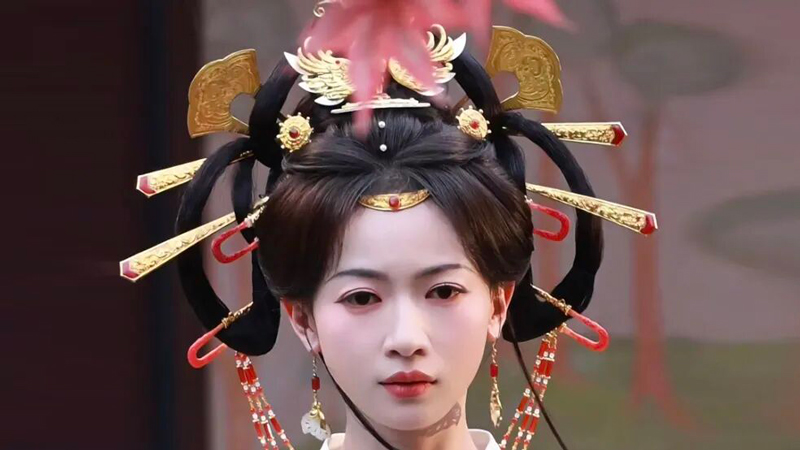
So, when we see Wu Jinyan in Feng Bu Qi, we are seeing more than just a “rare” and “unusual” hairstyle. We are seeing a powerful reinterpretation of a forgotten history. Compared to the swaying, eye-catching Bu Yao (步摇) or the elegant phoenix hairpins we see everywhere, the Bo Xing Zan might seem less flashy. But its quiet power lies in its functional genius and its symbolic weight. It proves that the ancients could be just as pragmatic as they were poetic. The show’s decision to revive this look is a tribute to a form of craft that is both deeply practical and undeniably beautiful. It asks us: why always look to the future for innovation when the past is full of such ingenious and majestic answers?