
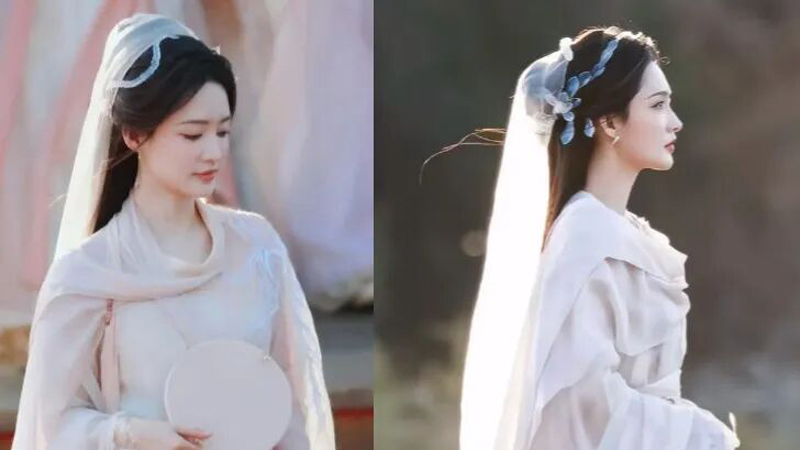
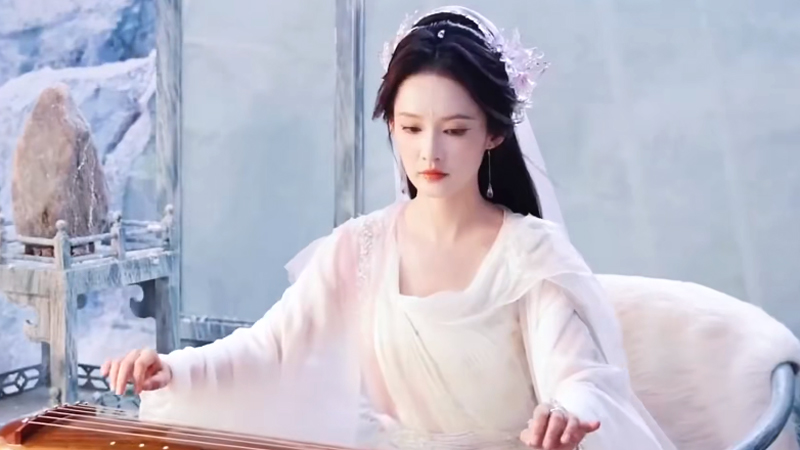
Li Qin’s (李沁) new historical drama Xian Yu Fei Sheng (咸鱼飞升) has sparked a curious debate among viewers. In the recently released stills and trailers, her character appears in a flowing white dress, with a long white veil draped over her head. The immediate reaction from many netizens was that it looked strikingly similar to a modern bridal veil. Was this a creative anachronism, or did such headwear actually exist in ancient China?
A closer look at historical records reveals that this costume choice is not a modern invention but a thoughtful recreation of the Song Dynasty (960–1279) “Gaitou (盖头),” a traditional head-covering for women. This discovery not only clarifies the costume design but also offers a fascinating glimpse into the everyday lives and social customs of women in the Song Dynasty.
The Veil’s Ancient Journey
The “Gaitou” did not appear overnight; its lineage can be traced back to the Northern and Southern Dynasties (420–589), where women wore a “Mili (幂篱)” for travel. This was a long, opaque veil that completely covered the body to protect against dust and prying eyes. By the Tang Dynasty (618–907), this evolved into the “Weimao (帷帽),” a wide-brimmed hat with gauze hanging down to shoulder level. It served the dual purpose of shielding the wearer from the sun and providing a degree of modesty.
However, it was during the Song Dynasty that a more practical version emerged. Women shed the rigid bamboo hat frame, opting instead for a soft piece of cloth or silk. This new style was simply draped over the head and could be easily folded and carried, making it far more convenient for daily use than its predecessors. Historical texts like Qingbo Magazine (清波杂志) and Dongjing Menghua Lu (东京梦华录) frequently mention it as a common article of clothing, proving its widespread adoption.
Two Styles of Song Dynasty Gaitou
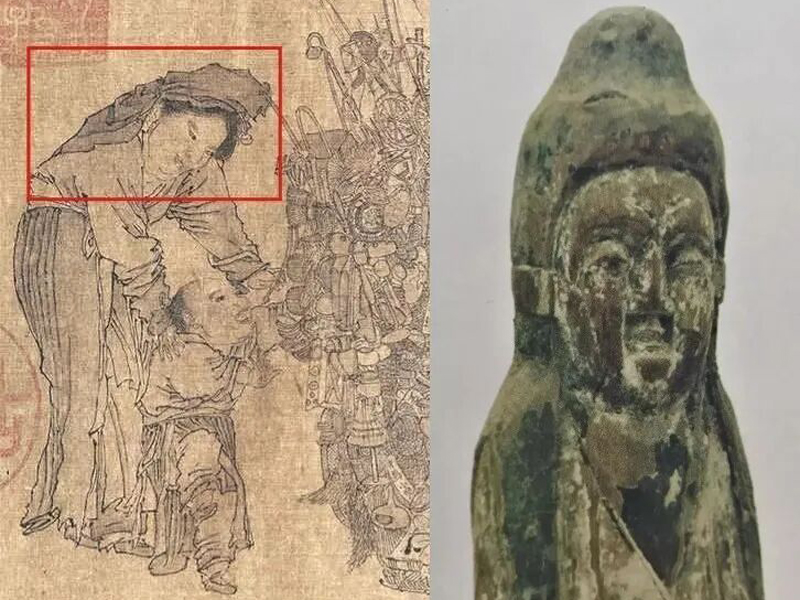
While the basic function was the same, the “Gaitou” came in two distinct styles. The first was the hood-style “Doumao (兜帽)” Gaitou. This was a sewn piece of fabric that fit snugly over the head, covering the temples and the top hair bun. However, it often left the forehead and some of the hair ornaments exposed, allowing a woman to display her status and fashion sense. The length typically reached down to the waist. A famous example can be seen in artist Li Song’s (李嵩) renowned painting, The Knickknack Peddler (货郎图), where a woman is clearly depicted wearing this very style. This is further supported by archaeological finds, such as a female pottery figurine from the Song Dynasty, unearthed in Jiangsu, which also features a similar hooded cloak.
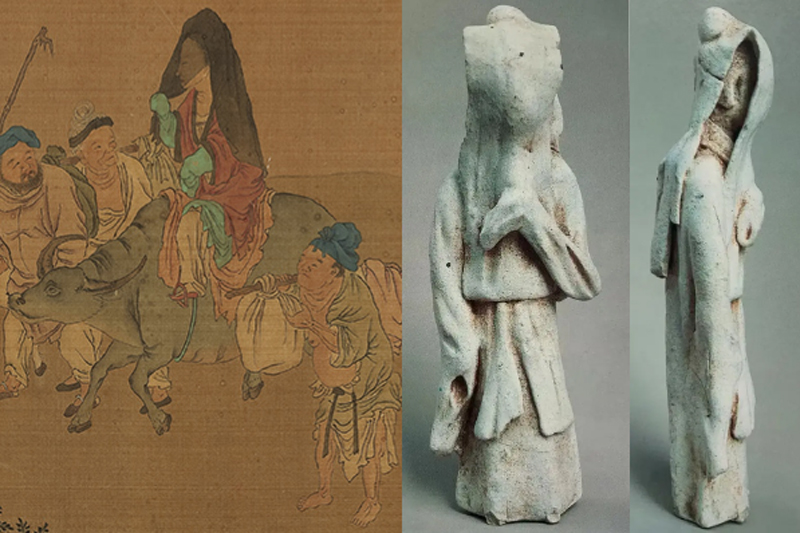
The second and more common form was the square cloth “Fangjin (方巾)” Gaitou. Its design was elegantly simple: a large rectangular piece of fabric draped from the top of the head, completely covering the face and falling over the shoulders and back. Because of its simplicity, it was highly accessible to women of all social classes. The most famous example of this type is the red bridal veil, a tradition that persists in Chinese weddings to this day. Historical evidence of this style is abundant, appearing in the painting Harvest and Joy Scroll (丰年民乐图卷) and in another Song Dynasty female figurine discovered near Poyang Lake (鄱阳湖) in Jiangxi. This illustrates that the veil was not just for special occasions but was a part of the daily fabric of Song society.
Why the Modern Wedding Veil Confusion?
So, why do so many modern viewers mistake the costume in Xian Yu Fei Sheng for a contemporary bridal veil? The confusion is understandable, and three key differences are to blame. First and foremost, the color is a major factor. In the Song Dynasty, everyday “Gaitou” were typically made of darker materials like deep purple or black. These colors were practical for everyday use, as they were less likely to show dirt and aligned with the somber aesthetics of the time. Li Qin’s headpiece, however, is a bright, pristine white, which immediately conjures associations with the white veils common in Western and modern Chinese weddings. This color choice is a clear visual departure from historical norms, likely made to enhance the character’s ethereal, “fairy-like” appearance on screen.
The length and styling also contribute to the confusion. Historically, the “Gaitou” was a practical garment; its length typically ended at the waist. A longer veil would have been cumbersome for walking or performing daily chores. In the drama, the veil descends almost to the hem of her dress, which is a common feature of many modern bridal veils. Furthermore, the way it is worn in the show deviates from historical practice. Instead of covering the head and face, Li Qin’s veil is styled with hair ornaments and only covers the hair bun at the back of her head. This specific styling is far more reminiscent of how modern bridal veils are worn, focusing on a decorative cascade of fabric rather than its original function of covering or modesty.
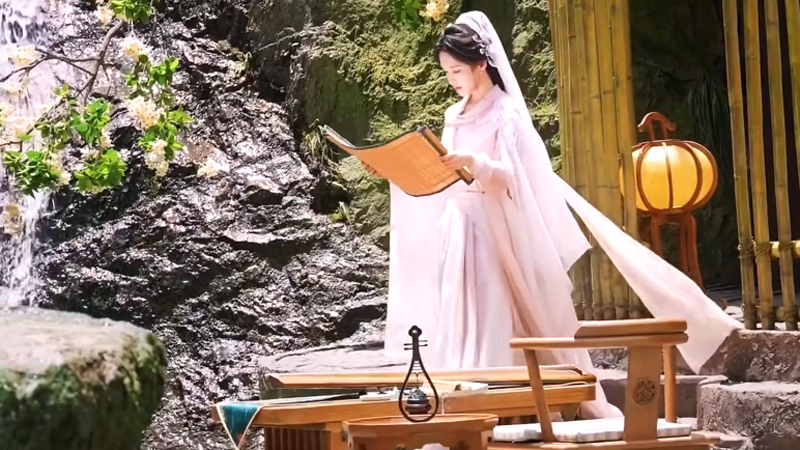
It is also worth noting that the modern bridal veil has its own ancient roots in European traditions, where women also covered their faces. This parallel evolution of a similar concept in completely different cultures highlights how universal the practice of veiling once was. Ultimately, the design in Xian Yu Fei Sheng is a considered reinterpretation, drawing inspiration from the Song Dynasty “Gaitou” while making deliberate alterations to the color, length, and styling to suit the character’s aura and the drama’s visual language. It’s a historical tribute, not a historical reproduction, and a testament to how costume design can creatively bridge the ancient and the modern.