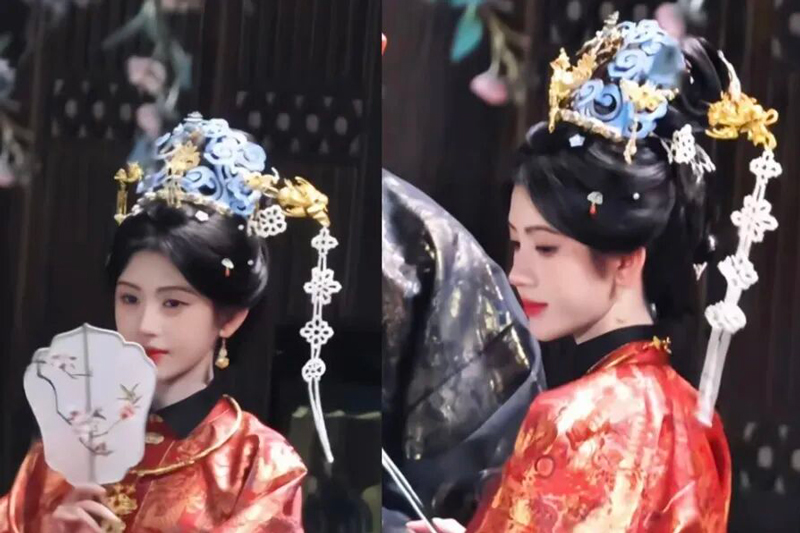
Ju Jingyi (鞠婧祎) recently appeared in a promotional still from the historical costume drama Wanhua Shijie (万花世界), and the internet lost its collective mind. It was not her porcelain face or embroidered robes that stole the show, but two shimmering strings of pearls hanging from her crown, swaying gently on either side of her temples. Within hours, forums exploded with a single question: what are those things, and why does every noblewoman in Ming-dynasty dramas wear them?
The answer is not just about fashion. It is a dazzling rabbit hole that leads straight into the heart of imperial hierarchy, ancient superstition, and a woman’s quiet battle for status—all dangling from a tiny piece of jewelry called a Tiaopai (挑牌), or dangling ornamental pin. This article breaks down its secret rules, its hidden meanings, and why a pop star’s hairdo can teach us more about history than a dozen textbooks.
More Than a Crown Piece
First, let us destroy a common myth. That elegant pearl strand you see on Ju Jingyi’s head is not permanently attached to her golden crown. In reality, it is a separate accessory with its own identity, known technically as a Tiaopai Zan (挑牌簪), or dangling pin hairpin. Its structure is simple but ingenious: a solid pin shaft with a decorative head, plus a long, dangling chain of beads and gems hanging from it. The pin head itself could be a miniature masterpiece, often shaped like a phoenix, a dragon, a lotus, or a mythical bird called a Di (翟). These were not mass-produced trinkets; each piece was handcrafted to reflect the wearer’s rank and taste.

Now, look closer at that dangling part. It is a cascade of materials that scream luxury—pure pearls, rubies, sapphires, and jadeite strung together in intricate patterns. Compared to the museum pieces worn by actual Ming empresses, Ju Jingyi’s screen version is practically minimalist. The real ones were so heavy and ornate that they looked like chandeliers for the head. But whether simple or extravagant, the Tiaopai was never an afterthought. It was a deliberate statement, a visual shout that said, “I belong to the top one percent of this empire.” And that shout had to follow a strict rulebook.
Rules Stitched in Silk
Here is where history gets brutal. Not every woman could wear these pearl strings. The Ming dynasty had a rigid social ladder, and the Tiaopai was its glittering badge of rank. At the very top sat the empress and the crown princess. They wore phoenix crowns for grand ceremonies, but here is a twist—those formal phoenix crowns actually had no dangling Tiaopai. It was their more casual “residence crown” that carried the signature pearl drops. One step down, the imperial consorts, princesses, and high-ranking noble ladies wore a different headpiece called a Di Crown, and it did come with a Tiaopai. But the ornament on the pin head had to match their station: gold phoenix motifs for princesses and royal consorts, while lesser noblewomen had to settle for a gold Di bird. No exceptions.
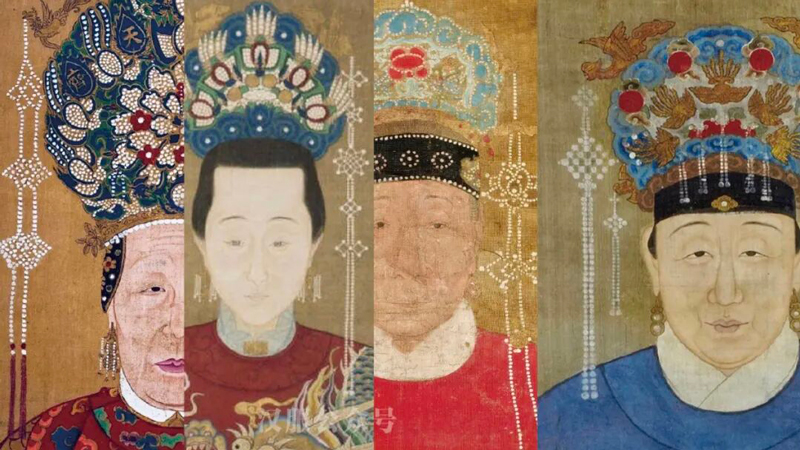
This hierarchy was not just for show. The Ming legal code spelled out these rules in black and white, and violating them was a crime called “overstepping” . Imagine being dragged to court because your pearl string was one inch too long or your phoenix had one too many tail feathers. It sounds absurd, but it happened. For ordinary noble ladies, the Tiaopai was only mandatory on major state occasions. On regular days, they skipped the heavy crown and simply tucked a standalone Tiaopai pin into their formal updo. This “light version” became so popular that surviving Ming portraits are filled with women wearing exactly that—no crown, just two elegant pearl strands framing their faces.
A Woman’s Own Signature
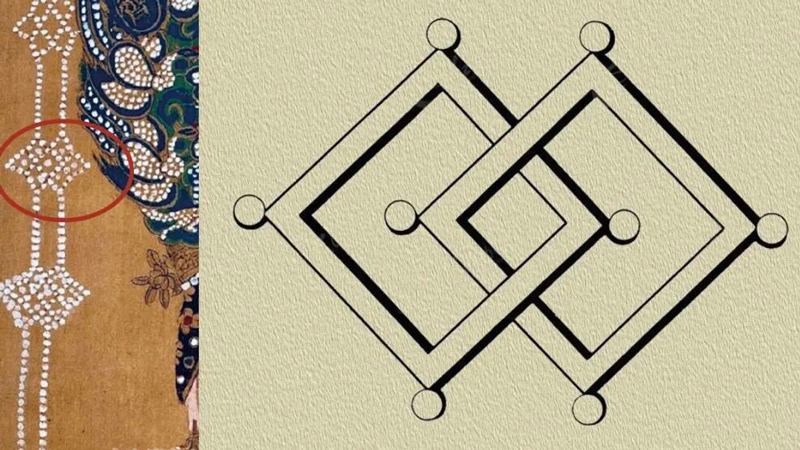
Despite all the royal regulations, women found ways to inject their personality into these mandated accessories. The most common trick was choosing specific motifs for the pin head or the bead arrangement. Floral and fruit patterns were perennial favorites, but the true hidden gem was a geometric design called the Fangsheng (方胜) pattern—two overlapping diamonds forming a star-like shape. This was not just decorative. The character “Sheng” (胜) was an ancient term for a noblewoman’s hair ornament, and the “golden Sheng” was a symbol of divine blessings. Historical texts like the Book of Song: Auspicious Records (宋书·符瑞志) even claimed that the appearance of a golden Sheng signified peace and universal submission to the emperor. So wearing that pattern was like pinning a good-luck charm for the entire nation to your hair.
The creativity did not stop there. Some Tiaopai bead strings were arranged to form actual Chinese characters. The Lanzhou Museum, for instance, houses a stunning set of Tiaopai that spells out the character “Spring” using a whole string of pearls. Scholars speculate this might have evolved from an ancient spring festival ornament called a “Spring Banner”, though no one has found solid historical proof yet. It is a lovely guess, but regardless of its origin, the meaning is clear: spring symbolizes rebirth and hope, and a woman wearing that character was literally framing her own wish for a peaceful, prosperous life. It was a quiet act of self-expression within the iron cage of dynastic rules.
So, the next time you see Ju Jingyi or any historical drama heroine swaying those pearl drops, do not just admire the sparkle. You are watching a silent language of power, a coded conversation between the wearer, the court, and the heavens. Those tiny beads carried the weight of imperial law, personal dreams, and centuries of tradition. And yes, that is exactly why they look so breathtakingly expensive—because they were worth more than gold. They were worth a woman’s place in the world.