
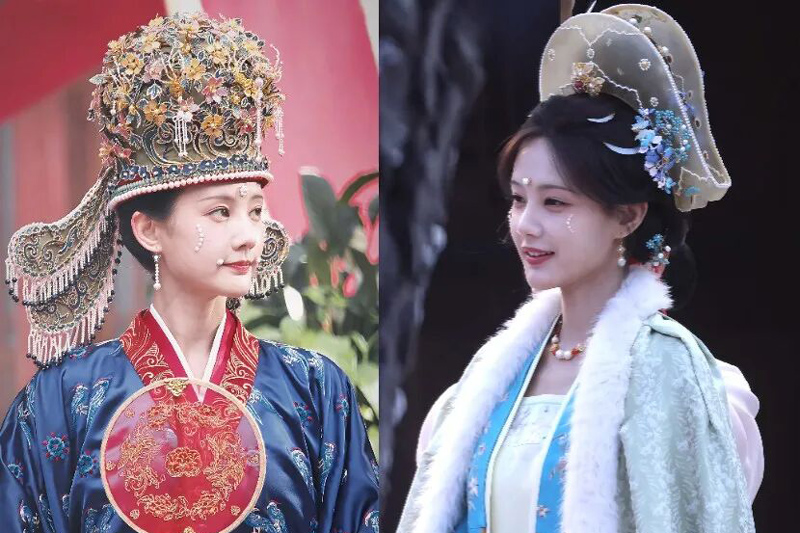
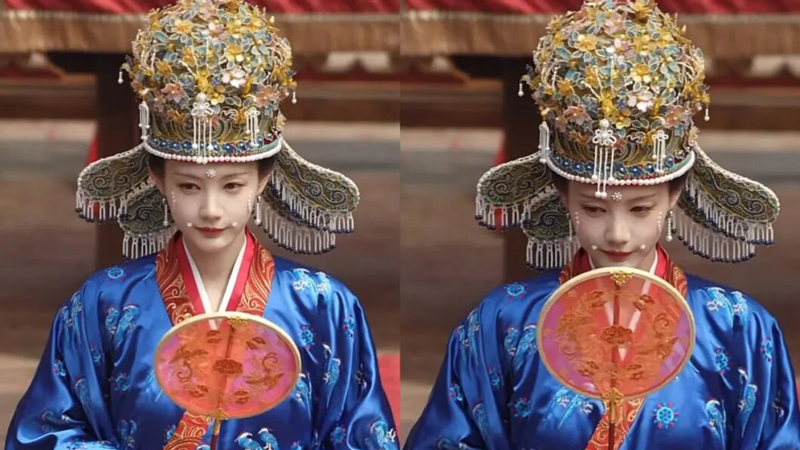
Li Yitong (李一桐), a renowned Chinese actress, has sparked intense curiosity with her striking appearance in the upcoming period drama Jin Zhi (金枝). Set against the backdrop of the Northern Song Dynasty (960–1127 AD), her character’s face is adorned with numerous pearls in a distinct pattern. This is not a modern stylist’s whim but a meticulous recreation of a fascinating historical practice.
The question isn’t just about aesthetics; it’s a portal into the complex social codes and artistic sensibilities of a thousand years ago. Why would a woman glue pearls to her face, and what did this shimmering statement truly signify?
The Glittering Origins of a Facial Ornament
The practice of decorating the face with ornaments is an ancient one, predating the Song Dynasty by centuries. As early as the Han Dynasty (206 BC–220 AD), women painted small, round dots at the corners of their mouths. Initially, these were not for beauty but served as a discreet mark for palace maids, a crude form of identification. By the Wei and Jin period (220–420 AD), this mark had fully transitioned from a practical label to a fashionable decoration, shedding its utilitarian origins for the sake of allure.
It was during the Tang Dynasty (618–907 AD) that this form of facial decoration reached its most extravagant peak. The Tang aesthetic favored boldness and opulence, leading to the creation of the “complete set” of facial adornments: Huadian (花钿) on the forehead, Mianye (面靥) on the cheeks, and Xiehong (斜红) near the temples. These were crafted from luxurious materials like gold leaf, colored paper, and kingfisher feathers, cut into delicate floral and butterfly shapes. The murals of the Mogao Caves in Dunhuang vividly depict noble donors and bodhisattvas alike sporting these elaborate designs, showcasing the height of this ornate fashion.
The Song Dynasty, however, marked a dramatic shift in taste. The era favored a more restrained, refined, and elegant aesthetic. While the Tang loved bold colors and lavish displays, the Song sought subtlety and grace. The influence of Neo-Confucianism promoted modesty and inner virtue over ostentatious wealth. It was within this new cultural climate that the pearl, with its soft, natural luster, began to replace the shimmering but more garish gold and feather ornaments, becoming the material of choice for the new, sophisticated facial decoration.
The Pearl: A Symbol of Status and Refinement
The adoption of pearls wasn’t just a matter of changing fashion; it was deeply intertwined with economics and the burgeoning maritime trade of the Song period. This era saw a significant increase in the import of pearls from the South Seas, making them more available than in previous dynasties. Yet, they remained a luxury item, too precious for common use. This scarcity, combined with their natural beauty, elevated the pearl from a mere adornment to a powerful symbol of status and privilege.
The “Pearl Face Decoration,” or Zhencui Mianhua (珠翠面花), became a formalized element of ceremonial dress for the imperial court and high-ranking noblewomen. In the early Northern Song, sumptuary laws strictly regulated their use. They were not merely for personal pleasure; they were a visual declaration of rank, akin to the badges of modern military officers. Portraits of Song empresses, which have survived to this day, prominently feature these pearl ornaments, cementing their place in the visual history of the dynasty’s elite.
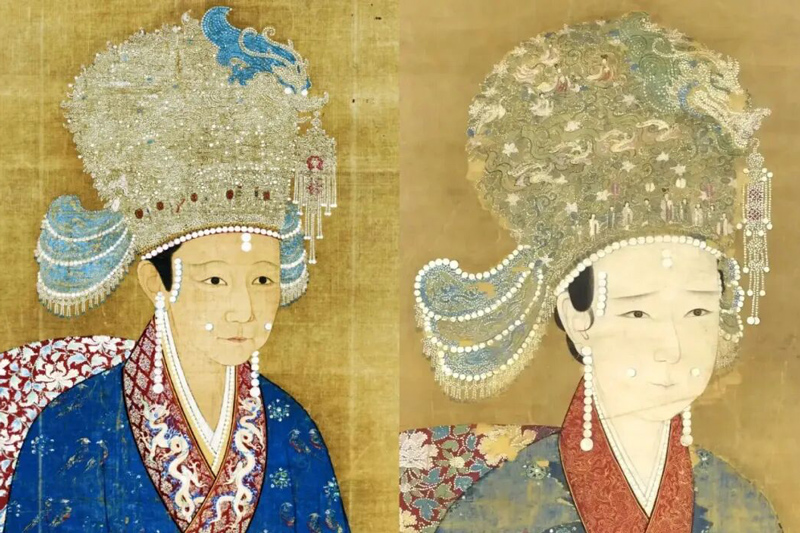
By the middle and late Song period, these restrictive laws relaxed, allowing wealthy merchant families to adopt the fashion. This diffusion transformed the pearl face ornament into the ultimate status symbol for aristocratic women. It no longer just said “I am noble,” but “I am a woman of taste and refinement who can afford the most subtle and elegant of luxuries.” To wear it was to signal one’s membership in an exclusive cultural and economic class, a silent yet shimmering assertion of one’s place in the social hierarchy.
Understated Glamour and Modern Resonance
Beyond its role as a status marker, the pearl decoration was a perfect embodiment of the Song dynasty’s core aesthetic values. Unlike the Tang’s pursuit of “radiant beauty,” Song taste celebrated “quiet elegance.” The soft, iridescent sheen of a pearl on the skin adds a subtle glow and a touch of delicacy to the complexion, enhancing natural beauty without overwhelming it. This “low-key luxury” perfectly aligned with the era’s preference for what was nuanced, scholarly, and restrained.
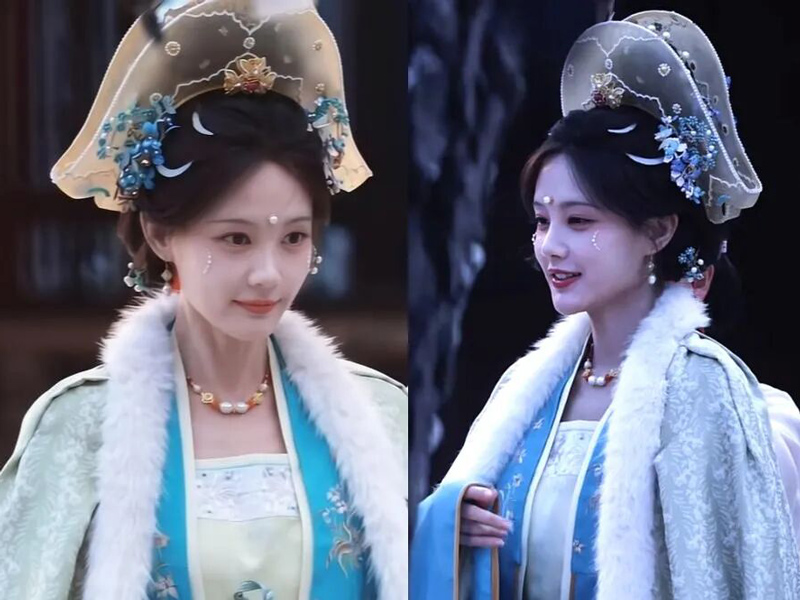
There was also a deep, superstitious significance attached to the ornaments. In ancient Chinese culture, the pearl was associated with the moon, water, and the yin principle, symbolizing purity, perfection, and good fortune. Its smooth, round shape was emblematic of completeness and a prosperous, harmonious life. By adhering these symbols of perfection to their faces, women were not just decorating themselves; they were literally embodying good luck and warding off misfortune, carrying a positive omen on their skin for all to see.
The stylistic choice in Jin Zhi is a testament to the production team’s commitment to historical authenticity. By faithfully recreating this specific custom, the drama does more than just tell a story; it acts as a visual time capsule, introducing modern audiences to the nuanced realities of Song-era life. While the practice faded from daily use after the Yuan Dynasty (1271–1368 AD), eventually giving way to the simpler aesthetics of the Ming and Qing, its recent revival in Hanfu culture proves its enduring appeal. It highlights how contemporary interest in traditional culture can reconnect us with our ancestors’ stories, proving that beauty truly is timeless and that the most compelling art often draws its power from a deep reverence for the past.