
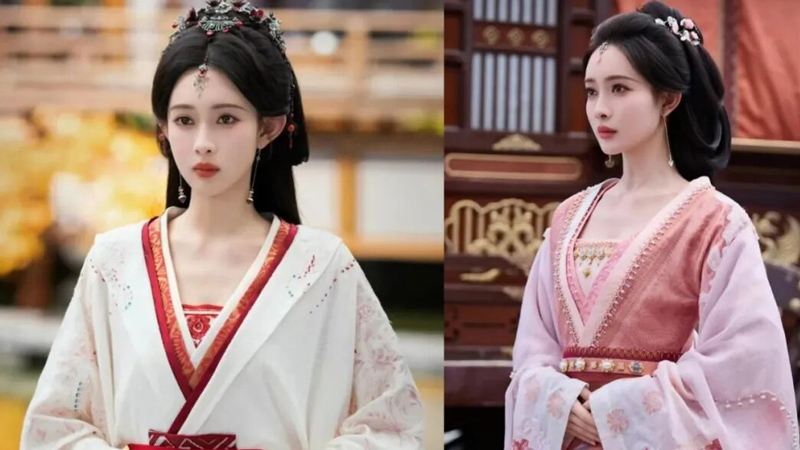
When Meng Ziyi (孟子义) steps onto the screen in her new historical drama Blossoms of Power (百花杀), her costumes immediately draw the eye. The deep V-necklines are striking, almost jarringly modern. To many viewers, this looks like a creative liberty taken by the costume department—a deliberate choice to make ancient attire more appealing to contemporary eyes. The thought is understandable; we often associate such plunging necklines with red carpets and evening gowns.
However, this perception is a classic case of historical amnesia. What appears to be a modern fashion statement is, in fact, a revival of an ancient aesthetic trend that predates our own by over a millennium. This sartorial choice is not an anachronism but a respectful nod to a specific era of Chinese history when fashion was remarkably forward-thinking.
The deep V-neck, far from being a 21st-century invention, is a classic silhouette that has been elegantly circulating through Chinese culture for centuries. It is a testament to the cyclical nature of style and the timeless human desire to showcase grace and status.
Ancient Wisdom: The Dynastic Roots
The concept of the deep V-neck was not born in modern ateliers but in the foundries and workshops of the Wei and Jin dynasties. During this tumultuous yet culturally vibrant period, societal norms regarding dress underwent a significant shift. The strict, formal dress codes of the earlier Han dynasty began to loosen, allowing for more personal expression in clothing. Ordinary cross-collared garments would create a small V-shape at the neck, resting just above the collarbone.
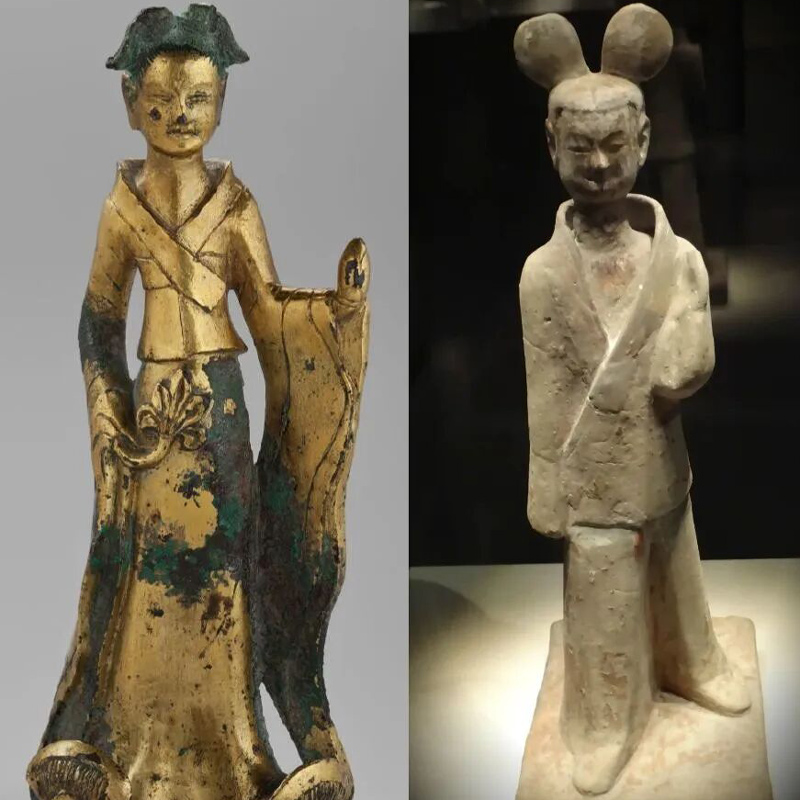
However, the “deep V” was a bolder evolution of this style, extending further down the chest. This wasn’t just a random alteration; it was a deliberate design to elongate the neck and create a more imposing and elegant silhouette. The evidence is not just in written records but in physical artifacts.
Bronze figurines from the Northern Wei period and pottery figurines from the Western Wei era, excavated from tombs, clearly show figures wearing robes with this exact deep V design. They are the spitting image of the costume pieces Meng Ziyi wears, proving that this “modern” look was already captivating audiences 1,500 years ago.
Peak Performance: The Tang Dynasty’s Love Affair
If the Wei and Jin dynasties introduced the deep V, it was the Tang dynasty that truly perfected and popularized it. The Tang era is often romanticized for its openness, cosmopolitanism, and relative freedom for women, and this spirit was perfectly encapsulated in its fashion. Women favored looser, more comfortable necklines that emphasized grace and confidence.
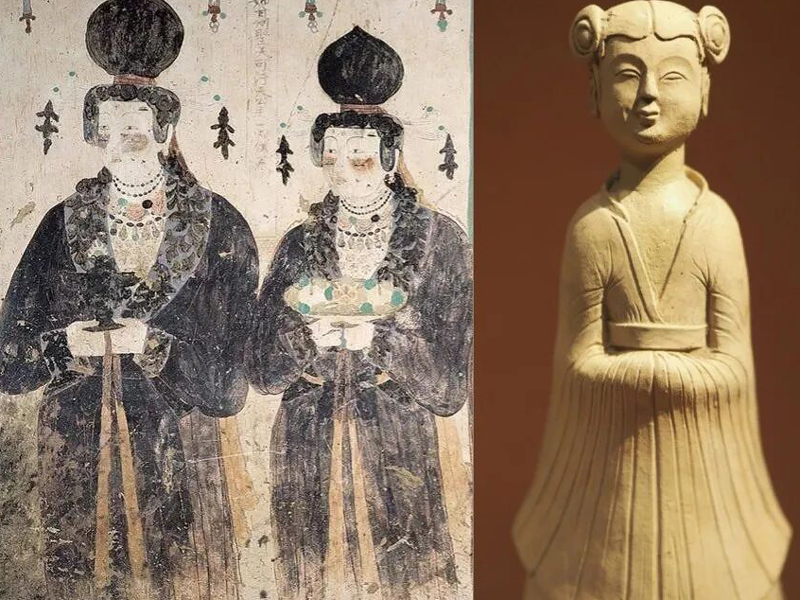
The deep V was ubiquitous, seen in casual wear and formal settings alike. It wasn’t just for the nobility either; murals in the Dunhuang Mogao Caves (敦煌莫高窟) depict female donors, ordinary wealthy women, adorned in these very styles. They wore their hair high and paired their deep V-neck tops with lavish necklaces, strikingly similar to how a modern celebrity might style a gown today. This was a cultural high point where comfort and aesthetic beauty were not seen as mutually exclusive.
The Tang aesthetic was all about expansive, bold lines, and the deep V was the perfect expression of that philosophy. It was not just a fad but a defining feature of an era that still inspires designers and artists.
Ebb and Flow: The Retreat of the V
Fashion, however, is never a straight line. While the deep V experienced its golden age in the Tang, it did not survive the subsequent dynasties in the same form. During the Song, Ming, and Qing dynasties, a more conservative aesthetic took hold. The social and philosophical climates shifted, favoring modesty and restraint over the overt display of the Tang era. The necklines crept back up, settling comfortably above the chest. In the Qing dynasty, the fashion landscape changed dramatically with the rise of the Manchu-style robe.
This new formal attire featured a high, standing collar that buttoned diagonally across the front, leaving no room for the natural, draping V-neck. The silhouette became more encased and structured, a stark contrast to the free-flowing lines of the past. The deep V was effectively erased from mainstream women’s fashion for several centuries, becoming a relic of a more liberated past. This shift highlights how deeply fashion is intertwined with politics, social norms, and prevailing philosophies, each dynasty leaving its unique mark on the nation’s style.
The “Why”: Unpacking the Ancient Craze
Why was the deep V so popular in certain historical periods? The reasons are multifaceted. Firstly, the Wei, Jin, and Tang dynasties were periods characterized by a more open and relaxed social atmosphere. There was less emphasis on rigid etiquette that demanded the body be completely covered. Comfort and the beauty of the human form were celebrated rather than hidden. Secondly, it aligned perfectly with the aesthetic ideals of the time. The Wei and Jin court valued an air of ethereal, unrestrained elegance, while the Tang loved grandeur and a bold, large-scale beauty.
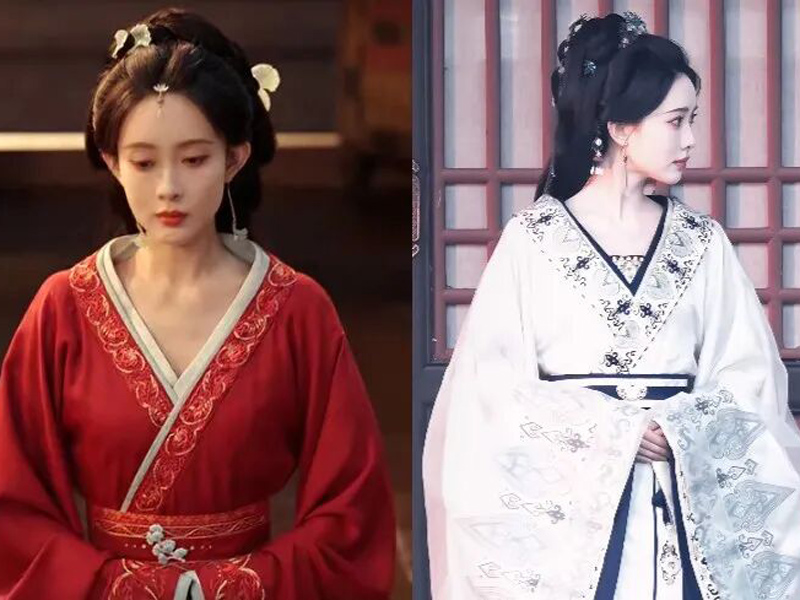
The deep V-neck, with its vertical lines, visually lengthened the neck and torso, achieving the desired sculptural effect. Finally, this was a period of intense cultural integration. The influence of nomadic peoples from the north, who brought their own clothing styles, mingled with the traditional Han Chinese cross-collar. This fusion, combined with the influence of Taoist philosophies that favored a more natural and “open” aesthetic, created the perfect conditions for the deep V to flourish. It was a genuine cultural phenomenon, not a historical accident.
Modern Echoes: A Lesson in Line
Looking at Meng Ziyi’s costumes in Blossoms of Power through this historical lens completely reframes the conversation. The production team hasn’t “modernized” ancient clothing; they have carefully reconstructed an authentic historical look, making some small allowances for modern fabric technology. It is a direct homage to the fashion pioneers of the Wei, Jin, and Tang dynasties.
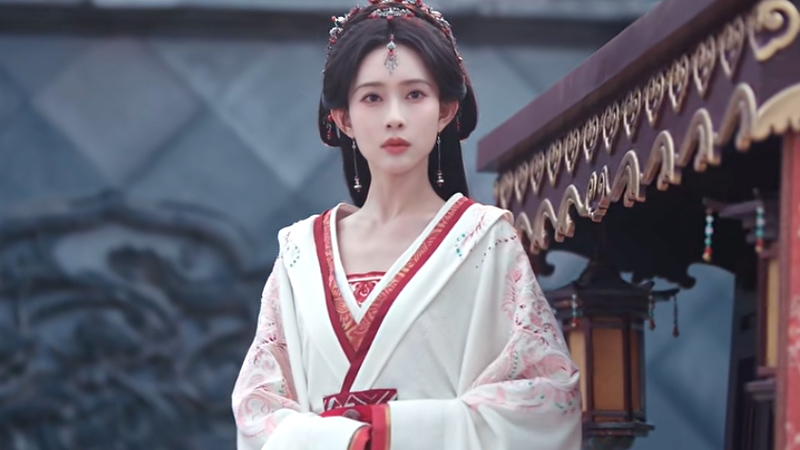
The fact that this silhouette is so prevalent today, used in everything from simple blouses to glamorous evening wear, is a testament to its timelessness. We use it for the exact same reasons our ancestors did: to flatter the figure, elongate the neck, and convey a sense of confident, effortless style. So, when we see a star on a red carpet or a fictional heroine in a period drama, what we are truly seeing is the wisdom of the ancients, proving once again that some ideas are too good to stay buried in the past.