
On July 3, 2026, the Shenyang Qipao Culture Season brought its “Manchu Embroidery Heritage, Qipao Shines in Heping” program to Jiuwu Cultural City in Shenyang’s Heping District. The event combined qipao runway shows, a guofeng market, and intangible cultural heritage demonstrations in a single immersive experience, organized by the Heping District Propaganda Department and Culture and Tourism Bureau.
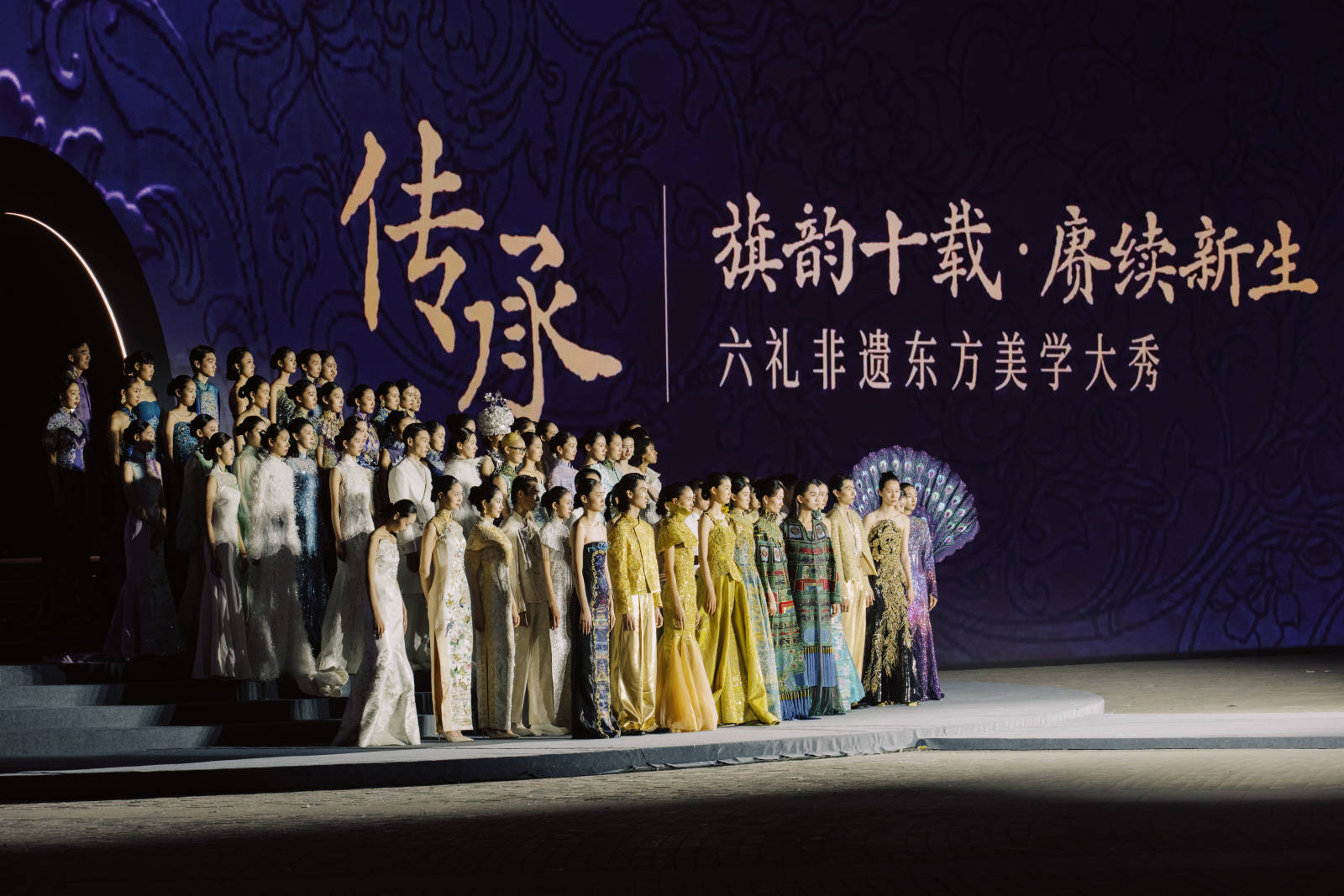
Four Qipao Model Teams Open the Show
The event opened with four qipao model teams taking the stage in sequence, their measured steps interpreting the aesthetic philosophy of “cultivating the body externally, cultivating the mind internally” that underpins traditional Chinese women’s dress. The performance aimed to break stereotypical associations of qipao with mere glamour, instead presenting the garment as a medium of self-cultivation and cultural identity.
Following the stage performance, the models transitioned seamlessly into a qipao parade through the “Dongbei Super” market area. This crossover of traditional qipao aesthetics with youth-oriented street market culture was designed to capture younger audiences, using the visual contrast of elegant silk against a bustling commercial backdrop to create what organizers called a “walking aesthetic of tradition meeting trend.”
The parade then moved into the book city section of Jiuwu Cultural City, initiating a “qipao plus book fragrance” segment. This pairing of neon silk elegance with the atmosphere of a major bookstore was conceived as an immersive garden experience, transforming the commercial space into what organizers described as a “guofeng photography destination.”
Jiuwu Cultural City, operated by Shenyang Publishing Group, is a 70,000-square-meter cultural complex that combines book retail, cultural experiences, and entertainment. By bringing qipao into this literary environment, the event created an unusual juxtaposition: the visual language of traditional dress set against shelves of contemporary publications, reinforcing the idea that qipao culture belongs not only in museums but in everyday cultural spaces.
ILiao Embroidery, Manchu Embroidery, and Pan-Kou
The final segment focused on “qipao plus intangible heritage,” with the ICH Theme Hall showcasing three northeastern Chinese craft traditions: Liao embroidery (liao xiu), Manchu embroidery (man xiu), and handmade pan-kou (frog buttons). Inheritors of these crafts demonstrated techniques on-site and offered interactive teaching sessions, allowing visitors to observe fine embroidery up close and try their hand at pan-kou construction.
Liao embroidery, native to the Liaoning region, is characterized by its bold color contrasts and dense stitchwork, reflecting the aesthetic sensibilities of northeast China. Manchu embroidery carries the decorative traditions of the Qing imperial court, with which the qipao itself shares historical roots. Pan-kou, the knotted button closures that define qipao construction, represent perhaps the most technically demanding element of the garment, with complex designs requiring hours of handwork per button.
The event was part of the broader 2026 Shenyang Qipao Culture Season, a district-level initiative to build qipao as a cultural brand for Heping District. By embedding the event within a commercial complex and pairing it with the “Dongbei Super” trend IP, organizers aimed to integrate cultural programming with retail foot traffic, creating what they termed a “show, tour, market” integrated experience matrix.
The program opened with a “silver-haired elegance show” featuring older models, then progressed through the qipao parade, market integration, and ICH demonstrations. This structure was designed to be age-inclusive, spanning from elderly qipao enthusiasts to young market-goers encountering traditional embroidery for the first time.
The Shenyang event demonstrates how qipao culture can extend beyond conventional runway formats into multi-sensory, interactive experiences that connect garment aesthetics with craft heritage, literary culture, and contemporary retail environments.