
Was there ever a moment when the villain stole the entire show? In the realm of Chinese animated series, the so-called “female antagonists” have evolved far beyond mere obstacles for the hero. They are now the gravitational center of entire story arcs—commanding, complex, and hauntingly beautiful. Between 2018 and 2023, four such characters emerged from different studios, each redefining what it means to be the “bad guy.” Their faces graced billboards, their catchphrases trended on social media, and their backstories sparked heated debates in online forums.
What makes them unforgettable isn’t just their power levels or their flawless 3D models. It is the raw, human wound at their core—betrayal, obsession, or a desperate bid for freedom. They don’t wait for the hero to save them; they build their own thrones. And even as new series flood the market every season, no one has yet dethroned these four. So, who are they, and why does their legend persist while countless other villains fade into pixels?
1. Bibi Dong (比比东) – The Broken Goddess
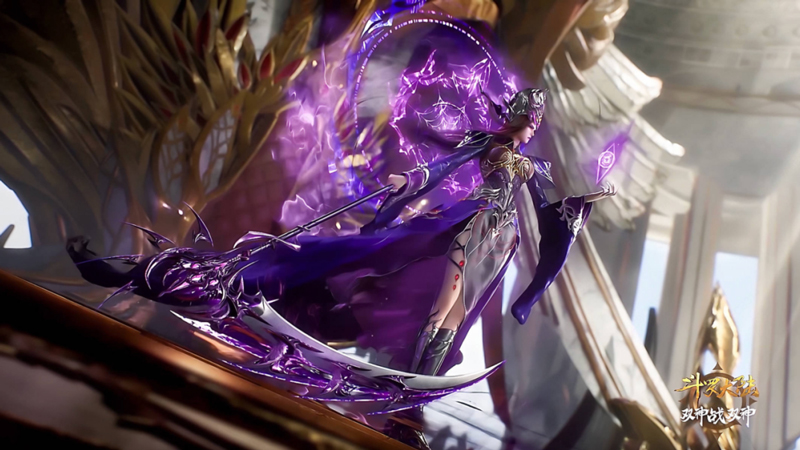
She walks into every scene like a winter storm—cold, untouchable, and devastating. Bibi Dong from Soul Land (斗罗大陆) is not your typical power-hungry tyrant. Her origin story reads like a tragedy: as a young girl, she was violated by the previous Pope, Qian Xunji (千寻疾), and then believed her lover, Yu Xiaogang (玉小刚), had betrayed her. That double blow cracked her soul wide open. Hatred became her only companion, transforming a naive, romantic girl into the merciless Queen of the Spirit Hall. She clawed her way to the top, eventually becoming the feared Rakshasa Goddess. What makes her so compelling? It is the contrast—her divine, untouchable beauty against the festering rage inside. She wears her crown like armor, but you can still see the ghost of that broken teenager in her eyes.
Modeling teams poured years of refinement into her design. Her pale silver hair, sharp cheekbones, and flowing papal robes give her an almost religious aura. Yet her combat sequences are brutally efficient, each spell laced with centuries of suppressed pain. She never apologizes for her cruelty, because in her mind, the world owes her everything it took. That unapologetic ferocity resonates with viewers who are tired of redeemable villains who cry at the last moment. Bibi Dong stands firm until the very end. Even in later Soul Land sequels, no antagonist has matched her emotional weight. She remains the gold standard for “beautiful, powerful, and utterly broken” — a archetype that later shows tried to copy but never quite replicated.
2. Yan Lingji (焰灵姬) – The Flame That Flickers
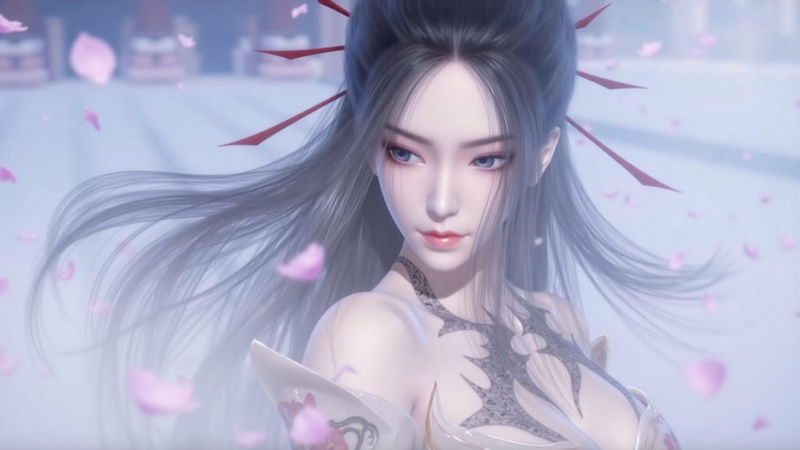
Before the era of hyper-realistic skin textures and dynamic hair physics, there was Yan Lingji from Nine Songs in the Sky (天行九歌). She didn’t just walk onto the screen; she glided, wrapped in azure flames and an air of dangerous playfulness. At the time of her debut, her 3D model was considered revolutionary—flawless facial proportions, a waist that defied animation constraints, and eyes that shifted between seductive and icy. She became the unofficial “first goddess” of Chinese anime, a title that stuck for years. But looks alone don’t build a legacy. Her personality is a careful blend of softness and steel. She appears gentle, even teasing, yet she never hesitates to incinerate an enemy when the moment calls. That duality kept audiences guessing.
Interestingly, she is a villain who rarely acts like one. She fights for her own chaotic agenda, but she also shows moments of childlike curiosity and loyalty to her companions. Her fire manipulation isn’t just a weapon; it’s an extension of her mood—calm and warm when she’s at peace, roaring and wild when angered. Over time, as the series expanded, her screen time diminished. But her legend never cooled down.
3. Xia He (夏禾) – The Seductress Who Never Killed
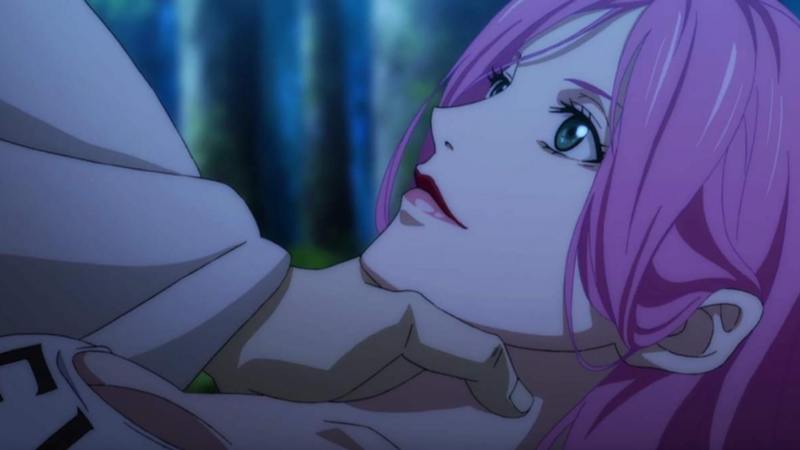
Here is a paradox: a woman born to enchant men, yet she remains fiercely devoted to one. Xia He from The Outcast (一人之下) carries the nickname “Bone-scraping Knife” among the Four Maniacs of the Quanxing (全性) sect. Her supernatural ability makes any man who looks at her lose his mind—literally. She cannot turn it off; it is as natural as breathing. But beneath that promiscuous, wild exterior lies an unexpectedly monogamous heart. Her only true love is Zhang Lingyu (张灵玉), the young Taoist master, with whom she shared an intimate past. She spends the entire series waiting for him to acknowledge his own feelings, never forcing him, never using her power on him. That restraint makes her fascinating.
Visually, she is a chameleon. One moment she exudes mature seduction; the next, she flashes a pure, almost girlish smile. Her pink hair and modern streetwear clash with the martial arts setting, yet that contrast only amplifies her uniqueness. But here is the real twist: despite her terrifying ability to manipulate life and death, she has never actually killed anyone. She enjoys the game, the threat, the psychological warfare—but she draws a line. That moral gray area is her greatest charm. She is evil by affiliation, not by action. In a genre filled with bloodthirsty villains, Xia He offers a refreshing take: a woman who owns her sexuality, loves deeply, and refuses to be a puppet of her own power. Her popularity even rivaled the protagonist’s, a rare feat for any supporting antagonist.
4. Tianqiong (天穹) Elder – The Unexpected Savior
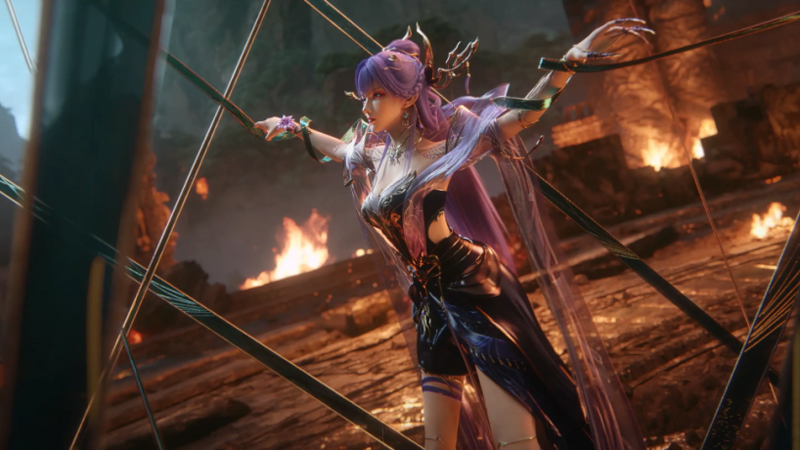
No one saw her coming. In the original web novel of Apotheosis (百炼成神), the Tianqiong Elder was a minor male character—an old sage with barely any dialogue. The animation studio took a wild gamble: they gender-swapped the role, turning it into a blue-haired, sleek-bodied femme fatale with an icy glare. The moment she appeared on screen, the show’s viewership skyrocketed. Media outlets called her the “breakout sensation” that single-handedly revived the series. She wasn’t just a villain; she was the reason millions tuned in each week. Her design—flowing turquoise locks, a form-fitting battle dress, and a voice that drips with condescension—became an instant meme and fan-art darling.
But the studio didn’t stop at aesthetics. They rewrote her arc to include a twisted, on-again-off-again rivalry with the protagonist, Luo Zheng (罗征). Their interactions oscillate between lethal combat and reluctant teamwork, creating a tense, almost romantic subtext that kept audiences glued. She betrays him, then saves him; she mocks him, then respects him. That push-pull dynamic elevated a simple cultivation story into a character-driven drama.
And because she was originally a footnote in the source material, the animation team had complete creative freedom—no novel purists to offend. That flexibility allowed them to craft a villain who is both menacing and oddly sympathetic. Her popularity proved that sometimes, the best characters are the ones born from bold, reckless adaptation. Today, she stands as a testament to how a single supporting role can redefine an entire franchise’s trajectory.