
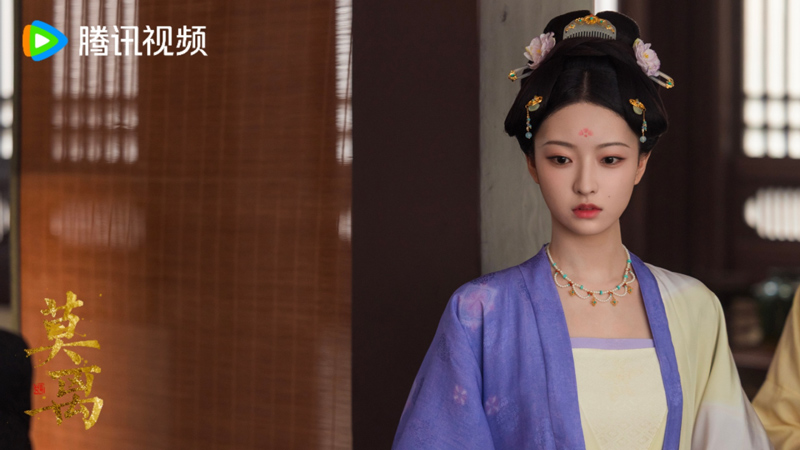
Why do intelligent women make choices that seem to defy logic and self-preservation? In the historical drama The First Jasmine (莫离), three very different women answer that question in ways that will haunt you long after the final credits roll. One risks her life for a man who despises her, one deliberately chooses a harder path to protect a stranger’s dignity, and one slaps her lover across the face—then stays with him after he goes blind.
These are not naive girls or passive victims. They are women who have weighed their options and made their peace with the consequences. Their stories cut through the usual tropes of historical romance, offering something rawer and more unsettling: a portrait of love as a deliberate, painful, and deeply personal choice. As we dig into their journeys, we might just find pieces of our own complicated hearts reflected back at us.
Ye Ying (叶莹): The Long Road to Letting Go

Ye Ying fell in love with a shadow. She knew Mo Jingli (墨景黎) only through his poetry, yet she married him with the fervor of a true believer. The reality was brutal. He ignored her, abandoned her for his political ambitions, and made it painfully clear that his heart belonged to another woman—Ye Li (叶璃). When she first heard a false report of his death, Ye Ying tried to take her own life, as if the mere absence of her tormentor was unbearable. Later, when he was branded a traitor and besieged by enemies, she did not flee. Instead, she traveled a thousand miles to Luoxia Pass (落霞关) to find him, not to save herself, but to offer him a few fleeting moments of happiness.
Her method of comfort was heartbreakingly selfless. She knew that only stories about Ye Li could bring a smile to his face, so she recounted the other woman’s past, burying her own jealousy and pain. She begged him to abandon his rebellion, promising to eat wild herbs and live in poverty by his side. It was not enough. He left her again. Ye Ying eventually settled in his mother’s hometown, living a quiet, solitary life. It is easy to dismiss her early actions as foolishness or even malice—her “villainy” was born from jealousy of Ye Li. But her true depth appears only when she accepts that her feelings were a one-way street, a fantasy. She walked through the fire of unrequited love and emerged on the other side, not bitter, but at peace. She had done everything in her power; letting go became her final act of strength.
Lin Tinglan (林听澜): The Compassion of Distance
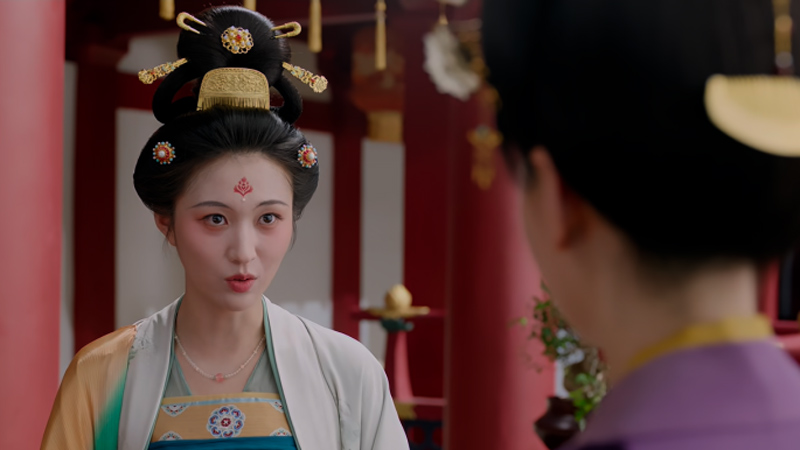
If anyone embodies unexpected grace, it is Lin Tinglan. She is sharp, predicting the fall of the Marquis of Muyang (穆阳候) while others still grovel at his feet. She is also instinctively kind, stopping in the street to help a stranger in need. That stranger was Qin Cang (秦苍). Their connection was immediate, born of shared experiences and interests. She took the initiative, giving him her name and address—a bold move for a woman in her time. But their second meeting revealed a chasm: he worked for the very man she knew was doomed. She warned him to leave, but he refused, pocketing the handkerchief she had given him as a token.
The third time they met, Qin Cang was a convicted criminal, being sent into brutal exile in Qianchuan (黔川). Most would have turned away. Lin Tinglan followed him. She did not swoon or make grand declarations. She walked the same hard road, keeping a silent watch from a distance until she was sure he would survive. Then, she chose to separate their paths. This is where her genius lies. She understood that sharing the same journey was not an act of love, but a humiliation for him. She protected his dignity by giving him space. Considering they had only met twice and shared a few hours of conversation, her commitment is staggering. She loved him not by clinging, but by giving him the freedom to retain his self-respect. Qin Cang did not just find a woman who loved him; he found one who understood him.
Yu Sheng (玉笙) : The Slap That Meant Forever
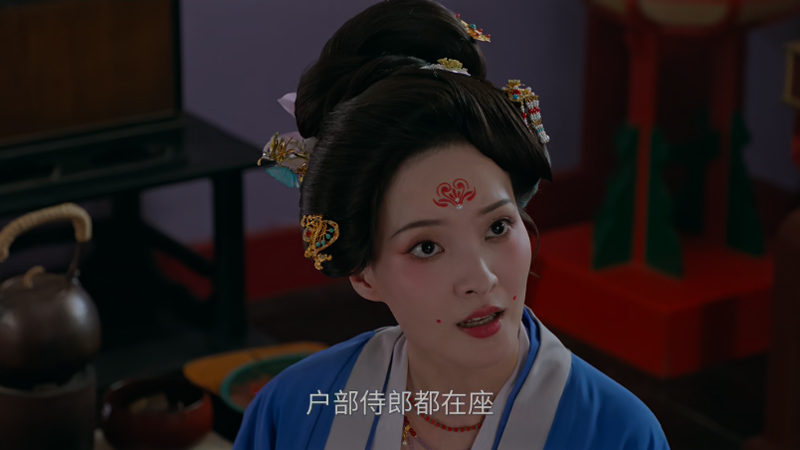
Yu Sheng was the most sought-after courtesan in the capital, a woman for whom wealthy princes emptied their coffers. But she was never interested in wealth or status. She wanted one thing: a man with true feeling. She found that in Li Feibai (李飞白), a martial artist and the senior disciple of Ye Li. He was ready to buy a house, redeem her from the brothel, and make her his wife. Then, disaster struck. During a violent attack in the capital orchestrated by Mo Jingli, Li Feibai rushed to save a friend from a burning building. An explosion cost him his sight. Knowing he would soon be blind, he made a devastating choice: he pushed Yu Sheng away, giving her money and coldly claiming their love had been merely a game.
Yu Sheng was furious. She slapped him across the face, refused the money, and walked away without a backward glance. It seemed like the end. But the final episode reveals a different truth. Yu Sheng is there, by the now-blind Li Feibai’s side, watching the stars with him. It is clear she “came back” on her own terms, her stubbornness overriding his self-sacrificing cruelty. She chose him when he had nothing left to give. Her slap was not a rejection; it was the punctuation mark of her fury at his presumption. She would not be sent away like a piece of property. Her devotion was a choice, not an obligation, and she proved it by staying when it was hardest. She did not just love him; she fought for the right to love him on her own terms.
The women of The First Jasmine defy easy categorization. The empress dowager can be ambitious and bloodstained; Ye Ying can be naively devoted; and Lin Tinglan can be breezily independent. They encompass every shade of human complexity, proving that a woman can be anything—a survivor, a fool, a warrior, a healer—often all at once. These three women, in particular, teach us that the deepest love is not always the loudest or the most visible. Sometimes, it is the quiet choice to leave, the hard choice to understand, or the furious choice to stay.