
On July 3, 2026, the China Art Museum in Shanghai will open “A Home of a Thousand Gold — Life Aesthetics and Cultivation in the Mawangdui Han Tombs,” the largest and highest-level exhibition of Mawangdui artifacts ever mounted outside Hunan Province. Running through October 7, the exhibition assembles 195 sets totaling 472 individual pieces, including 31 Grade I cultural relics and three items on China’s national prohibited-export list.
The Mawangdui tombs, discovered in 1972–1974 near Changsha, Hunan Province, are among the most significant archaeological finds of the 20th century. The tombs belonged to Li Cang, the Marquis of Dai, his wife Xin Zhui (Lady Dai), and their son, dating to the early Western Han dynasty (circa 168 BCE). The anaerobic, waterlogged conditions preserved organic materials — silk, lacquer, wood, and even human tissue — to an extraordinary degree.
Silk Textiles: The Earliest Printed and Painted Fabrics
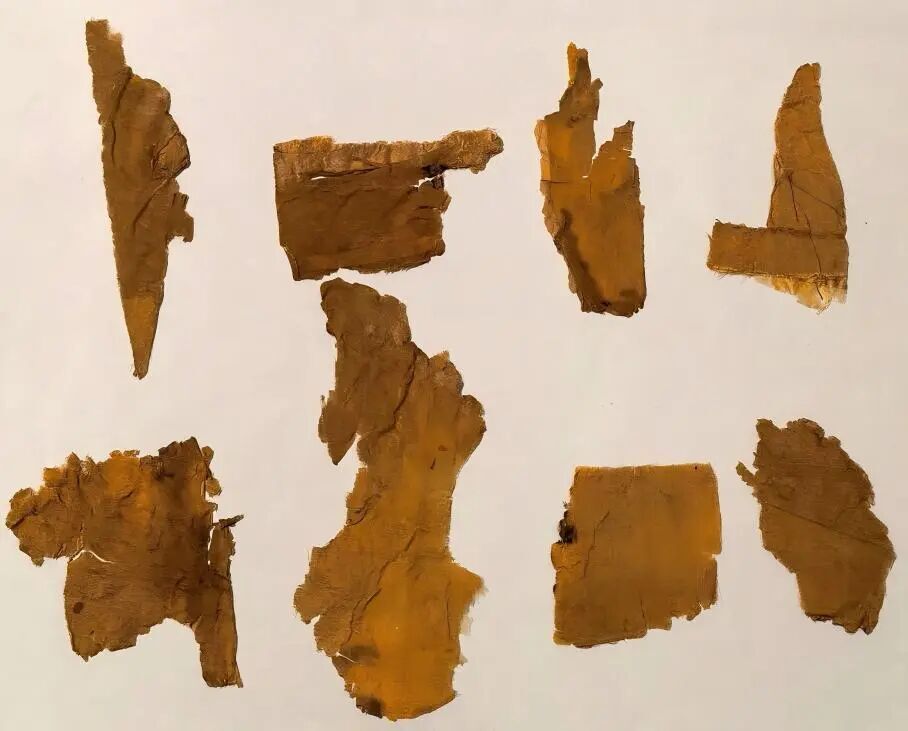
The textile artifacts in this exhibition represent a watershed in global textile history. The gold-and-silver flame-pattern printed gauze (金银色火焰纹印花纱) is the earliest known example of three-plate block printing on silk, demonstrating that Chinese artisans had mastered multi-color registration printing two millennia before Gutenberg. The printed and painted gauze (印花敷彩纱) combines block printing with hand-painted color — the first discovered instance of these two techniques used together on a single textile, corroborating ancient texts that described “painted garments” as a luxury category.
The “Cheng Yun” embroidered cushion on paired-bird lozenge-pattern qi silk is the earliest silk floor mat ever found archaeologically, offering direct evidence of Han-dynasty aristocratic interior furnishing. The fragmentary silk robe bearing the woven inscription “An Le Ru Yi Chang Shou Wu Ji” (安乐如意长寿无极, roughly “peace, contentment, and boundless longevity”) is the oldest known example of text woven directly into fabric on a loom, predating similar techniques elsewhere by over a millennium.
T-Shaped Silk Paintings
For the first time, the T-shaped silk paintings from both Tomb 1 (Lady Dai) and Tomb 3 (her son) will be displayed together outside Hunan. These paintings, known as feiyi (非衣), were draped over the innermost coffin and served as spiritual conduits for the soul’s ascent to heaven. The Tomb 1 painting, on view from July 3 to August 16, is a first-batch national prohibited-export relic. The Tomb 3 painting, displayed from August 18 to October 7, measures 234.6 cm in length — the largest surviving painted silk from the Han dynasty — and depicts a more elaborate tripartite cosmos of heaven, earth, and the underworld.

A Multi-Sensory Museum Experience
The curatorial team has designed the exhibition around three narrative chapters: “The Eye of Pattern” (纹样之眼), “The Order of Vessels” (器用之序), and “Contemplations of Heaven and Humanity” (天人之思). Beyond the artifact displays, visitors will find reconstructed spaces including Lady Dai’s dressing room, kitchen, and exercise area, as well as interactive zones for traditional medicine consultation and incense appreciation.
Full-price admission is 98 RMB, with discounted tickets at 68 RMB and children’s tickets at 9.9 RMB. Tickets are available through HUXIAOYOU, Maoyan, Damai, Douyin, and Ctrip. The museum is open Tuesday through Sunday, 10:00 to 18:00 (last entry at 17:00), closed on Mondays.