
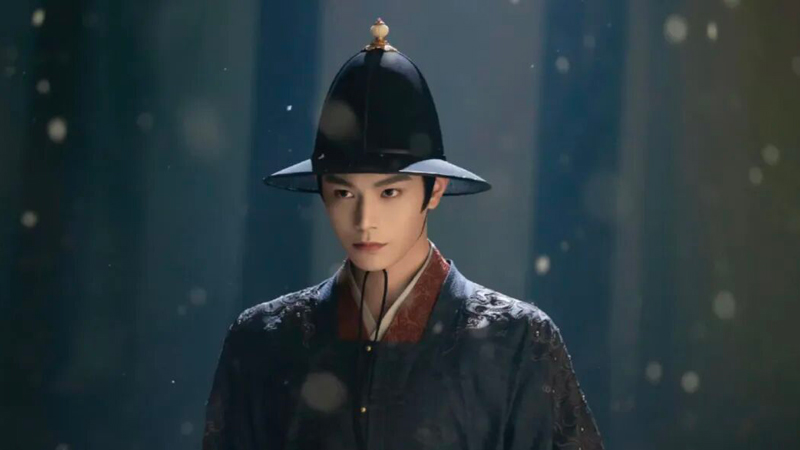
Ding Yuxi (丁禹兮) wears a round, wide-brimmed hat in the historical drama The Road to Splendor (花开锦绣). The moment his costume was revealed, it sparked a heated debate online. Is this a creative invention, a historical error, or a case of mistaken cultural identity?
While some viewers immediately associated the look with popular Korean historical dramas, a closer examination of the Ming Dynasty dress code reveals a fascinating story about fashion, class, and cultural exchange that challenges our modern assumptions. This article dissects the hat’s true origins, its practical purpose, and what it tells us about how we understand history through entertainment.
The Hat’s True Historical Identity
For the casual viewer, the hat is just a piece of headwear. For a historian, it is a clear indicator of the wearer’s job and social status. The round hat with a brim that Ding Yuxi wears is referred to in historical texts as a large hat or large-brimmed hat. It was a common piece of men’s headwear in the Ming Dynasty, and its genealogy can be traced back even further. Some scholars believe it evolved from the “Li Mao” (笠帽, bamboo hat), a style that was already taking shape during the Five Dynasties period, with possible origins in the headwear of northern nomadic groups. This early design was purely functional—a shelter against sun and sand.
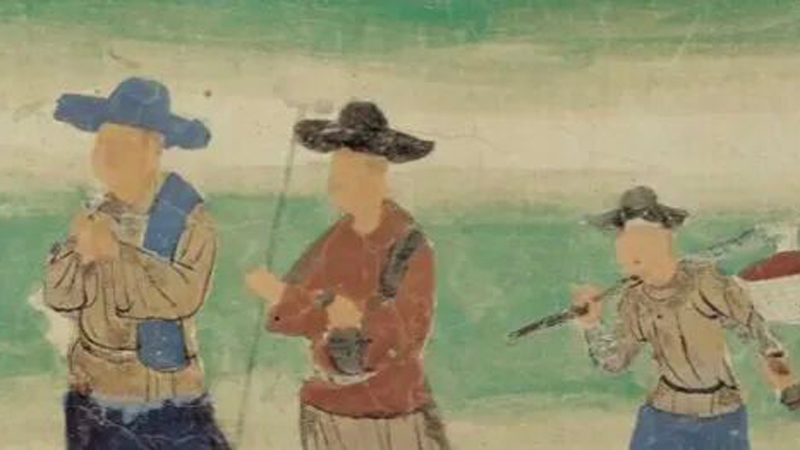
The hat that graces Ding Yuxi’s head is specifically a military style. The presence of a decorative top ornament on his large hat is not just for aesthetic flair; it is a professional marker. In the Ming Dynasty, such ornaments were strictly reserved for military officers. Civilian scholars and bureaucrats wore their large hat without any crown top. This small detail provides a crucial clue to his character Zhao Ling’s (赵凌) life, establishing him as a member of the warrior class. It shows the producers made a conscious effort to align the costume with the character’s background.
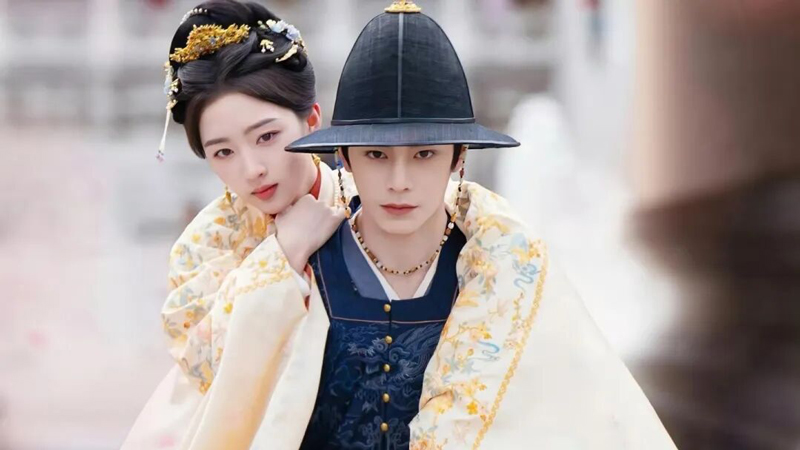
The materials used for these hats were also an indicator of season and social rank. While the most common versions were made of woven bamboo for its coolness—making it the “must-have” travel accessory for scholars—options expanded to include palm fiber and felt for colder weather. However, the design wasn’t static. A variation we sometimes see in other dramas is the “Zhe Yan Mao” (折檐帽, folded-brim hat), where the brim is turned upwards. This style was popular in the early Ming Dynasty, as seen on a character played by actor Xu Kai (许凯) in a different production.
Deconstructing the “Korean Drama” Stereotype
This is where the conversation gets particularly contentious. The immediate reaction from some netizens was that the costume was “stolen” from Korean dramas. It’s a common accusation in the age of viral media. However, these accusations are based on a limited historical perspective and overlook the one-way flow of cultural influence during that era. During the Ming Dynasty, Joseon was a tributary state of China, meaning its culture, including its official dress code, was heavily influenced by and often directly adopted from its powerful neighbor.
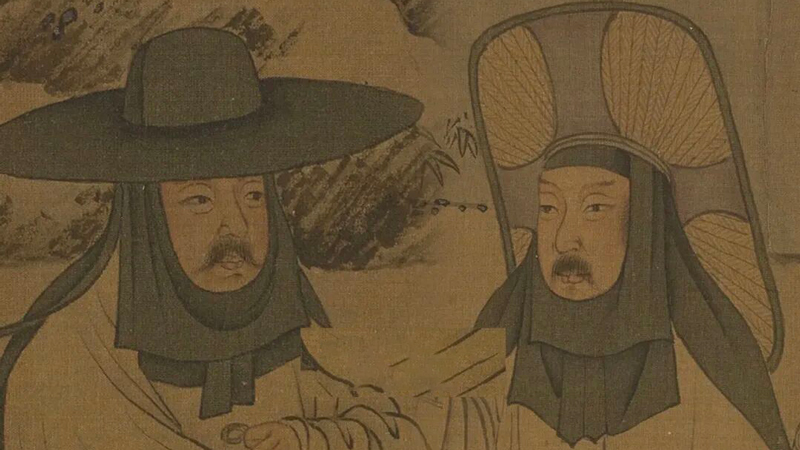
The iconic black hat known as the Heukrip, which is frequently seen in Korean historical dramas and is often the source of the comparison, is a direct descendant of the Ming Dynasty large hat. It was transmitted to the Korean peninsula in the early Ming period. But the subtle differences are key. The Heukrip preserved an older style of beaded strings, whereas mainland China phased them out. More importantly, it evolved with different proportions. The beaded strings on the Korean version typically hang much longer, reaching the chest, while its Chinese predecessor had a shorter length for a more practical fit.

The confusion is made worse by the fact that Korean pop culture has created its own “fusion” designs. For instance, a hat called the Juryeop, which also appears in Korean dramas, is actually a modern media creation. It is a mashup of elements from the late Ming Dynasty military style and an even older Eastern Han Dynasty military crown called the Wu Bian Da Guan (武弁大冠), famous for its side feathers. In essence, what some see as “authentic Korean costume” is often a secondary adaptation of a primary Chinese source, a detail that gets lost in the swift current of online arguments.
Why Costume Accuracy Matters in Entertainment
The tendency to misattribute the origin of these garments is a symptom of a larger issue. For decades, South Korean and Japanese historical dramas dominated the international market, shaping the visual language of historical Asia in the minds of global audiences. This early exposure created a mental library that many people use as a reference, leading them to see Chinese historical clothing as the derivative, rather than the original.
However, the winds are changing. The recent global popularity of Chinese historical dramas has given the industry a new responsibility. With a massive and engaged audience, these shows are no longer just entertainment; they are a primary source of historical education for millions of young people. If a drama chooses to represent a specific dynasty, its costume design has the power to either correct or cement historical misconceptions. By striving for authenticity, as The Road to Splendor attempts to do with the large hat, the industry can actively participate in cultural preservation.
Simply put, we cannot afford to be passive viewers. The “Korean drama” filter is a lazy one, born of habit. By understanding the specific details—the hat’s function, its evolution from the Yuan to the Ming, the difference between civilian and military top ornaments, and the meaning of the bead strings—we can deconstruct these false equivalencies. Dismissing these historical details because the show is “just a drama” is a disservice to the heritage that inspired it. Entertainment has an immense power to influence, and it is time to ensure that influence is an educated one, supporting productions that take the responsibility of cultural representation seriously.