
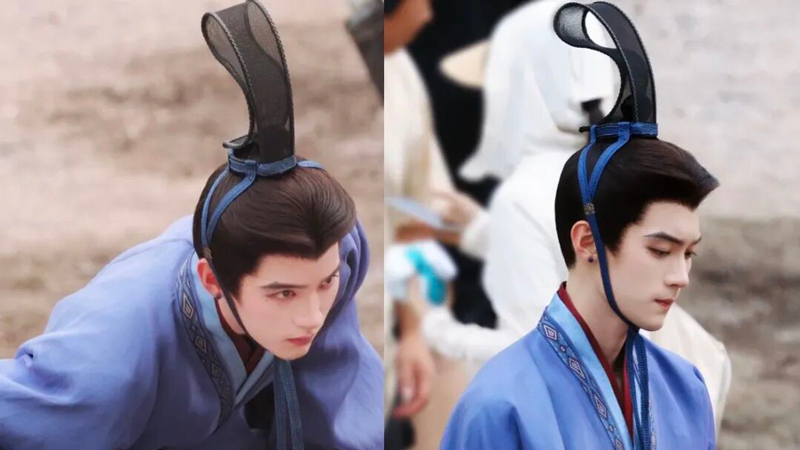
He looks like a prince who just stepped out of a Warring States mural, yet his hat seems to defy gravity. In the historical drama Ashes to Crown (翘楚), actor Zhou Yiran (周翊然) appears with a towering, almost architectural headpiece that has sparked countless comments online. Why does it look so unusual? What is the story behind this peculiar accessory?
The answer lies not in the whims of a costume department, but in the deep, romantic soil of ancient Chu culture. The headwear isn’t just a hat; it is a declaration of identity, a political statement, and a soaring symbol of a kingdom that refused to bow to the conventions of its time. This specific design, known as the Qieyun Guan (切云冠), connects a modern television drama to a poet who lived over two thousand years ago, bridging the gap between fashion and philosophy.
The Crown that Touched the Clouds
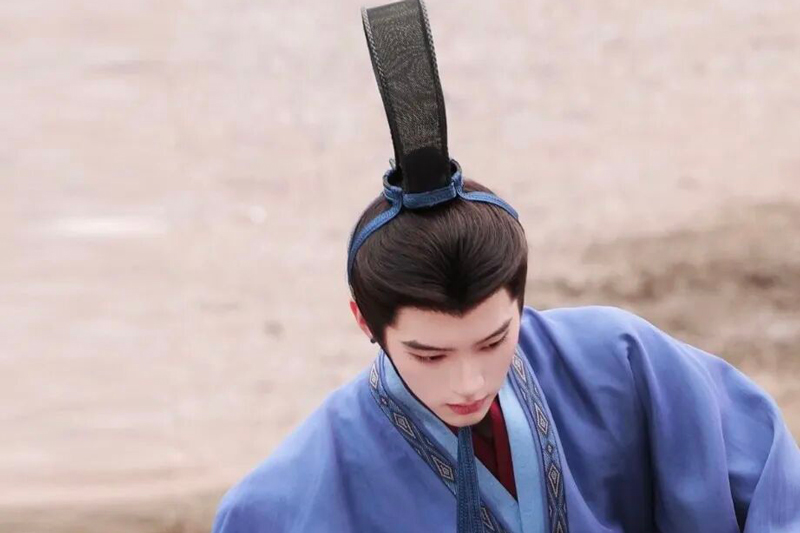
The distinctive hat worn by Zhou Yiran’s character, Xie Yanlai (谢燕来), is a cinematic interpretation of the most iconic headwear of the Chu state. Unlike the squat, modest crowns preferred by the Central Plains states, Chu crowns were known for their vertical ambition. They were structured to rise high above the wearer’s head, creating an imposing silhouette. Its popular name, Qieyun Guan, literally translates to “Crown that Cuts the Clouds,” a title that perfectly captures its most defining feature: its height. It is characterized by a figure-eight profile, with a narrow waist cinching the middle and a flared top and bottom, making it appear as if it is reaching for the heavens.

This was not a random aesthetic choice; it was a cultural cornerstone. Historical texts consistently refer to the Chu people’s preference for tall hats. The construction was often rigid, possibly using lacquered silk or leather to maintain its lofty shape. This style stood in stark contrast to the subdued, practical hats of the north, serving as a bold visual representation of Chu’s independent spirit. The kingdom of Chu, located in the south, was often seen by its northern neighbors as a land of mysticism and eccentricity, a reputation its citizens seemed to embrace with flamboyant fashion and unique rituals.
To understand the foundation of this design, one must look at the archaeological evidence that supports the historical record. The most definitive visual proof comes from the Painting of a Man Riding a Dragon (人物御龙帛画), a silk painting unearthed from a Chu tomb in Changsha, Hunan. This funerary art depicts a nobleman ascending to the afterlife on the back of a dragon. On his head sits a crown that matches the exact description of the Qieyun Guan, complete with its soaring, figure-eight shape. This artifact is a crucial piece of evidence, confirming that the exaggerated high crown was not a myth or an exaggeration by historians, but a tangible accessory worn by the elite.
Poetry, Politics, and Jade
The most famous advocate for this towering accessory was the poet-minister Qu Yuan (屈原). For him, the Qieyun Guan was more than mere fashion; it was a moral compass. In an era of political intrigue and corruption, Qu Yuan used his attire to project his inner virtue. He famously wrote in his work Nine Chapters: Crossing the River (九章·涉江), “I wear the lofty Qieyun Guan, with a bright moon and precious jade pendant.” The term “lofty” was deliberately chosen to describe not only the physical height of the hat but also his own noble, untouchable character. He was a man separate from the sycophants of the court, and his headwear made that separation spectacularly visible.
By choosing to wear this hat, Qu Yuan was making a rebellious fashion statement. He consciously differentiated himself from the standardized norms of the Central Plains during the Warring States period. For a Chu intellectual, adopting such a distinctive style was a way to assert cultural independence. It was a way of saying that the spirit of the south, with its magical realism and passionate poetry, would not be suppressed by the rigid protocols of the north. This link between the towering crown and the scholar’s integrity remains a powerful theme in Chinese literature.
The connection between Qu Yuan and this headpiece is essential for understanding its later appearances in art and media. The specific line about the “lofty” crown provides the textual anchor for the visual artifacts found centuries later. Without his poetic endorsement, the archaeological finds might have been interpreted differently. Qu Yuan’s words ensure that when we see the Qieyun Guan, we do not just see a piece of costume; we see a symbol of defiance, a public declaration of principles in a time of moral darkness, immortalized in ink and unearthed in silk.
From Tomb Murals to Television Screens
Beyond the single painting, the Qieyun Guan appears consistently across Chu-era artifacts, proving its widespread popularity. The painted lacquerware unearthed from the Baoshan Chu (包山楚) Tomb in Jingmen (荆门), Hubei, features processions of nobles, many of whom are depicted wearing variations of this tall crown. These repeated appearances in different contexts—funerary art and daily luxury items—confirm that the Qieyun Guan was not reserved for a single eccentric poet but was a standard marker of status and identity for the entire upper class of Chu society. It was a trend that lasted for centuries.
When the production team for Ashes to Crown designed Zhou Yiran’s look, they faced the challenge of translating ancient textiles and lacquered wood into a modern visual language. They did not simply copy the murals. Instead, they streamlined the structure, retaining the essential figure-eight waist and soaring height while introducing lighter materials and decorative cutouts. This approach allowed the costume to read well on camera, ensuring the character looked formidable and elegant without appearing clumsy or burdened by a heavy replica of a two-thousand-year-old artifact.
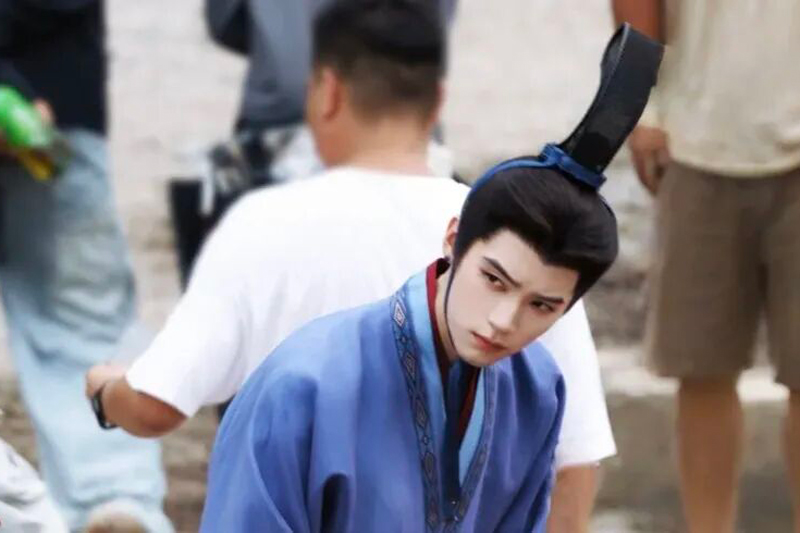
The resulting look is a creative adaptation that balances historical research with the requirements of television drama. It avoids the trap of many historical dramas that invent nonsense headwear purely for visual effect. The designers acknowledged the historical prototype, preserved its core identity—the verticality and the unique profile—and polished it for modern aesthetics. The cap worn on screen is a testament to the enduring appeal of Chu culture, translating a three-thousand-year-old fashion statement into a compelling costume for a contemporary audience.