
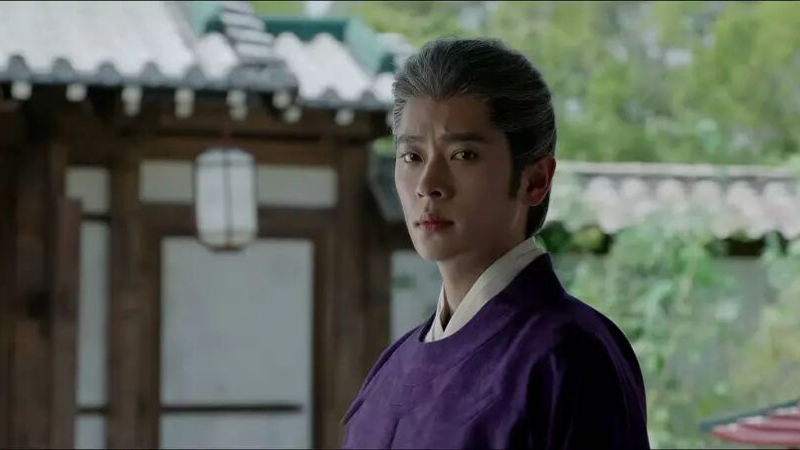
The First Jasmine (莫离) has just dropped its finale in early screenings. At first glance, it looks like a palace drama about loyalty and betrayal. But watch till the end, and you realize it is really a three-way power struggle among the uncles and nephew of the Mo (墨) clan. One ends up a rebel pierced by a thousand arrows. One guards the frozen border, forever doubted. And one simply lies down and wins, planted firmly atop the political pyramid. So who really holds the crown? And more importantly, does the crown ever hold anything but trouble?
Rebel with a Lost Cause
Mo Jingli (墨景黎) was the legitimate heir of the Eastern Palace – the rightful successor by blood and law. But Guo Jin (郭妗), the ambitious empress dowager, burned that palace to the ground. He survived the fire, but he never escaped it. Every single day of his life, he relived the smoke, the screams, the loss. That fire took his parents, his birthright, his identity. What remained was a ghost wearing a prince’s name.
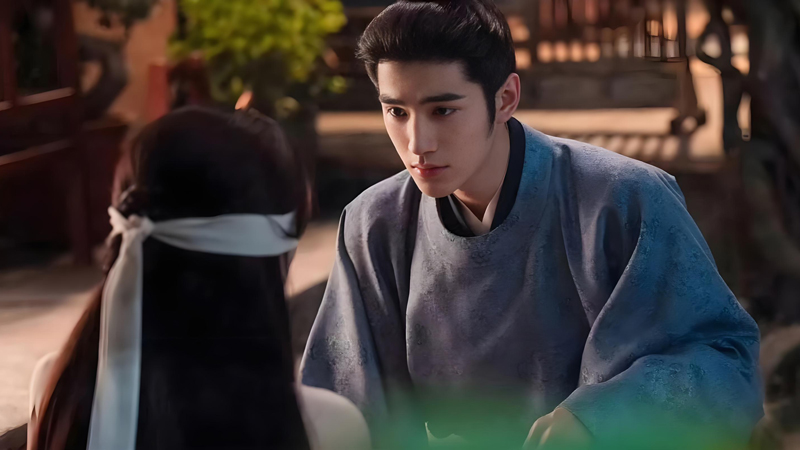
He lived in hiding, trembling with every footstep. His only fuel was revenge. He plotted to reclaim what was stolen – even if that meant reigniting the war between Cangbei (苍北) and Dachu (大楚). He did not see that his methods were eating away his legitimacy. Every secret assassination, every backdoor deal, every alliance with traitors – they piled up like kindling around his own feet.
In the end, he did not lose to Ye Li (叶璃) or Mo Xiuyao (墨修尧). He lost to himself. To his narrowed vision. If he had let go of his obsession, if he had thought of the people’s suffering, he could have watched Mo Jingqi (墨景祁) dig his own grave and then stepped in as the savior. At the very least, he could have walked away with Ye Li, playing the qin and writing poetry under the moon. Instead, he chose the arrow-filled sky and a historian’s contempt. What a waste.
Guardian of the Snow Pass
Mo Xiuyao was born to defend Suixue Pass (碎雪关). His family, the Dingwang (定王) line, had held that frozen wall for generations, blocking Cangbei’s cavalry. But Guo Jin’s conspiracy got them removed. When Mo Jingli rebelled and butchered the new garrison commander, a healed Mo Xiuyao was ordered to Luoxia Pas (落霞关). There, he crushed the rebel main force. Then he learned Jingli had snuck back to the capital to kill the young emperor. He rode day and night, arrived just in time, and stopped the coup.
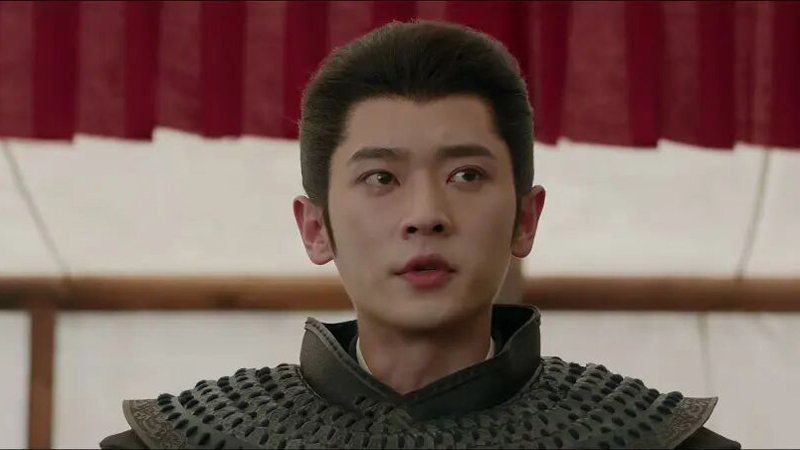
After the dust settled, he returned to the border. Ye Li even traveled a thousand miles to visit her husband. On paper, it looks like a happy ending – the loyal general finally vindicated. But peace is a thin sheet of ice. The young emperor used him to counter the dowager’s power. Even while relying on his sword, the emperor constantly suspected him. Now the dowager is gone, and Mo Xiuyao has transformed from a cripple in a wheelchair into a war god with a massive army. How could that not terrify a young ruler?
Watch how the emperor chose Li Duo (李铎) over Mo Xiuyao for Suixue Pass. He initially favored Mo Xiuyao, but Li Duo whispered a few words, and the emperor flipped. Why? Because deep down, he fears Mo Xiuyao’s military might more than he trusts his loyalty. If Mo Xiuyao does not see this trap – or fails to find a way to disarm that fear – he might end up exactly where his father did. He will spend his whole life being doubted, no matter how many battles he wins. That is his crown of thorns.
The Lucky One Who Did Nothing
Mo Jingqi was never supposed to be emperor. He was just an ordinary son of the late emperor – neither the eldest nor the most talented. But his mother, Guo Jin, had iron fists and a steel will. She clawed her way through court bloodshed, but because she was a woman, she could not sit on the dragon throne herself. So she pushed her son onto it. He was her puppet, her proxy, her male-shaped seal.
Here is the irony: Guo Jin ruled for years, made real achievements, stabilized the treasury, and pacified rebellions. Yet the ministers always resented her. The moment Mo Jingqi grew his own feathers, they rallied behind him – simply because he was male. He demanded his mother return the regency, and the court cheered. He became the “legitimate” emperor with full control. No bloody coup, no desperate gamble. He just waited.
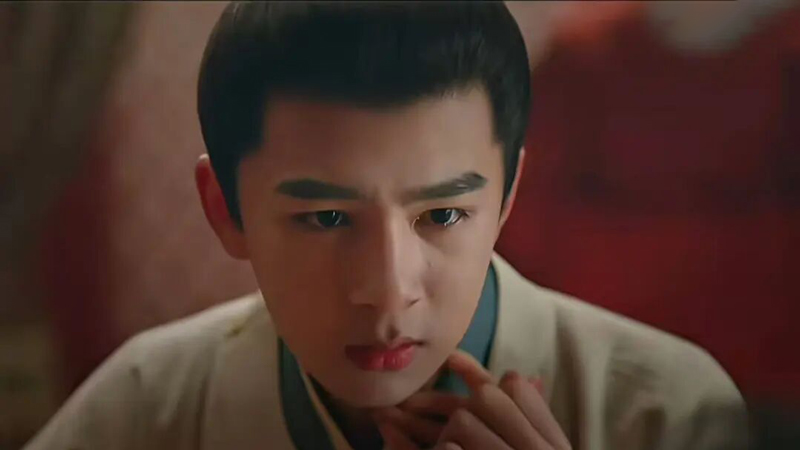
His victory came on the backs of others: his mother’s ruthless politicking, Ye Li’s strategic mind, Mo Xiuyao’s bloody battles, and even Mo Jingli’s failed rebellion that cleared the field. Mo Jingqi contributed nothing except his birth gender and a passive patience. He picked up the crown like a stray coin on the road. That is the definition of a free ride. But here is the unsettled question – does that power truly help him, or will it devour him later? He has never been tested by real fire. And a throne built on others’ sacrifices has a fragile foundation.
Looking at these three men – the rebel, the guardian, the idle winner – one pattern emerges. Power is addictive. It blinds. It makes you see enemies everywhere and allies nowhere. Mo Jingli chased it so hard he became its victim. Mo Xiuyao holds it but is forever chained by others’ fear. Mo Jingqi has it without earning it, which might be the most dangerous position of all. But beneath all that, the real currency is not power – it is capability. Mo Xiuyao has military genius. Ye Li has political acuity. Even Guo Jin had administrative grit. Mo Jingqi? He has only his mother’s past efforts and a lucky chromosome. So the next time you watch a palace drama and root for the schemer or the warrior, remember: the one who lies down and wins often wakes up to a throne that is also a cage. And the cage has no key.