
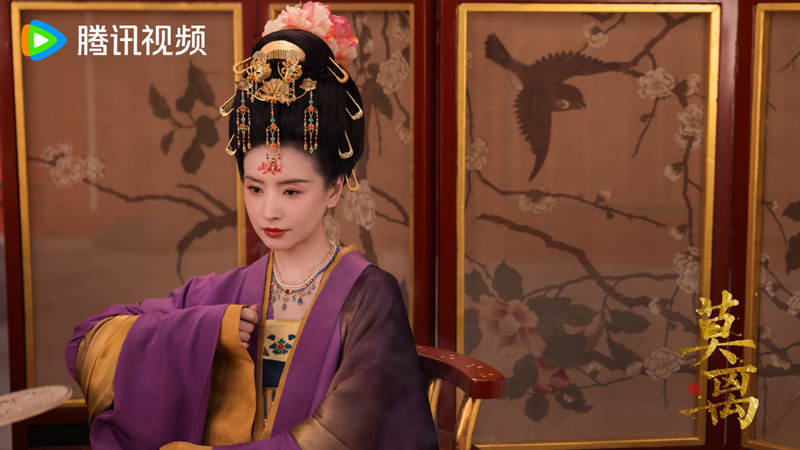
She orchestrated plots against generals, poisoned lords, and colluded with rebels. Yet, when the dust settled, she was not executed. She was not imprisoned forever. She ended up holding the reins of power once more. Her story is a masterclass in political survival, showing that sometimes, losing everything is the first step to gaining it all. This is not a tale of redemption, but of ruthless pragmatism.
While the television adaptation gave her a fitting downfall, the original text painted a far more complex picture. It forces readers to ask a difficult question: What does it truly mean to win? For this Empress Dowager, the answer was simple. It meant achieving absolute control, regardless of the personal cost. Her journey from the brink of death to the pinnacle of power is one of the most compelling narratives in modern historical fiction.
Her Deadly Gamble
At the start of The First Jasmine (莫离), Guo Jin (郭妗), the Empress Dowager, was not content with a quiet life in the palace. She had survived the brutal succession wars of the late emperor’s reign. She had seen her own son, Emperor Mo Jingqi (墨景祁), rise to the throne. But she refused to be a mere figurehead. Her ambition was not for her children, but for herself. She wanted to rule. This led her down a dark path. She framed the loyal general Mo Xiuwen (墨修文) for returning to the capital without orders. She orchestrated the fire that destroyed the Eastern Palace. She even sent poisoned wine to the Marquis of Muyang (穆阳). She saw these acts not as crimes, but as necessary steps to secure her power. The throne was her goal, and she would let nothing stand in her way. Her actions were the catalyst for the civil war that tore the empire apart. They set brother against brother and turned the court into a den of vipers.
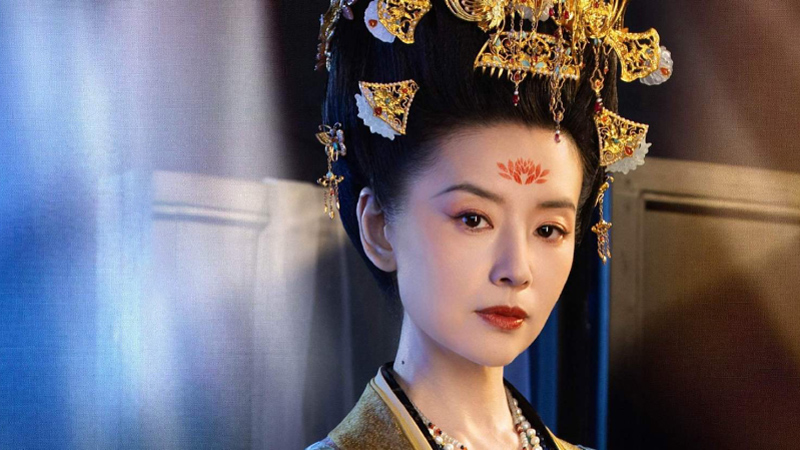
Her relationship with her eldest son, the Emperor, was the first casualty of her ambition. He was not the weakling she had perhaps hoped for. After just three years on the throne, Mo Jingqi moved to consolidate his power. He politely but firmly asked his mother to retire to the inner palace. He took back the reins of government. This was a direct challenge to her authority. The Empress Dowager was furious. She could not accept a life of leisure. So, she made a counter-move. She began to secretly support her younger son, Mo Jingli (墨景黎). He was a warlord with his own ambitions. She saw him as her new champion, a way to regain her influence. This decision created a deep and irreparable rift in the family. The Empress Dowager had chosen power over her own blood. She had gambled the empire’s stability on her personal hunger for control.
The Sons’ Betrayal
Her gamble failed. Mo Jingli’s rebellion was crushed. To make matters worse, Mo Jingqi was poisoned. He was dying. In a final act of defiance against his mother, he called his brother to his deathbed. They reached a grim accord. Mo Jingqi would name his young son, Mo Suyun (墨夙云), as the new emperor. Mo Jingli would be the Regent. Then, Mo Jingqi delivered his final, bitter blow. He left an edict. The Empress Dowager was to be buried alive with him. It was the ultimate punishment. He was ensuring that his mother, the source of all his troubles, would not outlive him. She would be sacrificed to maintain the dynasty’s stability. The Empress Dowager was completely cornered. Her sons had both betrayed her. One was dead, and the other was a usurper. Her power was zero. Her life was forfeit. At this moment, everything she had built was about to crumble into dust.
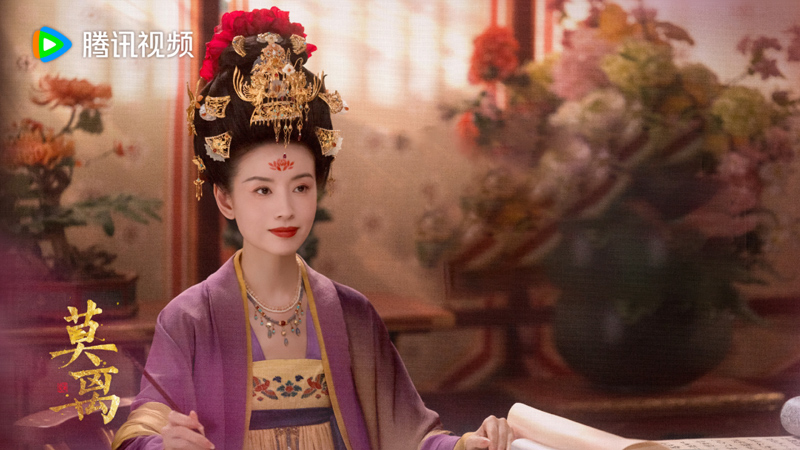
She found herself in a desperate situation. The new Regent, Mo Jingli, saw her as a liability. He had no loyalty to her. He had used her, and now he would discard her. But the Empress Dowager was not ready to die. She was a survivor. In a move of breathtaking pragmatism, she turned to her former enemies, Mo Xiuyao (墨修尧) and Ye Li (叶璃), the leaders of the opposing faction. She offered herself as a pawn. They hated her, but she had one piece of value left. She was the mother of the Regent. She could be used as a check on his power. So, they agreed to let her live. Her survival was not a gift. It was a cold political calculation. She was the thorn that could prick Mo Jingli’s side. This was her new role, a tool to be wielded by others. It was a humiliating position for a woman who had once dreamt of being the absolute ruler.
The Final Victory
Mo Jingli was not a man to be tied down. He soon poisoned the young emperor and declared himself the new ruler. The empire fractured. He led the weakened court southwards. The Empress Dowager had no choice but to follow. She was a prisoner in her own son’s entourage. But she was waiting. She had learned patience. She had learned that the most dangerous position is the one that seems the weakest. While Mo Jingli was focused on his conquest, she was building a network of allies. She kept her head down. She played the role of the powerless mother. Then, her opportunity came. She was in the south, and she began to plot her ultimate revenge. She was about to launch the most ambitious coup of her life. This time, she would not make the same mistakes. She would be the one in control.
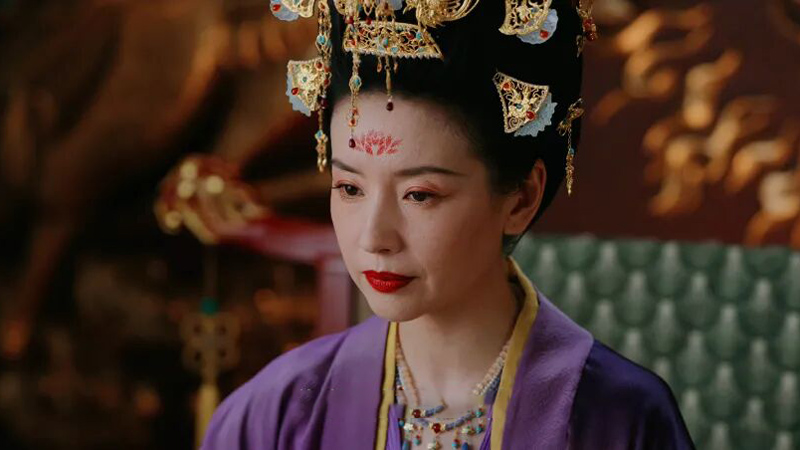
When Mo Jingli left the southern capital to go on a military campaign, he left his rear exposed. The Empress Dowager struck. She acted as the Grand Empress Dowager. She issued an edict deposing Mo Jingli. The charges were clear: he had murdered two emperors and caused chaos. In his place, she installed another son, Mo Suiyun (墨随云), as the new puppet emperor. Her first act was to establish peace with her old enemies, the Prince Ding (定王) faction. The coup was a success. She was once again the most powerful person in the southern court. She had gone from being a condemned prisoner to the ultimate victor. She had sacrificed her sons, her morals, and her reputation. But she had achieved her lifelong goal. She was the true ruler. In the end, she did not need love or family. She only needed the imperial seal. She got what she wanted. She won.