
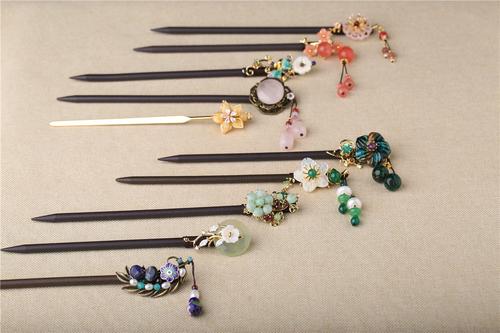
A June 2, 2026 Douyin post by maker Wutong Miaomiao Handicraft Workshop, captioned “freshly made hairpin and buyao,” drew 1,438 likes within hours under hashtags including #guofenghandicraft, #handmadehairpin, and #hanfuhairpin. The clip is part of a broader wave of hanfu-accessory DIY content on short-video platforms in 2026.
From Finished Goods to DIY Kits
Hanfu accessory tutorials have multiplied on Douyin and Bilibili, covering hairpins, buyao (tasseled step-shaking hairpieces), tuanshan (round fans), hebao (sachets), yingluo (pendant necklaces), and forehead bands. On the 1688 wholesale platform, DIY accessory-kit searches have surged, with metal flower pieces, tassel fringes, and mini-fan parts all seeing major sales increases. The format lowers the entry barrier for newcomers to guofeng styling, removing both the price barrier of finished heritage pieces and the intimidation factor of complex construction. Many makers begin with a single tutorial and progress to multi-piece sets within months.
The format also serves as an education pipeline. Short-video creators typically explain the historical name and use of each piece alongside the construction steps, embedding craft knowledge in the same content that drives sales. New makers who learned through such clips now run their own accounts, creating a self-reinforcing supply of both content and finished products. The hanfu-accessory segment of the platform economy is increasingly a creator-led category rather than a brand-led one.
The Buyao Revival in a New Material Vocabulary
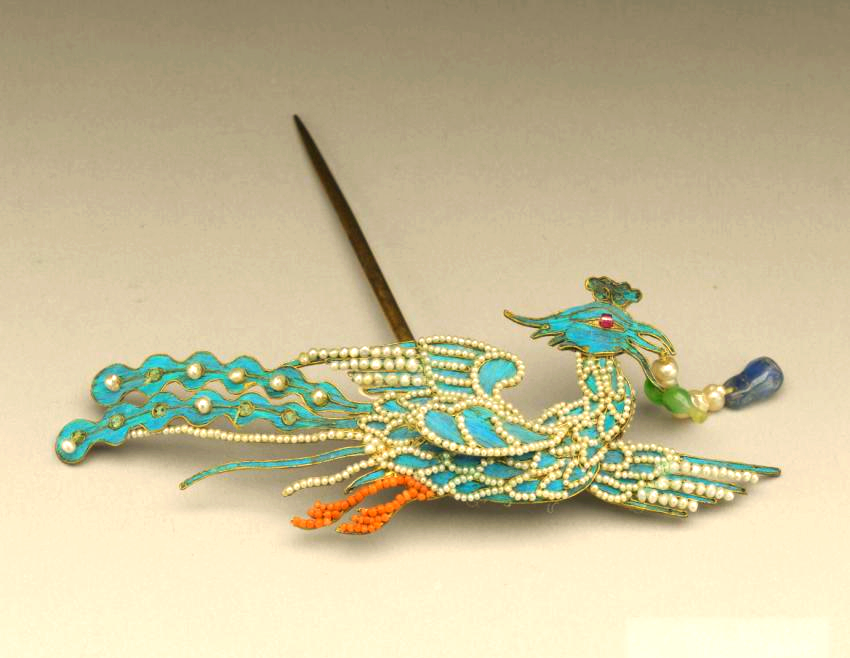
Buyao, literally “shake as you step,” was historically worn by aristocratic women, with pendant elements swaying gently as the wearer walked. Contemporary makers have replaced traditional diancui (kingfisher feather) work with eco-friendly faux-cui techniques using metal sheets, pearls, and colored resins to recreate the classical look at lower cost and easier handling. The shift addresses two constraints at once: the legal restriction on kingfisher feather use, which has limited authentic diancui to museum and restoration contexts, and the technical difficulty of working with feather-inlay, which required years of apprenticeship in the original craft.
Modern faux-cui pieces can be produced in a home workshop with basic jewelry tools, and the visual fidelity at normal viewing distance is high. Some heritage-focused makers are now using the format to teach genuine diancui techniques on substitute materials, creating a training path that could feed a future revival of the original craft. As one maker commented under the viral clip: “a hairpin I made myself feels more like mine than one I bought.” The sentiment captures the shift from accessory as product to accessory as personal craft, a category change that the hanfu community has been pushing for several years and that the platform algorithms are now amplifying.