
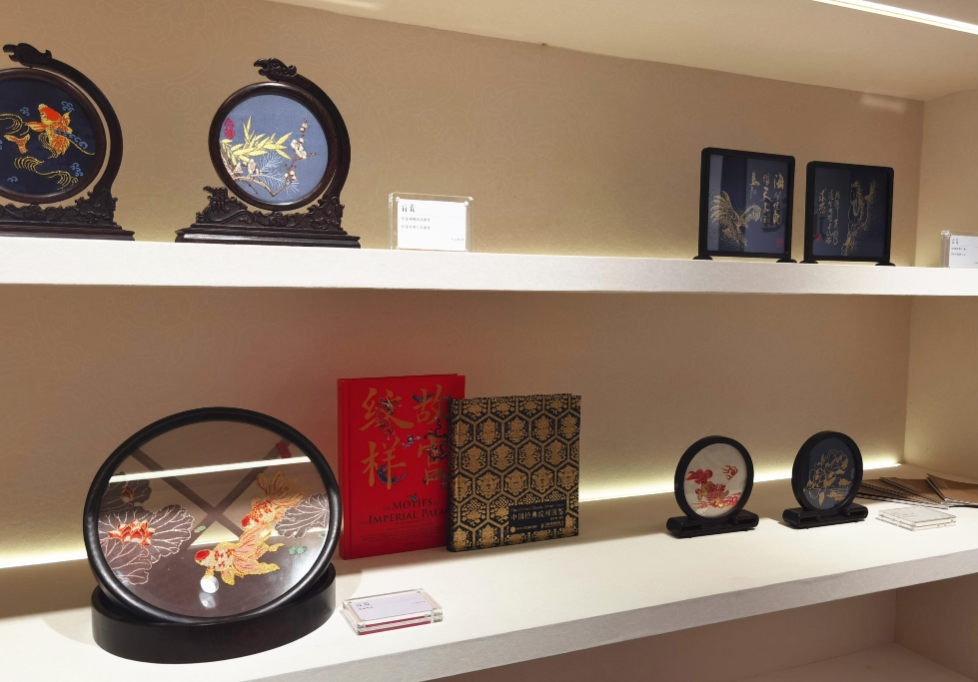
On June 19, 2026, the Jiangsu Provincial Procuratorate Office — a Qing-era government compound in the heart of Suzhou — opened its heavy wooden doors for something entirely different from its centuries-old purpose. Inside, 85 national, provincial, and municipal intangible cultural heritage (ICH) items filled its restored halls: Nanjing yunjin brocade glowing with gold thread, Wuxi liuqing bamboo carving gleaming under soft light, Changzhou cloisonné enamel catching the afternoon sun through lattice windows, and Suzhou taohuawu woodblock New Year prints lining the corridors like old friends come home.
This was the opening of “Suzhou Craftsmanship, Heavenly Work — ICH Life Aesthetics Exhibition,” the centerpiece of a three-day festival that merged Suzhou’s 21-year-old Wudi Duanwu (Dragon Boat) folk tradition with the province’s most ambitious attempt yet to put heritage crafts back where they belong: inside lived spaces, not behind museum glass.
Why Suzhou’s Duanwu Is Unique?
Most of the world knows the Dragon Boat Festival as a commemoration of Qu Yuan, the Warring States poet-minister who drowned himself in the Miluo River. Suzhou tells a different story. For over two millennia, the city has marked Duanwu in honor of Wu Zixu, the strategist who built Suzhou’s ancient city walls in 514 BCE and whose legacy is woven into every canal, bridge, and stone alley in the old town.
Suzhou’s Duanwu customs were recognized as one of China’s first national-level ICH items and inscribed on UNESCO’s Representative List of the Intangible Cultural Heritage of Humanity in 2009. The traditions — wrapping zongzi with calamus leaves, wearing scented sachets, racing dragon boats — have been practiced continuously for a thousand years. This year marked the 21st consecutive edition of the Gusu (Suzhou’s ancient name) Duanwu folk festival, and the organizers made a deliberate pivot: instead of just performing traditions, they wanted visitors to live inside them.
The Exhibition That Refuses to Be a Museum
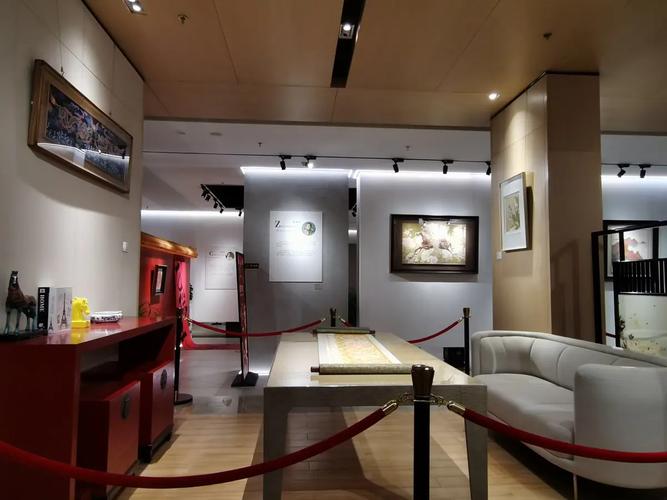
The exhibition’s organizing principle was radical in its simplicity. Rather than arranging crafts by category or chronology, the curators restored the mansion’s original room functions — study, main hall, women’s quarters — and placed ICH pieces exactly where they would have been used in daily life.
In the study, Suzhou Song brocade (songjin) bolts rested on a desk beside calligraphy brushes, as if a scholar had just stepped away. The main hall showcased Nanjing yunjin — the “inch of brocade, inch of gold” fabric that once dressed emperors — draped across a wooden stand in a reception setting, the way it might have appeared when hosting honored guests in the Ming dynasty. In the women’s quarters, Kesi silk tapestry pieces hung near embroidery frames, evoking the domestic craft culture that made Suzhou the embroidery capital of imperial China.
This was not a museum exhibition. It was an inhabitation — an argument, built in wood and silk and bamboo, that heritage crafts are not relics to be preserved in climate-controlled cases but living skills that make homes more beautiful.
The 85 Crafts
Jiangsu province is one of China’s richest regions for intangible cultural heritage. The 85 items gathered for the exhibition represented a cross-section of the province’s craft traditions, drawn from all 13 prefecture-level cities. The selection included:
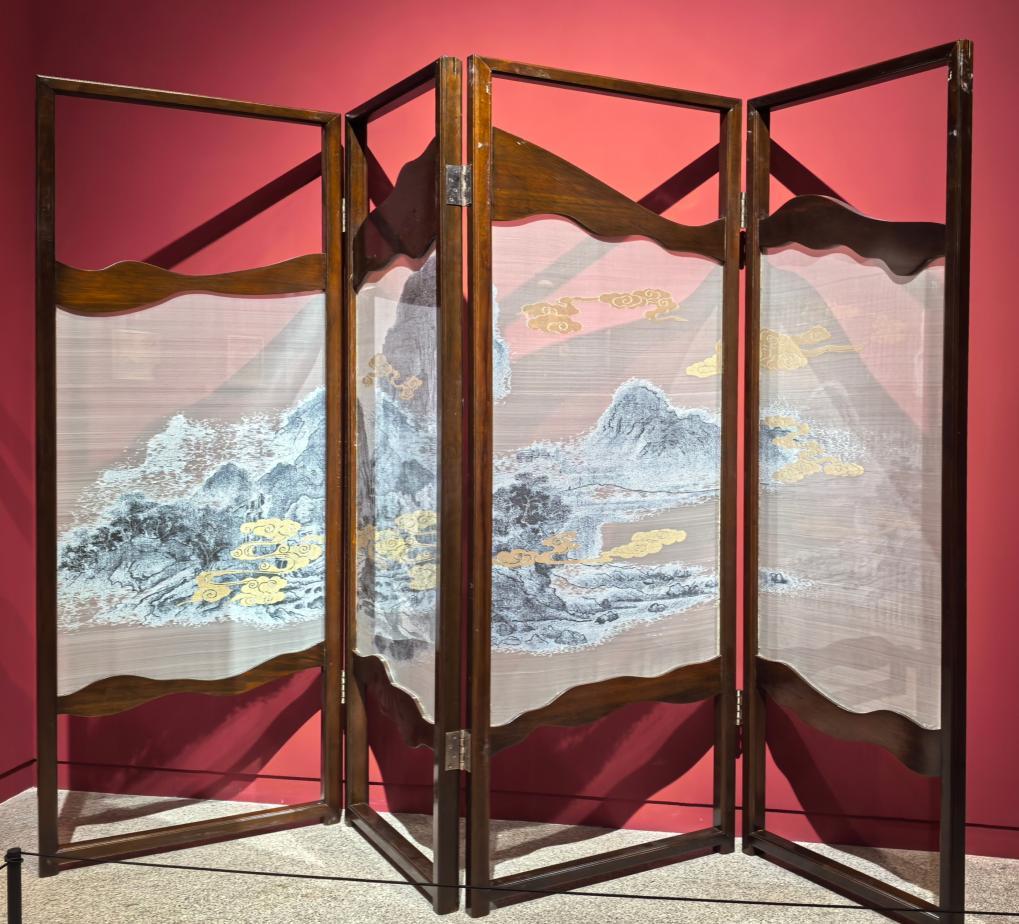
Textile and fabric arts: Nanjing yunjin brocade (a UNESCO ICH item, woven with gold and peacock-feather threads on massive double-operator looms), Suzhou Kesi silk tapestry (known as “silk carving” for its precision), Suzhou embroidery (one of China’s Four Great Embroideries), Changzhou comb carving, and Nantong indigo print.
Bamboo and wood crafts: Wuxi liuqing bamboo carving, Yangzhou lacquerware, Changzhou boxwood carving, and Suzhou taohuawu woodblock New Year prints — a tradition dating to the Ming dynasty that influenced Japanese ukiyo-e.
Metal and ceramic work: Changzhou cloisonné enamel, Yixing purple clay teapots, and Nanjing gold foil — a technique so refined that a single ounce of gold can be beaten into a sheet covering 16 square meters.
Paper and folk arts: Xuzhou paper-cutting, Lianyungang shell carving, and Huai’an painted lanterns.
The exhibition did not just display finished objects. Through “Fingertip ICH” micro-classes and a Duanwu-themed garden party, visitors could try their hand at basic embroidery stitches, watch a woodblock printer pull a fresh print, or learn how yunjin weavers coordinate their movements on a two-person loom.
Wu Zixu, Ancient Costume NPCs
Across town at Panmen Scenic Area — the only remaining ancient water-and-land city gate in China, originally built under Wu Zixu’s supervision — a parallel program turned heritage into adventure. The Wu Zixu Memorial Ceremony followed traditional ritual protocols, with Wu clan descendants traveling from across China to pay respects to their ancestor.
But the real draw for younger visitors was the ancient-costume NPC (non-player character) experience. Staff dressed in period-appropriate hanfu — Ming-style round-collar robes for men, cross-collar ruqun for women — roamed the scenic area, inviting visitors to try archery, practice martial arts movements, and complete a “Duanwu Fortune Hunt” that guided participants through multiple checkpoint locations to collect a custom good-luck bag.
This gamification of folk tradition reflects a deliberate strategy: rather than lecturing young people about heritage, let them play inside it. The approach has precedent. In 2025, the Luoyang Hanfu Fashion Week drew hundreds of thousands of visitors by turning the Sui-Tang imperial gardens into a hanfu catwalk. Suzhou’s NPC experience builds on the same insight: heritage becomes compelling when it becomes participatory.
The Economic Layer
The festival’s organizers understood that cultural programming alone does not sustain heritage — economic vitality does. Two parallel night markets operated simultaneously at the Procuratorate Office and Panmen: the ICH Summer Night Market and the Zongzi Bazaar, featuring heritage foods from across Jiangsu, time-honored brand products, and cultural-creative goods.
The inaugural Gusu “Zongzi Super Competition” brought contestants from eight neighborhood sub-districts to compete in speed and creativity. The event was cross-promoted with Suzhou’s professional football club (the “Su-Chao” or Suzhou Super League), with designated viewing areas turning the festival into a “shop the market, watch the match, enjoy ICH, taste the food, buy the goods” consumption loop. This multi-layered approach — layering sports, food, shopping, and heritage — pushed visitors from passive exhibition viewing toward active spending, creating a model for heritage-driven local economic development.
The Suzhou exhibition was part of a nationwide wave of events surrounding China’s Cultural and Natural Heritage Day on June 13, 2026. The national theme — “Cultural Relics Belong to the People, Serve the People” — emphasized accessibility and public participation. Wuhan hosted the main national event, the National Library of China launched a month-long ICH lecture series, Chengdu unveiled 73 community ICH cooperation opportunities, and Shanghai kicked off its Haipai Qipao Month alongside a guochao design competition.
What set Suzhou apart was the “life aesthetics” framing. Rather than positioning heritage as something to be protected from the public, the exhibition insisted that heritage is something the public should live with — on their desks, in their living rooms, on their bodies. A Nanjing yunjin shawl is not just a museum piece; it is something you can wrap around your shoulders on a cool evening. A Kesi wall hanging is not just a collector’s item; it belongs on the wall above your dining table.
What This Means for Hanfu and Traditional Clothing Enthusiasts
For the hanfu community — the millions of young Chinese who wear traditional Han clothing as a daily or occasional practice — the Suzhou exhibition offers both validation and a roadmap. The presence of ancient-costume NPCs at Panmen signals that traditional dress is no longer confined to stage performances and wedding photography. It is becoming part of the tourism infrastructure, the way period costumes at Renaissance fairs have long been in Europe.
More importantly, the exhibition’s emphasis on textile ICH — yunjin, songjin, Kesi, Suzhou embroidery — provides hanfu enthusiasts with deeper knowledge about the fabrics and techniques behind the garments they wear. A hanfu buyer who understands the difference between machine-embroidered polyester and hand-woven songjin is a more discerning consumer, and a more discerning consumer drives the market toward higher quality and greater authenticity.
The three-day Suzhou festival concluded on June 21, but its organizing philosophy — heritage as lifestyle, tradition as participation, craftsmanship as everyday beauty — is likely to influence ICH programming across China for years to come. As one exhibition designer put it to local media: “We are not asking people to protect heritage. We are showing them that heritage makes life better.”