
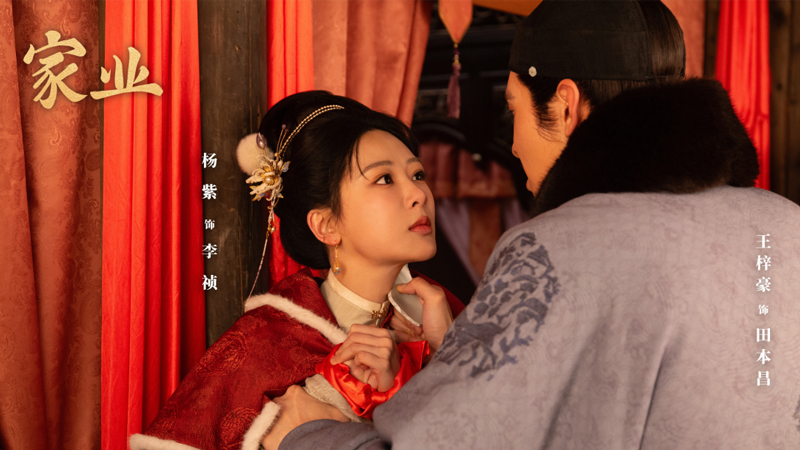
In most revenge dramas, the villain gets what he deserves—prison, exile, or a bloody execution. But what if the hero saves the very enemy who tried to destroy her? That is exactly what happens in the novel version of The Mo (家业). The TV drama shows the Tian (田) family falling hard: father beheaded, son tortured to death by slow slicing, and the family name ruined forever.
Yet the original story flips the script. The same woman they bullied, Li Zhen (李祯), becomes their unexpected lifeline. Set in Huizhou (徽州), the heart of China’s ancient ink trade, this tale of greed, betrayal, and twisted redemption forces us to ask: Is destroying your enemy always the right move? Or does leaving a door open sometimes save you too?
The Screen’s Wrath
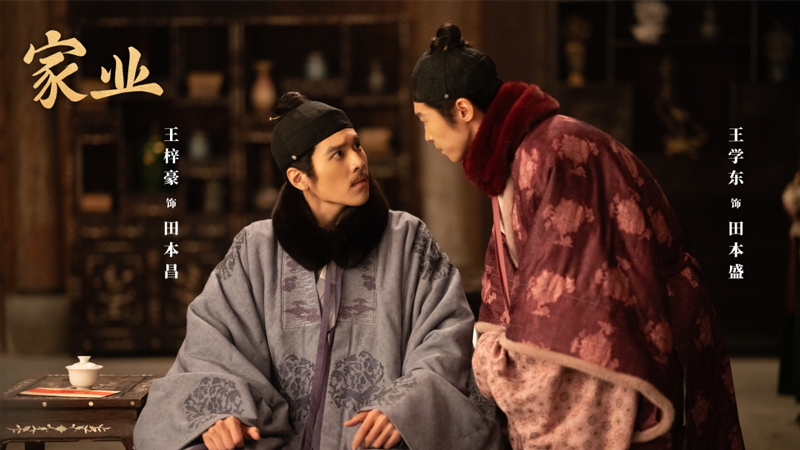
The TV version of The Mo leaves no room for sympathy. Tian Benchang (田本昌) sells his own sister to an old man as a concubine—just to buy a government post. He hides illegal foreign-trade ink inside her dowry chests. When his younger brother Tian Bensheng (田本盛) becomes a threat, he frames him for every crime in sight. Their father, Tian Huai’an (田槐安), does not stop him. Instead, the old man lies in court to protect the family name, throwing his second son under the cart. Meanwhile, Tian Ronghua (田荣华), the sold-off sister, turns informant. She exposes how the Tians cheated to win the tribute ink contract with the imperial court.

Li Zhen watches this mess unfold. She knows the Tians have been trading with foreign merchants—a serious crime back then. So she sets a trap. She uses herself as bait, forcing Benchang to move his illegal ink. Then she rallies every other ink workshop in Huizhou to chase him down. The police catch him red-handed. In the drama’s finale, Tian Huai’an loses his head on the chopping block. Tian Benchang suffers lingchi (凌迟)—death by a thousand cuts. The audience cheers. Justice tastes sweet. But the novel asks a harder question: What if the Tians were not pure monsters, just desperate people who lost their way?
The Novel’s Mercy
In the original book, the Tians do terrible things too. They force Li Zhen to commit ritual suicide for Benchang after his wife dies. They bribe a Taoist priest to cheat in the tribute ink contest. They steal timber from the Li (李) family’s forests. But here is the twist: the Tians’ real enemy is not the Lis. It is themselves. Tian Huai’an takes a young concubine named Chunzhi (春枝). His wife dies of a broken heart. He sinks into pleasure, ruining his health. His three children tear each other apart. Tian Bensheng and his sister Ronghua want the family fortune. So Bensheng reports his own elder brother Benchang for cheating in the ink contest. Benchang goes to prison.
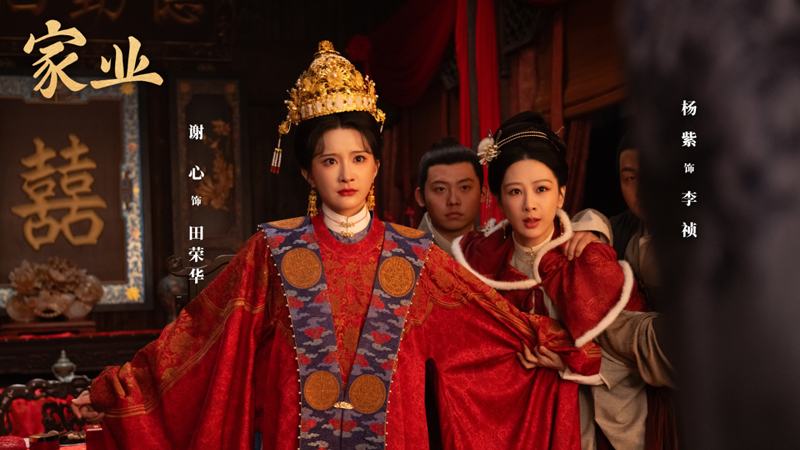
Then disaster strikes again. Tian Huai’an dies from rage and illness. Chunzhi fakes his will, teaming up with a son-in-law named Li Decai (李德才) to steal everything. The Tian estate is about to vanish. That is when Ronghua makes a shocking move. In the story, she was engaged to a young man from the Xu (徐) family. But he drowned before the wedding. Instead of running away, she sets herself on fire as a ritual sacrifice. In that era, this act makes her a martyr, earning a public honor from the emperor. Her real goal? To use that honor to beg for Benchang’s release. She believes he is the only one who can save the family name.
Her sacrifice works. With the imperial commendation and help from Li Zhen’s clan plus the Cheng (程) family, Benchang walks free. Later, Chunzhi and Li Decai try to frame the Lis for trading with foreign enemies. But Benchang sends his wife to warn Li Zhen. The truth comes out. Li Decai gets stabbed in court by Chunzhi, who is then sentenced to death. In the end, Benchang regains his property. He switches to the timber business and never harms anyone again. Compared to the TV bloodbath, this ending feels almost hopeful. And it happens because Li Zhen chose to help, not destroy.
The Real Crime
So what is the difference between the drama and the novel? It is not about who did worse things. Both versions have plenty of greed. The real difference lies in one simple idea: leaving a way out. In the TV show, every Tian family member fights to crush the others completely. Benchang blocks his sister’s future. The father betrays his son. They leave no escape route for anyone, including themselves. And when the walls close in, there is no hand reaching back.
But in the novel, even after all the lies and theft, someone still leaves a door open. Li Zhen could have watched the Tians burn. Instead, she helps Benchang get out of prison. Why? Because she sees that total destruction helps no one. The Tians lose their ink business anyway. But Benchang survives and rebuilds—doing honest work this time. Ronghua dies, but her death buys her brother a second chance. The lesson is sharp and clear: fighting for your own gain is never wrong. Everyone wants a better life. The crime starts when you block every path for the other person. Because when you shut all their doors, you are really locking your own exit too.
The Mo gives us two endings. One satisfies our thirst for revenge. The other asks us to think. Maybe justice does not always mean a bloody spectacle. Sometimes it means letting the enemy live—so you do not become the very thing you hate.