

In the bustling ink-making hub of Huizhou (徽州) during the Ming Dynasty, a young woman named Li Zhen (李祯) fights to revive her family’s ink business. But she doesn’t do it alone. Four very different women stand by her side—each with her own dreams, wounds, and endings. One sails the high seas, another heals a broken family tie, a third bets her money on a risky talent, and the last dares to walk away from everything she knew. Their stories aren’t just sidelines. They are the heart of The Mo (家业). Here is what happens to each of them.
1. Wang Hua’er (汪花儿)
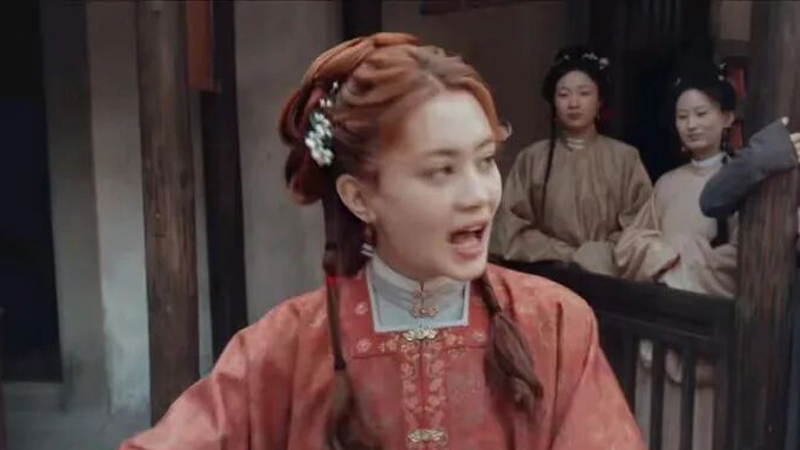
Wang Hua’er has fiery red hair and sea salt in her veins. She is a mixed-race child of a merchant family who runs cargo ships along the coast. In a time when outsiders rarely set foot in Huizhou, Hua’er stands out like a bright flag. She and Li Zhen grew up together as childhood friends. Every summer, Hua’er would visit her aunt’s home—the same courtyard where little Li Zhen practiced grinding ink sticks.
As adults, Hua’er becomes Li Zhen’s most loyal shadow. She follows her into the ink workshop, helps her bid for rare soot on the street, and never once asks for credit. When the seventh grandmother of the Li family dies, Hua’er feels she has no reason to stay. She returns to her own family’s ship. But she doesn’t disappear. The story hints that she will sail back with news from faraway ports—and maybe, one day, carry Li’s ink across the ocean to places like Jiaozhi (交趾) and Liuqiu (琉球).
Hua’er’s ending is open, not closed. She doesn’t settle down or marry into a local clan. She keeps moving. That is her gift to Li Zhen—a reminder that the world is bigger than any one village or family grudge.
2. Yan Xianglan (言香兰)

Yan Xianglan wears a veil when we first meet her. Rashes cover her face, and her temper is sharp. She is the adopted daughter of a local ink official, a man who loves her but doesn’t know how to show it. Li Zhen cures her skin disease with a special medicinal ink. That alone would make Xianglan grateful. But Li Zhen does more: she pushes Xianglan to see her own heart and forgive her father.
Later, Xianglan becomes Li Zhen’s ally in a fierce competition for the princess’s ink contract. She also becomes her friend in love. When Li Zhen feels confused about a man named Qi Jiu—who likes her but won’t say it—Xianglan advises her to take a trip to Nanjing (南京). “Distance clears the mind,” she says. On that trip, Xianglan meets Li Zhengshen, a steady man who admires her but fears being seen as a social climber because of her father’s rank.
Xianglan waits. She doesn’t push or beg. Only when her father retires does Li Zhengshen (李正身) finally propose. Their wedding is quiet but warm. Xianglan’s story shows that patience and self-respect can win a different kind of battle—not for power, but for a love that fits.
3. Wang Cuiqiao (王翠俏)

Wang Cuiqiao has traveled enough to read people like open books. She runs a small teahouse in Huizhou, but her real trade is spotting talent. When Li Zhen comes to her for investment in the small Li ink workshop, Cuiqiao doesn’t look at business plans or family names. She brews a cup of tea and watches how the young woman drinks it.
Li Zhen passes her test. She talks about ink formulas with sharp clarity and refuses to flatter. Cuiqiao decides on the spot: she puts silver into Li’s workshop without hesitation. That makes her the closest thing Li Zhen has to an angel investor. Cuiqiao never asks for a seat at the table or a title. She just wants a return on her bet—and she gets it.
Unlike the other three women, Cuiqiao has no emotional arc involving love or family drama. Her ending is simple: she continues to back smart, hungry makers. She represents a rare thing in that era—a woman who trusts her own judgment with money and doesn’t apologize for it.
4. Tian Ronghua (田荣华)

Tian Ronghua starts as a stepping stone. Her father and older brother use her like a gift to please powerful families. They marry her off, discard her, and never ask what she wants. When the Tian family falls apart, Ronghua has nothing left but a job as an accountant at Li Zhen’s small workshop. For the first time, she earns her own rice and sleeps without fear.
Then comes a letter. Her mother and second brother have been exiled but receive a pardon. They settle in Ningguo (宁国), a town east of Huizhou, and ask Ronghua to join them. The old Ronghua would have packed her bags and run to them. But this new version—the one who kept books and watched Li Zhen fight—has learned something. She doesn’t want to be someone’s daughter or sister anymore.
She leaves the workshop, but not for family. She decides to become a merchant, like Wang Cuiqiao. The Ming court has just reopened sea trade, and coastal markets are exploding with demand. Ronghua heads east, toward the ships and the unknown. Her ending is not about reunion. It’s about choosing yourself when everyone else expects you to choose them.