
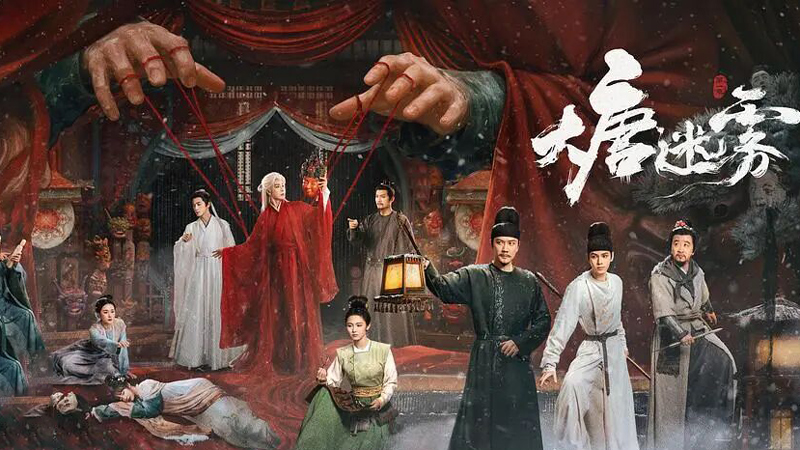
A bloated corpse drifts down the Ruan River (阮江). Ropes have carved deep grooves into its neck and limbs. An old man kneels in a riverside mansion, swearing on his own remaining years that his dead son never killed anyone. This is the opening of The Tang Mist (大唐迷雾), a new Chinese drama that throws viewers into a familiar trap. You think you are watching a murder mystery: find the killer, crack the alibi, expose the perfect crime. But the show’s real trick is that it refuses to play that game.
The victim you pity may have bloodier hands than the accused. The suspect you chase may never have touched a weapon. Within two days of its release, the first of five story arcs—the “Water Ghost Case”—has already shattered every expectation about historical suspense dramas. Monsters and ghosts are just a disguise. What lurks beneath is a brutal question: when hatred takes over reason, who among us can truly stay human?
The Mute Inquisitor
Most viewers remember actor Feng Shaofeng (冯绍峰) as the dashing warrior Gu Tingye (顾廷烨) in The Story of Minglan (知否)—a man on horseback, full of life. His new role as Di Renjie (狄仁杰) could not be more different. This Di is quiet, thin, and carries a chilling distance. He does not shout. He does not pace. In one interrogation scene, he does not even use a wooden gavel. He simply leans back, rolls a copper coin between his fingers, and asks softly: “Did you really see the water ghost that night?” That one sentence makes the witness collapse in sweat. His gentleness is not weakness. It is a blade wrapped in silk. He has already seen through every lie. He is just too tired to pretend otherwise.
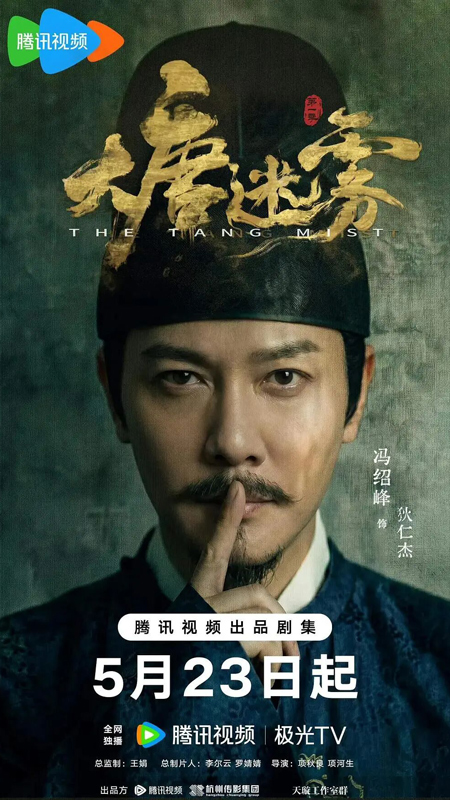
Di Renjie arrives in Jiangnan (江南) as a fallen man. He barely escaped with his life in the capital Chang’an (长安), exposing a deadly conspiracy orchestrated by Empress Wu. His reward? Exile to a remote circuit of salt marshes and misty rivers. The salt fields are crumbling. Fishermen refuse to enter the water because of ghost stories. Ordinary people are losing their livelihoods. Di does not complain about the injustice. He does not burn incense or pray for a faster return to power. He simply lifts his robe, sits down, and begins asking questions one by one. This is the core of his character: he has no ambition except to dig out the truth, even if it means wading through mud all night.
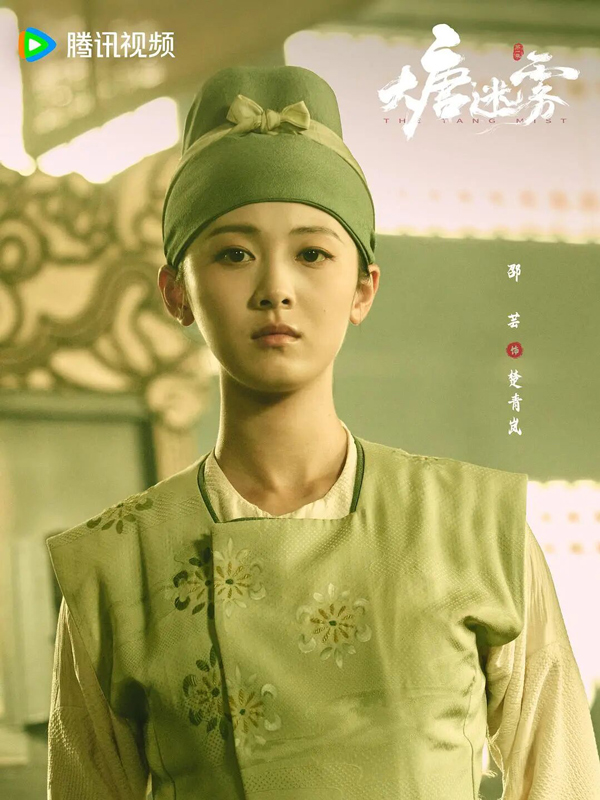
The night before leaving Chang’an, he visited the old chancellor Liu Wuzhi (刘吾之) in death row. Liu was about to be executed. “I accept it,” the old man said calmly. For a split second, Di’s mask slipped. It was not the frustration of a failed investigation. It was the agony of watching an innocent man walk to his death, trapped inside a political chessboard he could not overturn. Later, when Liu’s adopted daughter Chu Qinglan (楚青岚) follows him south, Di says nothing comforting. He just nods and takes her in. It is not just mentorship. It is a debt he carries—he could not save her father, so he will protect her with his remaining years. Feng Shaofeng’s Di Renjie is a man of extreme, silent courage. He knows the world is corrupt, that the powerful trample justice. Someone has to walk against the current. He does not just solve cases. He claws back justice from the dirt, one buried truth at a time.
The Widow’s Fiction
The most haunting character in the Water Ghost Case is a woman named Du Ruo (杜若). At first, she seems like a tragic victim. Her fiancé Qi Feng (齐风) died in a fire. His body was never found. She was assaulted by a rich man’s son, Wang Xian. She drifts through her days half-mad, calling out her dead lover’s name. When she beats the drum at the courthouse to demand justice, her voice cracks with real grief. Everyone pities her. But when Di Renjie visits her late at night, the story begins to rot from the inside. Du Ruo claims Qi Feng faked his own death to investigate who sank his father’s salt boat. She shows letters he supposedly wrote. The county magistrate compares the handwriting. Every single letter was forged by Du Ruo herself.
The final crack comes from a mundane question. Di asks gently: “What shoe size did Qi Feng wear?” A woman engaged to a man for years should know that detail without thinking. Du Ruo freezes. She has no answer. Di does not expose her on the spot. He just walks out into the rain and tells his assistant Lin Buyan (林不言): “This case was rigged from the start.” But he already fears something worse than a liar. He fears a liar who has hypnotized herself with her own lies, unable to tell reality from fantasy. The deeper truth is uglier. Wang Xian, out of jealousy, had sabotaged the Qi family’s salt boat years ago, causing bankruptcy and death. Later, he raped Du Ruo. But in her lawsuit, she only accuses Wang of arson and murder—not the original crime that destroyed the Qis. She carefully aims at one nail while ignoring the whole rotten structure.
Chu Qinglan’s autopsy of the burned corpse reveals a devastating clue. The charred body reeks of sleeping drugs. The victim was unconscious before the fire started. A witness confirms: no struggle, no screams. And on the corpse’s hand sits a jade ring—the Wang family heirloom. The body is not Qi Feng. It is Wang Xian. He was killed before the fire, then placed in the burning house. Du Ruo has been chasing justice for a corpse that is actually her worst enemy. Even more chilling is her precision. Every clue she fed the investigation points exactly to Wang Xian’s murder, but not enough to expose the Wang family’s older crime of ruining the Qis. Her control is terrifying. Is she avenging her fiancé? Or is she just feeding her own obsession, editing the past to fit her hatred?
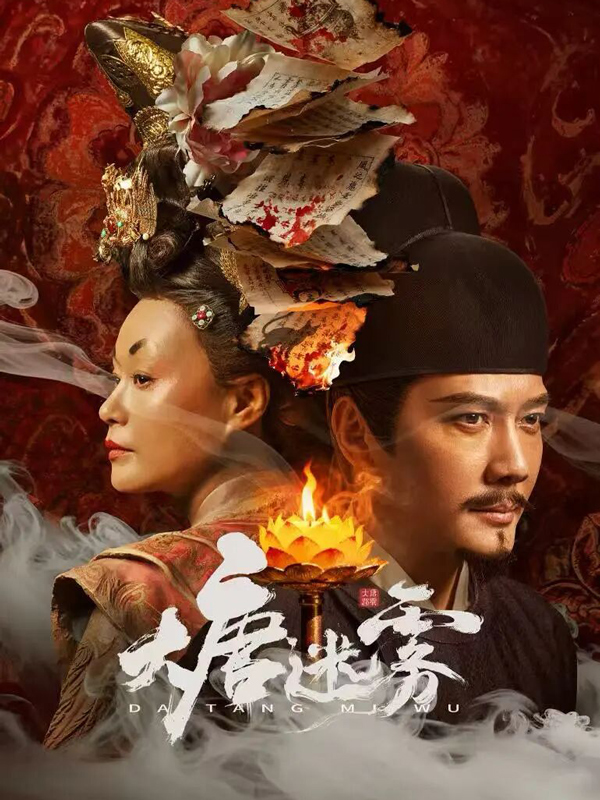
In the dark morgue, Di stands before the burned body for a long time. Chu Qinglan asks what he is thinking. He says: “If Qi Feng were alive, would he want Du Ruo to become this?” He has no answer. For the first time since his exile, he cannot judge. The law can separate guilt from innocence. But the human heart? It only knows how to dig deeper holes. Every minor character in this case—the protective father, the greedy boatman, the bribed servant—each holds a reason that feels unshakable to them. Everyone claims to be a victim acting out of necessity. Du Ruo’s revenge, meticulously planned and disguised as grief, makes her no different from the Wang family she despises. They both use dead names to hide living selfishness. The real ghost of Ruan River is not a corpse. It is the monster that wakes up when hatred and desire break their chains—and then even the one who set it free cannot recognize it anymore.