
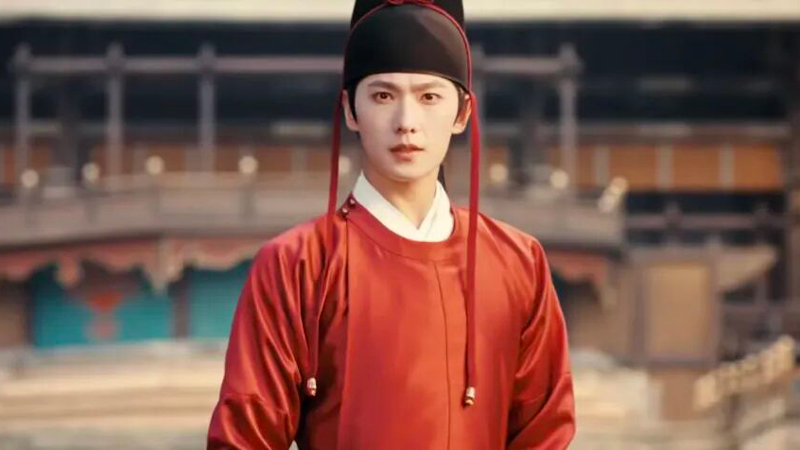
For decades, every actor who plays Zhan Zhao in Zhan Zhao Adventures (雨霖铃) has worn the same strange hat. Two long ribbons dangle from the sides, never tied. It looks elegant, even heroic. But here’s the question that no TV show answers: did people in the Northern Song period really wear their hats like that? Or has television accidentally frozen a costume mistake from a chaotic era 1,500 years ago?
The truth starts with two Chinese words that sound alike but mean opposite things: Ying (缨) and Chui Ying (垂缨). One keeps your hat on your head. The other just hangs there for show. And confusing them has given us a Zhan Zhao who looks more like a wandering actor from a 6th-century dance than a 11th-century imperial guard. Let’s untie this knot.
The Practical “Ying”
In ancient Chinese clothing, Ying was never a decoration. It was a tool. According to Shuowen Jiezi (说文解字), a Han dynasty dictionary, “Ying is the fastening of a hat.” Picture a ribbon attached to both sides of a cap, coming down under the chin, and tied tightly. That’s the real Ying. Without it, a gust of wind would steal your hat during a ritual. The Zhou dynasty even made laws about its color. Emperors used red silk. Nobles used cinnabar. Commoners used hemp. No exceptions.
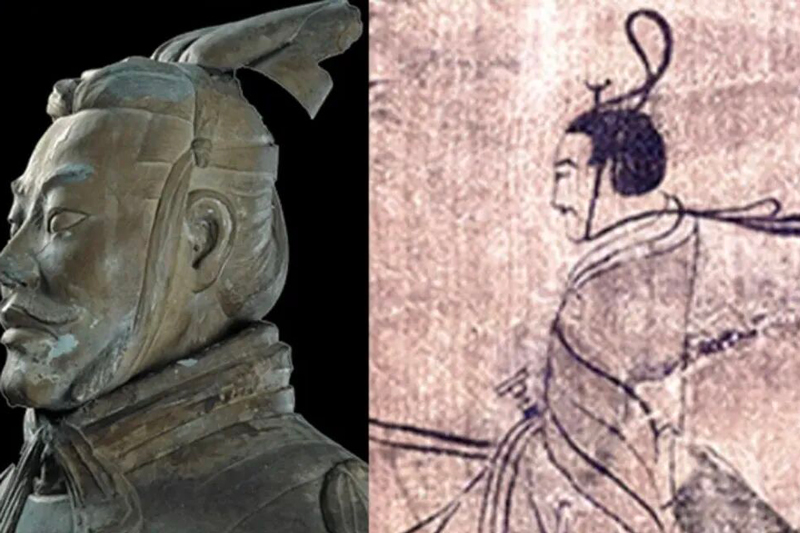
The most famous story about Ying comes from Zilu (子路), a disciple of Confucius. He was killed on the spot. This story proves one thing: in the Spring and Autumn and Han periods, a proper person always tied his Ying. Leaving it loose was shameful, like wearing pajamas to a wedding. So for over a thousand years, the Ying was practical, symbolic, and always knotted.
If Zhan Zhao had really lived in the Northern Song, his official hat would have had a tied Ying—not hanging ribbons. Archaeologists have found no evidence of loose decorative straps on Song dynasty court uniforms. The famous painting Along the River During the Qingming Festival (清明上河图) shows hundreds of officials and soldiers. Every hat either has a tied chin strap or no strap at all. The “dangling look” simply does not exist.
The Decorative “Chui Ying”
So where did the loose ribbons come from? Enter Chui Ying, which means “hanging Ying.” This trend was born during the Wei, Jin, and Northern and Southern Dynasties , a 300-year period of war and rebellion. The old Confucian rules broke down. Intellectuals called “Qing Tan” (清谈) scholars rejected tight formalities. They untied their chin straps on purpose, letting the ribbons flutter in the wind as a statement of freedom and rebellion. Think of it as the ancient equivalent of unbuttoning your suit jacket at a rock concert.
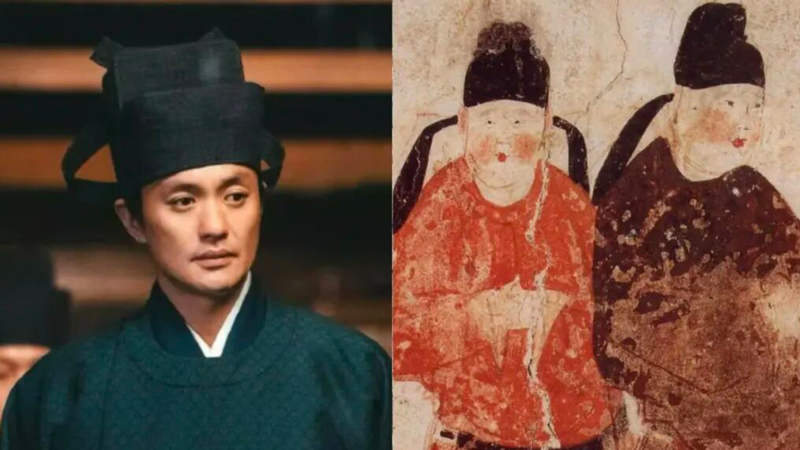
During the Tang (唐) dynasty, officials returned to tied Ying for ceremonies. But a new headwear called Fu Tou (幞头) became popular for daily wear. It had a stiff inner frame that stayed on without any chin strap. So the Ying disappeared from everyday life. The Song (宋) dynasty, which followed the Tang, was even stricter. Neo-Confucian scholars hated the loose, decadent look of the Chui Ying. By then, only stage performers and dancers used hanging ribbons to look dramatic. Real officials tied their hats.
By the Ming (明) dynasty, the government wrote in the History of Ming: Treatise on Clothing (明史·舆服志) that any hat with a Ying must be tied. The Chui Ying became a purely theatrical costume. In other words, the famous Zhan Zhao look with ribbons hanging down both sides is not Song dynasty clothing. It is opera clothing—a collection of stage tricks from the Yuan or Ming dynasties that later directors mistook for history.
Zhan Zhao on Screen
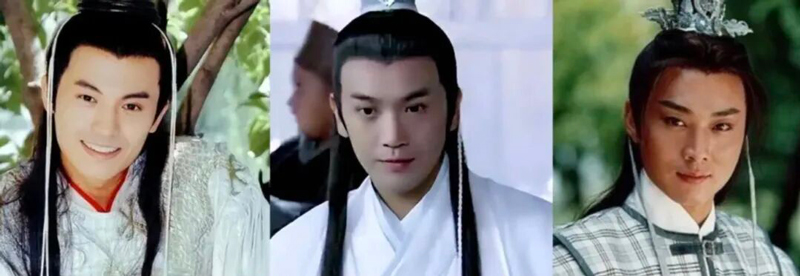
Now let’s look at the most famous Zhan Zhao actors. His official robe is dark red, which matches the Song dynasty rank of a fourth-grade imperial guard. But his hat has extremely long, flowing ribbons that no Song painting would allow. It looks great on camera—heroic, swift, larger than life. But it borrows from Peking opera, not from archaeology. The same goes for Jiao Enjun (焦恩俊) in later versions. He made small improvements, but the Chui Ying remained.
The recent drama Zhan Zhao Adventures, starring Yang Yang (杨洋), finally breaks one small tradition: there is no Mao Zheng (帽正)—a jade or gold ornament stuck in the center of the hat—which earlier shows added for no historical reason. But the hanging ribbons are still there. So why do directors keep this mistake? Because audiences expect it. After thirty years of the same visual shorthand, a Zhan Zhao without dangling ribbons looks “wrong.” The Chui Ying has become a symbol of his dual identity: a knight-errant who also serves the court. It whispers “free spirit” and “loyal official” at the same time.
Would a historically accurate Zhan Zhao be better? Probably not. Real Song hats look stiff and plain. The Chui Ying, despite being a historical error, tells a different kind of truth: that Zhan Zhao is a legend, not a photograph. He lives in our imagination, shaped by centuries of theater and television. So next time you see those ribbons swinging in the wind, remember—they are not Song dynasty. They are Wei-Jin dynasty rebellion, Tang dynasty performance, and 1990s Hong Kong drama magic, all tied together with a knot that was never meant to be untied.