

In the gripping drama Zhan Zhao Adventures (雨霖铃), the villainous Xiangyang Wang (襄阳王) lavishes praise on the hero Zhan Zhao while speaking to his trusted underling Shao Jizu (邵继祖). But is it genuine admiration? Far from it. Set against the backdrop of Kaifeng (开封) during the Song Dynasty, this calculated compliment hides three chilling schemes. Let’s tear apart the real motives behind those honeyed words.
A Wake-Up Call
Xiangyang Wang has spent years building his rebellion. He commands a network of spies, assassins, and corrupt officials. Yet his best efforts to stop Zhan Zhao—the famed “Southern Hero” who now serves as a sword-bearing guard in Kaifeng—have failed repeatedly. Even when Zhan was gravely wounded and poisoned, he slipped through every trap. So when the prince praises Zhan in front of Shao Jizu, he is not celebrating the hero’s skills. He is scolding his own men.
The message is sharp: “You underestimated him.” Shao Jizu and his fellow henchmen had grown arrogant. They thought a lone swordsman, framed for treason and hunted by both the court and the Wuxia underworld, would be easy prey. Instead, Zhan Zhao outran, outfought, and outthought them every time. The prince’s words are a whip. He forces his underlings to drop their pride and see the enemy clearly. If they cannot handle one injured man, how dare they dream of toppling an empire?
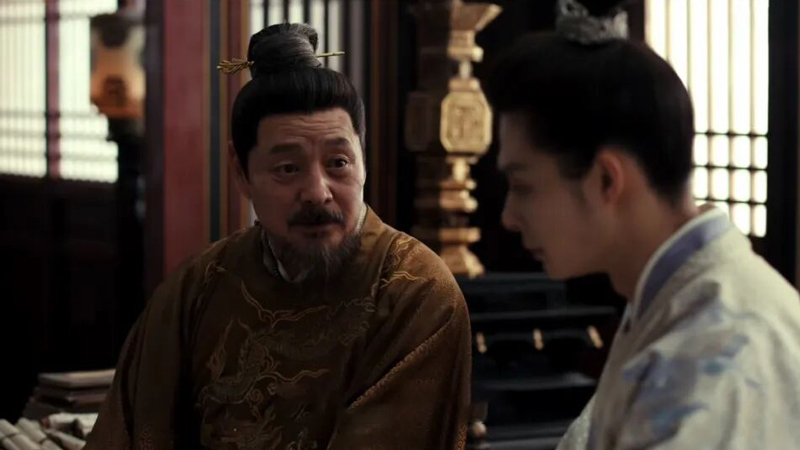
This first layer is pure strategy. A wise villain never lets his troops grow lazy. By highlighting Zhan’s loyalty, intelligence, and martial brilliance, Xiangyang Wang reminds his followers that failure has a price. He demands sharper focus, better planning, and absolute humility before a foe who fights not for power but for justice. Make no mistake: the praise is a rebuke dressed in silk.
A Hidden Recruitment
Xiangyang Wang hungers for talent. He looks at the court and sees sycophants who bend with the wind. He looks at the Jianghu and sees unruly rogues who bow to no master. What he truly needs is a warrior like Zhan Zhao: unstoppable in combat, unshakable in principle, and unbreakable in spirit. The prince knows that a man who risks death to deliver evidence of treason—who accepts imprisonment without betraying his cause—is worth a thousand mercenaries.
So his lavish praise serves as a quiet invitation. He wants Shao Jizu and the other insiders to understand: “This is the kind of person I want beside me.” By speaking of Zhan’s virtues so openly, Xiangyang Wang plants a seed. He imagines a future where Zhan Zhao wears his badge, fights his battles, and lends his righteous name to the rebellion. With such a man on his side, the throne would be within reach.
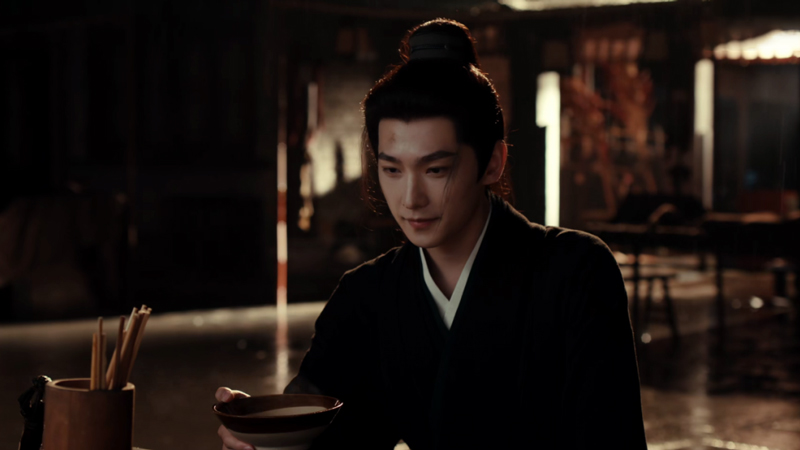
Yet the prince is no fool. He sees Zhan’s heart—a heart that loves the Song Dynasty and its laws. He knows that justice, not ambition, drives the hero. The praise is not naive hope; it is a calculated probe. It tests whether Zhan might ever waver. And when the answer comes back no, that same admiration will curdle into something far darker. Recruitment is only one path. The other is elimination.
A Deadly Trap
Here lies the prince’s cruelest move. Zhan Zhao has just cleared his name. The emperor has tasked him with investigating Xiangyang Wang’s conspiracy. Public opinion swings in the hero’s favor. He is at his most visible and most dangerous. So why shower him with compliments in front of a jealous subordinate like Shao Jizu? Because the prince understands human nature better than anyone.

First, the praise stokes envy. Shao Jizu hears his master call another man “peerless in loyalty and skill.” Resentment burns. He will now work twice as hard to sabotage Zhan’s investigation, hoping to prove himself superior. Second, the prince builds a narrative: Zhan Zhao is too capable, too righteous, too hard to control. This label makes it easier to justify murder later. When the hero inevitably refuses to join the rebellion, the prince can say, “See? He was always a threat. He left me no choice.”
The applause is a knife wrapped in velvet. Xiangyang Wang never intends to spare Zhan Zhao. He knows that a man of true integrity will never collude with traitors. Every word of admiration is a step toward the final blow. He is setting the stage for a public fall, framing the hero’s very strength as a danger to the state. In the prince’s chess game, praise is just another pawn—sacrificed when the kill is ready. And Shao Jizu, blinded by his own wounded pride, becomes the weapon.