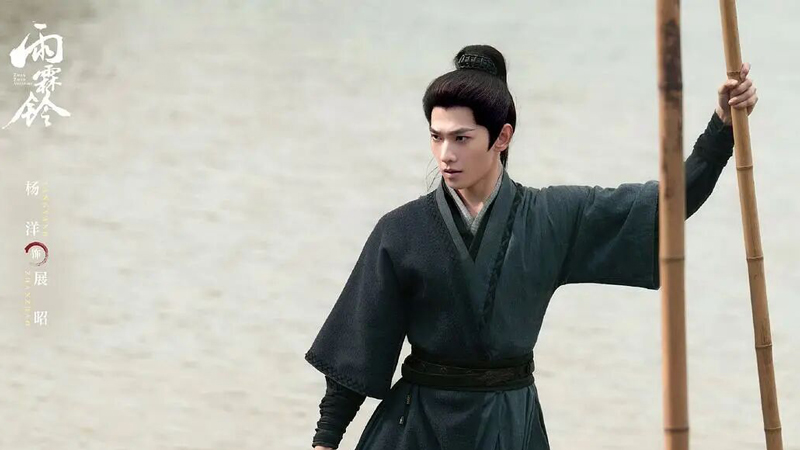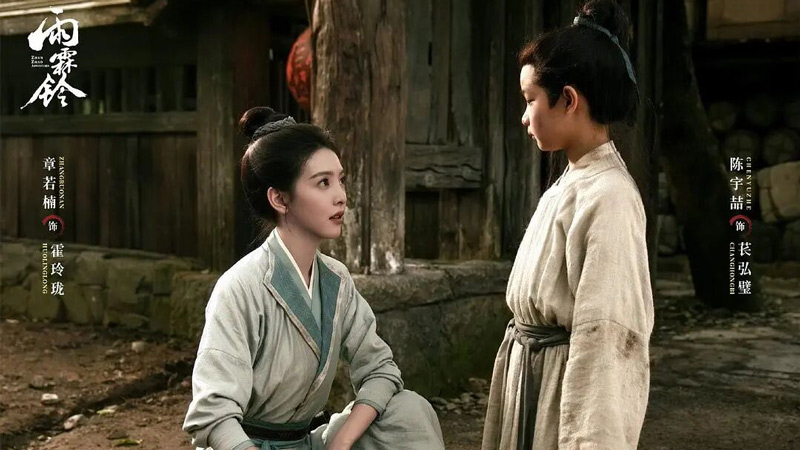
In the fictional world of Zhan Zhao Adventures (雨霖铃), set in Xiang Zhou (襄州), the local deity is not a god but the Yecha (夜叉)—because the government offers no justice. Everyone scrambles for a jade that cures all poisons, while a secret sect raises a child to prolong lives, and a sword-wielding exile carries evidence that could topple a dynasty. On the surface, it’s a chase for treasures: the Changhong Bi (苌弘璧), the Linglong Yan (玲珑眼).
But dig deeper, and you’ll find a chilling question buried beneath all the bloodshed. What happens when people stop seeing each other as humans and start treating one another as objects to be owned, used, and discarded? Zhan Zhao Adventures answers with three bruised, stubborn rebels who refuse to become tools. They bleed, they fail, and they keep whispering the same two words: “Not giving in.”
A Screaming “Treasure”
The first episode throws you into a rain-soaked inn. Four factions storm in, blades drawn, bodies falling. Forty minutes of chaos, yet nobody knows exactly what they’re fighting for. They’ve heard rumors of a jade that neutralizes any poison. That’s all. No one has seen it. No one questions why they need it. The act of grabbing becomes the only goal. This is the show’s sharpest jab at blind greed—a muscle memory so deep that people stop thinking. They just snatch.
Then comes the gut punch. In episode three, Zhan Zhao (展昭) reveals the truth: the legendary Changhong Bi is not a piece of carved stone. It’s a living child, raised by Han Shui Gong (寒水宫), force-fed a poisonous liquid called Biyan Sanshui (碧焰三生水) for years. His blood keeps dying elders alive. He cannot speak. He cuts his own palm in the dark to feed a stranger. And the world calls him “treasure.” The show asks you to sit with that horror. You’ve been chasing a jade that cries, that bleeds, that says “thank you” with terrified eyes. What does that make you?
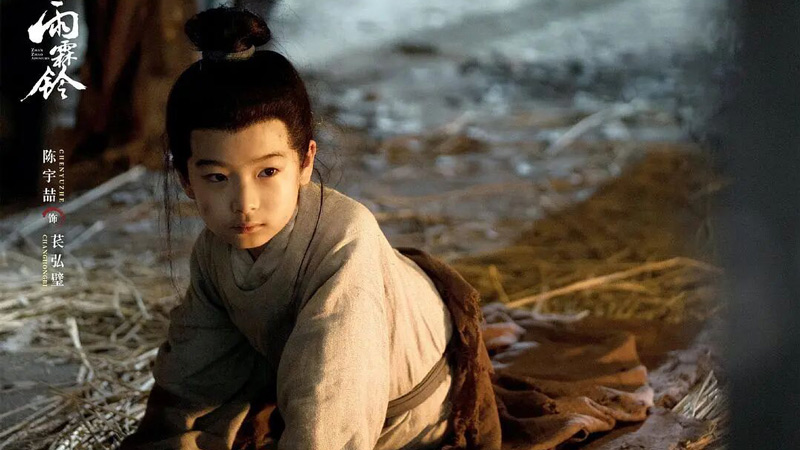
The cold logic spreads everywhere. The Sheng Yun Manor (升云庄) wants the child to stop a rival sect’s poison trade. Han Shui Gong wants him as a walking medicine bottle. Both dress up their hunger with noble words: “protecting the world,” “saving lives.” But underneath, it’s the same ugly equation: a human reduced to a thing. The show doesn’t let you feel superior either. Every time you judge a person by what they can produce or provide—their salary, their usefulness, their price tag—you become part of that same machinery. Zhan Zhao Adventures holds up a cracked mirror, and the reflection stings.
Refusing to Be Tools
Zhan Zhao starts as the imperial court’s knife. His title “Imperial Bodyguard” sounds honorable, but most see him as a blade to be aimed and pulled. Then his dying friend shoves a box of evidence into his hands and whispers, “Take this to the capital.” That moment changes everything. He stops being a weapon. He becomes a messenger carrying a dead man’s trust. Throughout the show, he’s poisoned, beaten, and drained to near death. He collapses against a temple wall, sliding down like a dying battery. Yet he never drops the box. Why? Not for glory. Not for orders. Because a person asked him, and he said yes. That’s the show’s definition of a true knight-errant: not invincible, just stubbornly human.
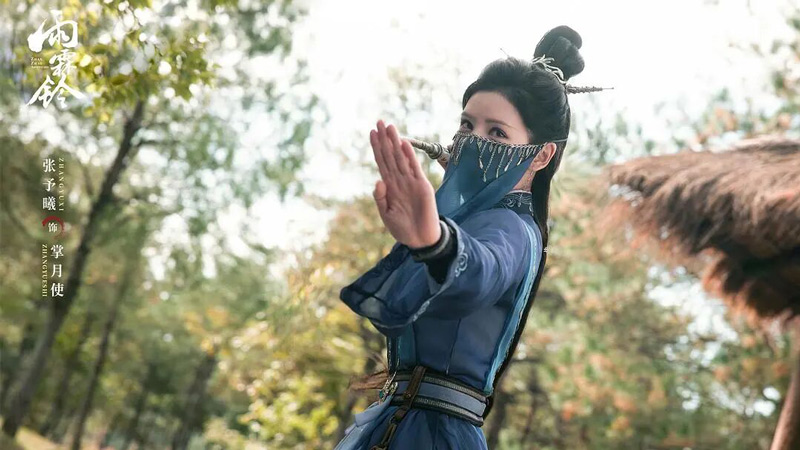
Then there’s Huo Linglong (霍玲珑). Viewers mocked her wide eyes and unwrinkled lipstick during escape scenes. But those complaints miss the point. She’s a sheltered manor girl who has never seen a corpse until episode one. Of course she looks ridiculous. That’s the design. Where others see the child Changhong Bi as a bargaining chip, she sees a boy who needs a blanket and a promise. She doesn’t calculate his value. She cries for him. Her “amateur” kindness is the show’s most radical statement: you don’t need martial arts mastery to refuse the world’s cold math. You just need to look at another person and say, “You are not a thing.”
Bai Yutang (白玉堂) operates in the gray. He kidnaps a doctor’s children to force a cure for Zhan Zhao. That’s ugly. But when the doctor accuses him, he replies calmly, “You did the same to a white-robed boy fifteen years ago.” One sentence, fifteen years of silent rage. He asks Zhan Zhao why that evidence box is worth dying for. Zhan Zhao says, “A friend’s last wish.” Bai Yutang nods and stands beside him. The “cat” and “rat” of classic tales become brothers. Why? Because both understand that some things can’t be measured. Loyalty, grief, a promise whispered in blood—these are not tools. They are the only treasures that matter.